The Cost of Justice Pt III: Close to 300 Industrial Court judgments outstanding for nearly a decade
 10 May 2026
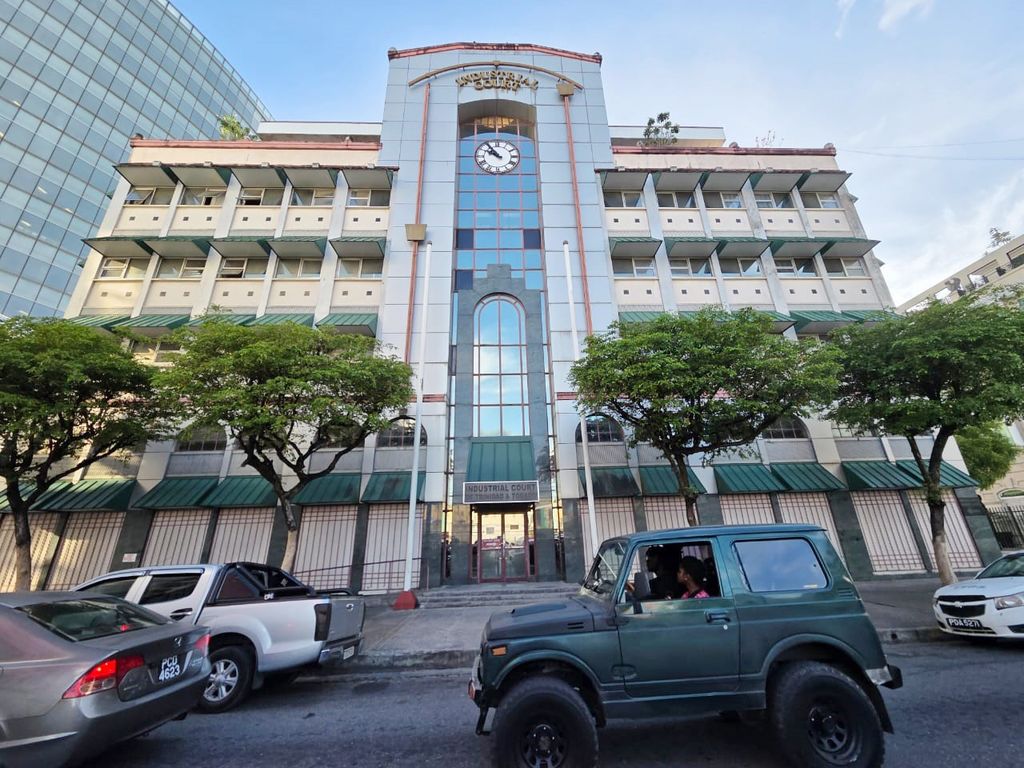

The administration of justice in any jurisdiction is supposed to be fair, impartial and accessible.
But for years, delays have raised a harder question: if justice comes too late, who is the system really serving?
In Part I, Guardian Media Investigations Desk examined how delay impacted accused people before trial and Part II showed how some prisoners died before their matters were completed in court.
In Part III we look at another aspect of the justice system: the Industrial Court, where delay does not usually mean prison time, but can mean years of uncertainty over jobs, wages, benefits, dismissals, unions and workplace rights.
Workers have gone to the Industrial Court seeking justice.
Years later, some are still waiting for a judge to decide who was right, after the Court had already heard the matter, in some cases nearly 10 years ago.
According to a Freedom of Information response filed by Guardian Media Investigations Desk, some Industrial Court judgments remained reserved for up to nine years and nine months.
The records showed 13 Industrial Court judges, who have been recommended for reappointment, have a combined 263 outstanding judgments under their names.
The highest figures were listed for His Honour Melvin Daniel, with 78 outstanding judgments; His Honour Azeem Mohammed, with 64; His Honour Lawrence Achong, with 38; His Honour Herbert Soverall, with 20; and Her Honour Michelle Ann Austin, with 17.
The oldest listed outstanding judgment was Communications Workers Union (CWU) vs Fortress Security Service Limited.
The matter was filed on June 2, 2014. Judgment was reserved on July 14, 2016. As of April 2026, it had been reserved for nine years and nine months.
The matter was assigned to His Honour Patrick Rabathaly to draft a judgment.
The second oldest was Oilfield Workers Trade Union (OWTU) vs Swissport.
It was filed on June 17, 2013. Judgment was reserved on July 20, 2016. As of April 2026, it had also been reserved for nine years and nine months.
That matter was assigned to His Honour Melvin Daniel.
Of the 10 oldest matters, every one involved a union.
Seventeen years before judgment was reserved
But the record also showed another type of delay.
Some disputes took years before judgment was even reserved.
The longest was Telecommunications Services of T&T (TSTT) Ltd vs CWU.
It was filed on February 20, 2008. Judgment was reserved on May 14, 2025. That was a gap of 6,293 days, or just over 17 years. The matter was assigned to Her Honour Michelle Ann Austin to draft a judgment.
The second longest was CGA Limited vs Union of Commercial and Industrial Workers (UCIW), filed on July 8, 2009, with judgment reserved on January 24, 2024 — about 14 years and six months later.
The third was ArcelorMittal Point Lisas Limited vs SteelWorkers Union of Trinidad and Tobago (SWUTT), filed on May 28, 2014, with judgment reserved on March 16, 2026 — about 11.8 years later.
ArcelorMittal is one example of a dispute outliving the workplace. The Point Lisas plant shut down in 2016, displacing over 600 workers.
All matters listed involved a union.
Guardian Media Investigations Desk also checked the FOIA disclosure against public Industrial Court and court records.
The FOIA disclosure listed CWU vs Fortress Security Service Limited as an outstanding matter reserved since July 2016. However, the Industrial Court’s 2018 judgment-delivered list records TD 326/14, Communication Workers’ Union vs Fortress Security Services Limited, as delivered on June 11, 2018.
The FOIA disclosure also listed NUGFW vs Udecott as an outstanding matter reserved since July 2019. However, the Industrial Court’s 2023 judgment-delivered list records TD 393/16, NUGFW vs Urban Development Corporation of Trinidad and Tobago, as delivered on December 13, 2023.
Under the Industrial Relations Act, the Industrial Court is a superior court of record.
It can hear and determine trade disputes, register collective agreements, hear matters relating to those agreements, restrain industrial action and hear industrial relations offences.
The Act also states that the Court must move quickly. Section 17 states: “The Court shall expeditiously hear, inquire into and investigate every dispute.”
The law gives the Court broad powers to manage cases. It states the Court may “give all such directions” needed for the “expeditious and just hearing and determination” of trade disputes and other matters before it.
There is also a specific judgment timeline for matters in the Essential Services Division.
The Act shows those matters should, once the hearing starts, be heard from day to day “as far as possible” until completed.
It then states: “Judgment… shall be delivered not later than 30 days” from completion of the hearing, except in exceptional circumstances.
Where exceptional circumstances arise, the law says judgment must be delivered “not later than 21 days” after the 30-day period, and the reason for the delay must be stated in the judgment.
The records did not show delays of days or months; they showed some judgments reserved for years.
The records also did not show the criteria used to recommend each judge for reappointment. It did not state whether the number of outstanding judgments was considered, as well as the age. Neither was there any pronouncement on whether there was a limit beyond which a judge cannot be recommended for reappointment.
The FOIA response said the Court has taken steps to push judges to finish outstanding judgments before their terms expire.
It said the Attorney General was informed “about six months in advance” of appointments expiring, so timely reappointments or appointments can avoid judges having to seek extensions “to complete part-heard matters and deliver outstanding judgments.”
The response also said judges whose terms are ending are, where possible, given a reduced schedule of new matters. Judges are also encouraged to deliver simpler decisions using “their own notes,” instead of waiting for verbatim notes in every matter.
Where verbatim notes are delayed, the response said judges are encouraged to use “Turbo Scribe AI transcript” and audio recordings “in order to speed up delivery of their rulings and judgments.”
The Court also said that “at least once each Court term,” a list of outstanding judgments is circulated to judges, with their attention drawn to the need to address those matters.
Those measures showed the Court has identified judgment delivery as an administrative issue.
But the records also showed several judgments were already outstanding for years.
The records showed that some judgments have been outstanding since 2016. Over that same period, from fiscal 2016 to fiscal 2026, the Industrial Court received $284.6 million in approved budget allocations.
The oldest dispute on the records was filed even earlier, in 2008. If counted from that year to fiscal 2026, the Court’s approved allocations total $526.5 million.
Guardian Media Investigations Desk’s FOIA also asked for peremptory fixtures that did not proceed.
A peremptory fixture is supposed to be a firm date for a matter to go on.
But the Industrial Court’s response said: “The way the data is stored currently on the courts’ database, it was not possible to ascertain whether the peremptory fixtures did not proceed as directed by the Court.”
It added a new system is being developed.
If the Court cannot easily state whether fixed hearing dates actually went ahead, it becomes harder to know what caused the delay, who was responsible, and whether the Court’s own scheduling system is working.
The Industrial Court said there is “no law governing the delivery of judgments in the General Services Division,” although judges are expected and encouraged to deliver judgments promptly.
For matters in the Essential Services Division, the Court said the Industrial Relations Act requires judgment within 30 days after the hearing is completed, except in exceptional circumstances. In those cases, judgment must be delivered within a further 21 days and the reason for the delay must be stated in the judgment.
On reappointments, Industrial Court President Heather Seale said the Industrial Relations Act makes members eligible for reappointment, but “does not stipulate the criteria” and does not prescribe what would make a member ineligible for reappointment.
The Court said every appointed member who has the required qualifications can be recommended for reappointment.
Seale said outstanding judgments are “of serious concern,” but said they should not be the only factor when a judge is being considered again.
She said several factors can contribute to outstanding judgments, including late filings by parties, matters being reheard, shortages in the Court Reporting section and delays in appointing or reappointing judges.
On the TSTT/CWU matter, which FOIA records showed was filed in 2008 and reserved for judgment in 2025, the Court said it was “by no means a typical case.”
It said both sides asked for adjournments, the case was put on hold while another case was being decided, and CWU filed its evidence, arguments and witness statements in June 2024 — more than nine years after TSTT filed its evidence and arguments in January 2015.
The Law Association of Trinidad and Tobago was also contacted for comment. No response had been received up to publication time.