
Tobago Correspondent
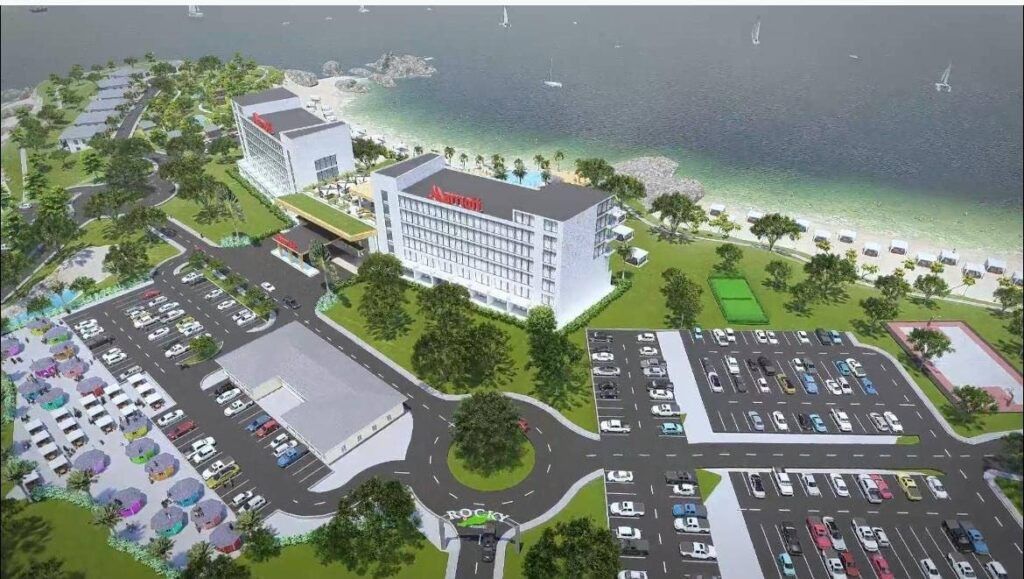
A red flag is now being raised after Superior Hotels Ltd was given the green light by the Environmental Management Authority (EMA) to build a 200-room hotel, complete with bungalows, villas, and private residences, in Tobago.
The sprawling development, comprising 11.99 hectares, is expected to cost $500 million.
Developers anticipate hundreds of jobs in the construction phase and a 3.5-star resort that would enhance the tourism product on the island.
However, Rocky Point Foundation founder Duane Kenny said he is disappointed that a Certificate of Environmental Clearance (CEC) was granted.
The foundation has been protesting certain specific aspects of the development for the last four years, to protect what it describes as an extremely sensitive environment.
In a media release on May 1, the EMA said its new board was committed to a more collaborative approach with stakeholders and was keen on “improving the ease of doing business while upholding rigorous environmental standards.”
However, in an interview with Guardian Media on Friday, Kenny argued the EMA standards are not stringent enough to protect an already fragile reef.
Kenny said, “Our concern is that what they have done in their environmental impact assessment (EIA) is not at the level we would have hoped. Although it did take a year, we feel that what they are going to do to alleviate those issues are not really good enough.”
He believes the 30m buffer, as the CEC outlines, between the coastline and the development works is inadequate.
“It is a much more sensitive area because of the reef literally being mere feet from the shoreline.
“We have to look at the steps, what can be done to either try and tell the developer you need to do these things to alleviate these issues, otherwise we worry the impact on the reef is gonna be significant along with the coastline.”
He argued that the natural runoff from the development would bring fertiliser, pool water with chlorine and other unnatural chemicals to the reef.
“A lot of these developments, the pool water goes onto the natural drains and will end up in the sea. All that chlorine is very dangerous to coral. That is a concern.”
In the EIA, the tests on seafloor sediments showed “total oil and grease and total petroleum hydrocarbons exceeding international guidelines in some instances.”
The tests on nearshore water quality also showed total suspended solids exceeded EMA ambient standards during the dry season.
Kenny added, “We already had high levels of toxins in the water just from Mt Irvine already, so if we add this on top of what already exists, then you gonna have an even greater impact.”
He urged the developers to treat the Rocky Point as an eco-tourism hub and not simply a resort.
He said the area is a very active turtle-nesting site with 60 per cent of the leatherback turtles choosing that site to lay their eggs.
In addition, he said it is a very popular location for divers and surfers.
“What makes that area unique, the most popular scuba diving spot is that wall off Back Bay/Mt Irvine. Then you have the Maverick, which is a wreck offshore that they dive on. You have one of the best beginner snorkelling reefs on that side, wrapping around towards Grange Bay.”
He added, “All of those things we worry if there is a significant impact to coral that could have a negative effect on the tourism of the area. All of these could be benefits to the developer if pushed in the correct way because you’re on site for all those amazing things.”
Kenny, who holds a degree in hospitality management, has worked at Disney in Orlando, Blue Waters Inn and Stone Haven Villas.
He said the foundation was not against the development.
“That location is one of the gems of Tobago, and we believe the type of development should be a very eco, green-focused type with low impact, maximum green space, minimum construction space. We understand it is a business thing, you have to make money, but we find that is way too much concrete for that site.
“It is an amazing green space!”
Asked to respond to the issues raised, Superior Hotels chairman John Aboud said: “Any further questions and concerns should be directed to the EMA.”
He said the developers have spent three years doing extensive studies and holding multiple public consultations.
“There should be no unanswered concerns,” he said.
He said Tobagonians stand to benefit considerably as “this project is a game changer.”
He added, “We are very excited to execute and deliver what was committed to. There should be no unanswered reasonable concerns by anyone who has the interest of Tobago first.”
Meanwhile, Rocky Point resident Edmund Lecointe, 85, said he does not believe Tobagonians would benefit significantly from the project.
“Right now, we can’t get people to work in Tobago. If you want a carpenter, a mason or an electrician, you can’t get people. They still have to bring in people from Trinidad, from outside. Local business is suffering here,” he said.
He claimed the Cepep programme in Tobago is controlling the majority of labour.
Lecointe said the infrastructure in the community needs to improve, as it is unsafe for pedestrians.
“From Grange coming up all the way to Pleasant Prospect, you don’t have a sidewalk.
“I’ve seen visitors come here and they frightened as hell because people driving very reckless here,” he said.
He said he has had to curb his morning walks because it has become too dangerous.
“There is no pavement to walk, it is all grass,” he said.
He said this should be prioritised before a hotel is built.
What the CEC says
The CEC addresses some of the concerns raised by the foundation, setting a 30m distance between development works and the high-water line to prevent encroachment of the beach. All major construction activities which may directly or indirectly affect coastal areas must be done outside of the turtle-nesting and hatching seasons. It also mentions that lighting must be shielded from the coastline during construction and be of low intensity/turtle-friendly spectrum.
Under the protection of the coral, the CEC notes that the holder must ensure no untreated or contaminated effluent is allowed to enter the nearshore marine environment. Major earthworks, as far as practical, must be scheduled in periods of minimal rainfall to prevent runoff. It also calls for earthworks to be halted during intense rainfall.
The stockpiling of excavated material, an area designated for refuelling and storage of hazardous material, must also be at least 30m from the high-water line.