
Seigonie Mohammed
Climate Change Editor
As Trinidad and Tobago heads into what some officials expect to be an active rainy and hurricane season, Minister of Rural Development and Local Government Khadijah Ameen has launched a month-long national preparedness campaign.
Speaking at the launch of National Disaster Preparedness and Prevention Month (NDPPM) 2026 on May 1, Ameen said the ministry’s “31 Days of Preparedness and Prevention” campaign comes at a critical time, warning that Trinidad and Tobago cannot afford to wait until the first storm warning to act.
The Minister framed the initiative against what she described as a “concerning” above-average seasonal forecast in the region. “This is not an abstract projection,” Ameen said. “It takes only one system, one hurricane, one storm to threaten our safety.”
Built around the theme M.A.Y., Mind the Signs, Anchor Your Homes, You’re Prepared, the campaign aims to move disaster readiness beyond public awareness and into direct action across communities.
Ameen said the ministry, working alongside the country’s 14 municipal corporations and other state agencies, will spend the month conducting shelter simulations, emergency drills, drain-clearing exercises and public outreach programmes.
“Preparedness must be proactive, not reactive,” she said.
One of the campaign’s major targets will come on May 30, when government teams will launch a nationwide registration drive aimed at signing up 200,000 citizens to the national Public Alert Notification System (PANS), allowing authorities to deliver emergency warnings directly to residents.
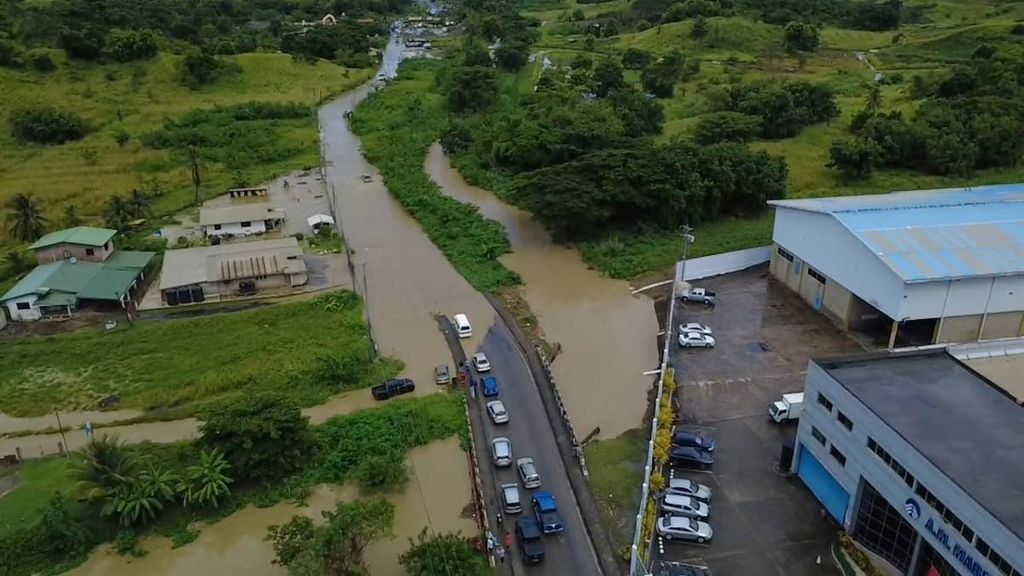
The minister also revealed that the Government has already mapped flood-prone communities across Trinidad using historical flooding data, identifying the Caroni River Basin and South Oropouche River Basin among the most vulnerable areas.
Communities from Port of Spain and the East-West Corridor to Rio Claro, Talparo, central and south Trinidad have all been identified for intervention.
While acknowledging that flooding cannot be eliminated, Ameen said early intervention and maintenance should significantly reduce its impact. “I’m not saying we will have zero flooding. I’m saying the flooding should be tremendously reduced.”
Ameen said one of the biggest challenges remains illegal dumping and poor development practices, with drain-clearing crews regularly finding discarded appliances, mattresses and other bulky waste blocking waterways.
She also pointed to unauthorised construction that has obstructed drains and natural watercourses, saying stronger enforcement by municipal corporations will be necessary to reduce long-term flood risk.
To strengthen the country’s response capacity, the Minister said more than 300 community emergency responders have already been trained nationwide, with volunteers equipped with boats, chainsaws and rescue equipment. Additional teams under the national programme for upkeep of public spaces are also being prepared for rapid deployment.
In one of the most significant upgrades ahead of the rainy season, the minister said government agencies, working with the Water and Sewerage Authority (WASA), have expanded flood monitoring beyond major rivers by installing instruments in tributaries, allowing earlier warnings before waterways overflow.
As the country braces for months of heavy rainfall and potential tropical systems, Ameen’s message was direct: “Preparedness cannot wait until the first alert.”
Related News

Police search for runaway driver in Penal fatal
Caricom backs Guyana; warns against using regional platforms to advance territorial claims

UN welcomes decision by Dominican Republic to reopen airspace with Haiti