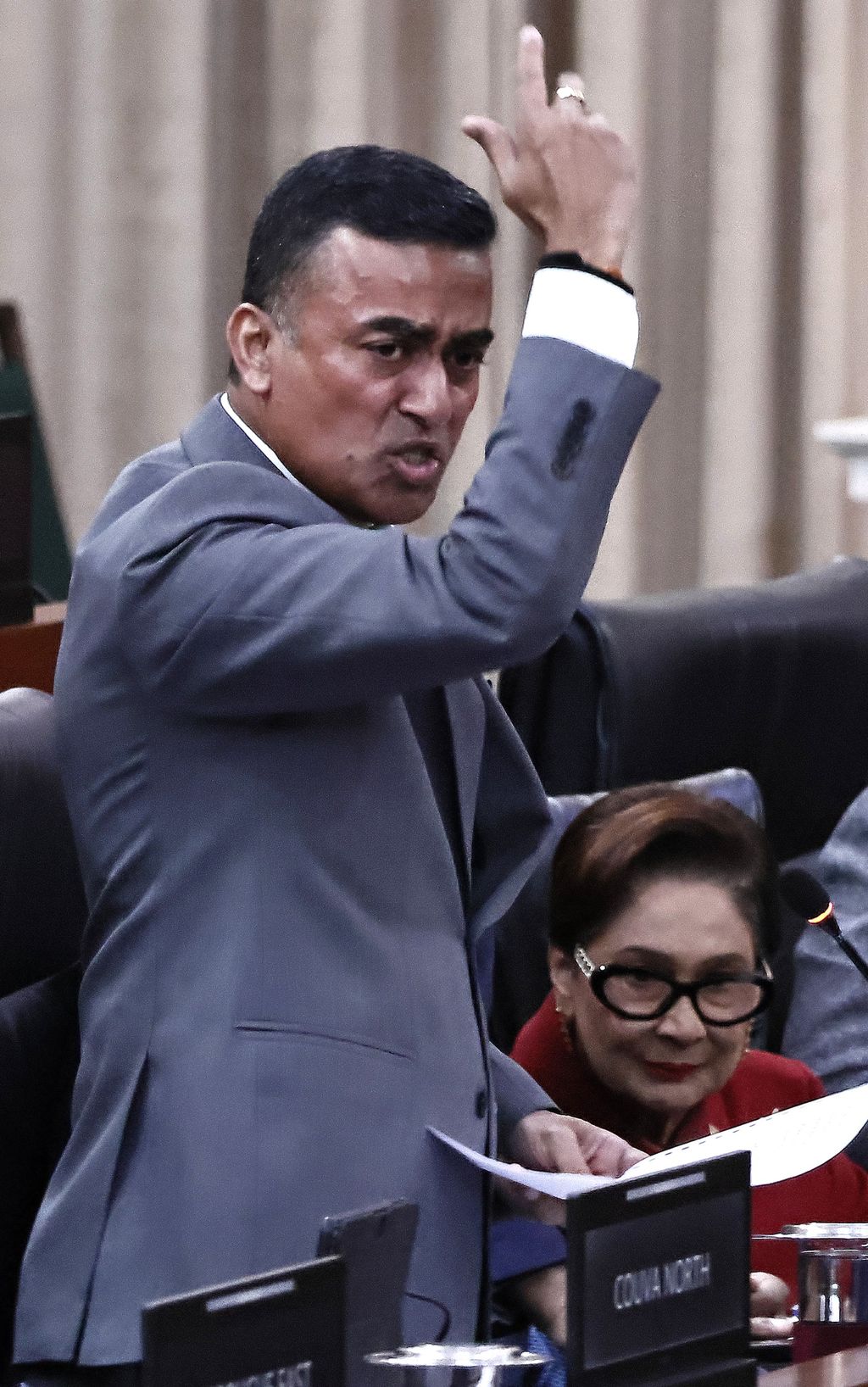
The National Joint Action Committee (NJAC) has condemned comments made by Laventille West MP Kareem Marcelle during a People’s National Movement (PNM) public meeting in his constituency last Thursday, describing the remarks as divisive and harmful to national unity.
In a statement, NJAC said Marcelle’s comments could only serve to sow division and discord between the country’s two major racial groups and perpetuate what it described as the colonial legacy of divide and rule.
The organisation said such rhetoric belonged to the politics of the 1950s and 1960s and had no place in Trinidad and Tobago’s modern political environment.
NJAC’s response follows remarks made by Marcelle at a PNM meeting at the Laventille Community Centre, where he accused the United National Congress (UNC) of being hostile towards Afro-Trinidadians and communities that have traditionally supported the PNM.
Speaking to supporters, Marcelle alleged that the governing party had disregarded African communities and PNM supporters.
“They hate African people, they hate black people, they hate people from Beetham, they hate people from Sea Lots, they hate people from Maloney, they hate people from La Horquetta, they hate people from Train Line, they hate people from Arima, they hate people from Carenage, they hate we,” he said.
Marcelle also compared references to PNM supporters on social media to a racial slur.
“Our former Prime Minister, the Honourable Stuart Young, just asked what is a PNM person to the UNC. Well, let me tell you, I ain’t afraid to say, whenever they say PNM people on social media, to me it’s the new ‘N’ word,” he said.
Addressing political divisions in Laventille West, Marcelle told supporters: “Laventille West, PNM people, they don’t like me and they will never like me.
“But I want them to know that we don’t like them and we will never like them.”
The comments sparked criticism on social media, prompting Marcelle to defend his remarks the following day as he arrived at the Red House for a sitting of Parliament.
Marcelle rejected claims that he had made anti-Indian statements and maintained that his comments were directed at the UNC and not any ethnic group.
In a statement posted on social media, he said anyone who listened to his speech would know that “at NO TIME did I ever say that ‘Indian people do not like us… we do not like them.’”
“Our political meeting was held in my constituency, Laventille West, last night. I spoke truthfully to my constituents,” Marcelle wrote.
He added: “This UNC Government, by their words and actions towards our communities, simply do not like us. And guess what? We do not like the UNC either. And I make no apologies for stating that fact.”
NJAC said that at a time when citizens were seeking solutions to pressing national issues, including crime, economic hardship and social inequality, resorting to tribally charged narratives was a regressive and dangerous course of action.
The group said political platforms should focus on presenting policies that uplift society and offer hope to citizens.
NJAC said it had spent decades advocating for national unity and the elimination of racial polarisation, maintaining that the country’s progress depended on harmony and mutual respect among all ethnic groups.
The organisation called on the political leader of the PNM to condemn the remarks and provide guidance to Marcelle.
It also urged political leaders and commentators to demonstrate greater maturity, social responsibility and decorum in their public statements.
“NJAC believes that our people deserve leadership that can build bridges, foster national unity and guide our nation to a more unified and equitable future,” the statement said.
Related News
Portugal and Austria defeat Germany for seats on the UN Security Council
Intruder at Brechin Castle Substation causes widespread power dip
TTPS to get $5m for rental vehicles to be used in covert SoE operations