
Senior Political Reporter
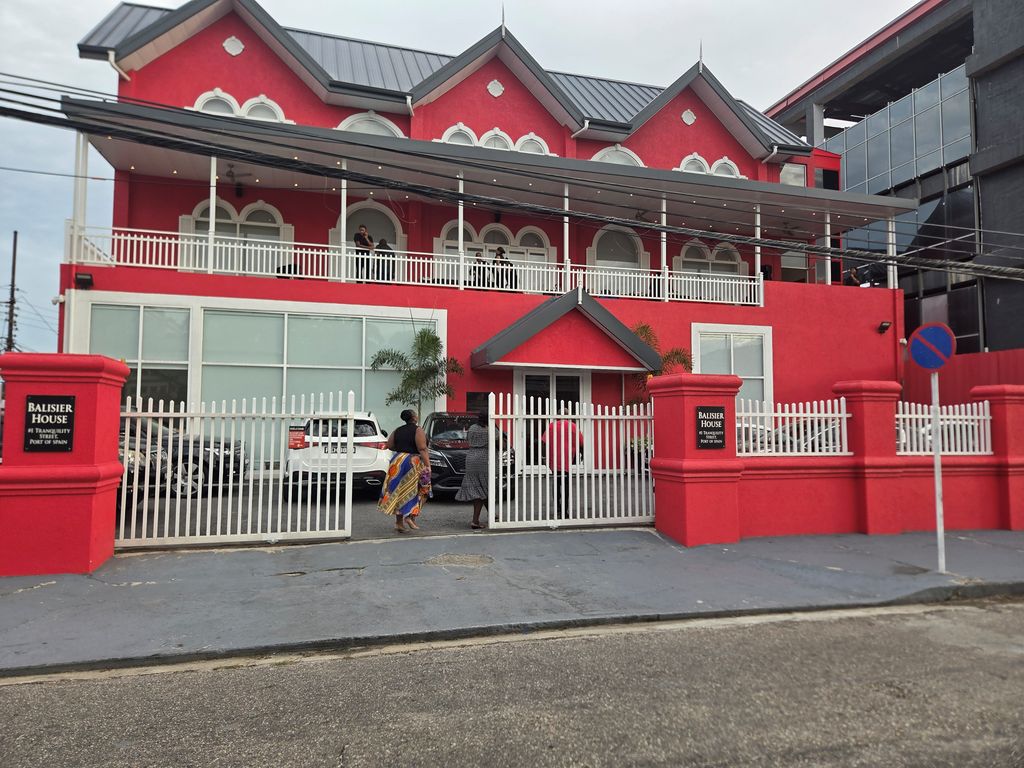
The Government’s handling of the matters involving Dominic and Genevieve Hadeed and Star Sabga has divided Trinidad and Tobago, and intensified the country’s polarisation, according to former United National Congress (UNC) minister Vasant Bharath.
Political analyst Dr Bishnu Ragoonath also believes the issue has become “very politicised,” with supporters of the People’s National Movement (PNM) and the UNC viewing it through sharply different lenses.
Both men shared their views yesterday on how the matter is affecting Trinidad and Tobago.
Bharath said, “This matter has become more than a legal issue as it’s divided Trinidad and Tobago into so many different pockets.
“It’s come down to how the Government intends to balance issues of national security versus civil liberties, how independence of the judiciary is perceived at the end of this process and ultimately how the Government is viewed in terms of people’s trust for them. Yes, there are UNC supporters, but that’s not enough to keep a country stable.”
He said the issue has magnified the level of polarisation in T&T.
“To an extent it’s almost deliberate by our politics: the more divided the population is, fighting on a matter, the more people forget about the real issues affecting T&T. It’s always been like that - Government have always found ways to make people forget the real problems.”
Bharath said UNC supporters believe the Government inherited a difficult situation, a view with which he agrees.
“But many of them feel ‘their government’ won’t come after them so they ignore the loss of civil liberties.
“The PNM feels this is racially motivated, as the Attorney General in Parliament spoke of the ‘one per cent’ implying the Syrian-Lebanese community in various ways. The PNM feels there’s vindictiveness, especially after no charges were brought against those incarcerated, views that this community didn’t support the UNC financially, that Dominic Hadeed braced the Government on tax rebates and Government revoked certain land matters.”
He said many people outside the traditional UNC and PNM support bases are instead asking whether there was credible evidence, whether emergency powers were used appropriately and whether the Judiciary is functioning as it should.
“Normal people are questioning decisions and whether the Judiciary is politically influenced or not,” Bharath said, noting that one Court of Appeal ruled the detainees should be freed while another later ruled they should remain in custody.
He said if the evidence ultimately substantiates the Government’s claims, some public confidence in the State could be restored. However, if those claims are not substantiated, people will believe there was executive overreach by the UNC Government and that it and law enforcement acted vindictively.
“It will determine investor confidence and further harm relationships with the business community and other minority groups who will start being fearful. One must also consider the international community’s take on the rule of law in T&T and predictability from a legal and economic standpoint. So this isn’t a small thing,” Bharath added.
Ragoonath: PNM sees jobs; UNC sees competition
Ragoonath said some PNM supporters may view the Syrian-Lebanese community primarily as employers.
“As far as they’re concerned, the Government going after them (Syrian-Lebanese community) is going to jeopardise their employment. I went to one of those Syrian-owned businesses in Port-of-Spain, and I was told: ‘Is only black people get employed here.’ So Government’s actions may be seen as undermining employment for PNM supporters.”
On the UNC side, Ragoonath said supporters may interpret the Government’s actions differently.
“On the UNC side, they may be looking at it as an attempt by Government to put a hold on the runaway Syrian ‘one per cent’ businesses, who, as far as they’re concerned, are creaming off the wealth of T&T’s economy; and they may be hoping Indian businesses will emerge after the suppression of the Syrian businesses.”
He added, “For example, ordinary people in the North are saying ‘let’s strengthen and start pushing Indian businesses...buy Oasis water not the Syrian water’. I haven’t spoken to the business community, however.”
Asked about the political impact on the Government, Ragoonath said, “I’m not sure the political ramifications are critical at this point in time because we’re too far away from election and whatever else. The Government will continue to do whatever it thinks it needs to do and the Opposition will continue to oppose.”
Related News

CPL to offer free health screening at all host venues
Guyana boat tragedy: Two confirmed dead as search and rescue operations continue
PM revives regional ferry talks; also touts local doctors