
akash.sama[email protected]
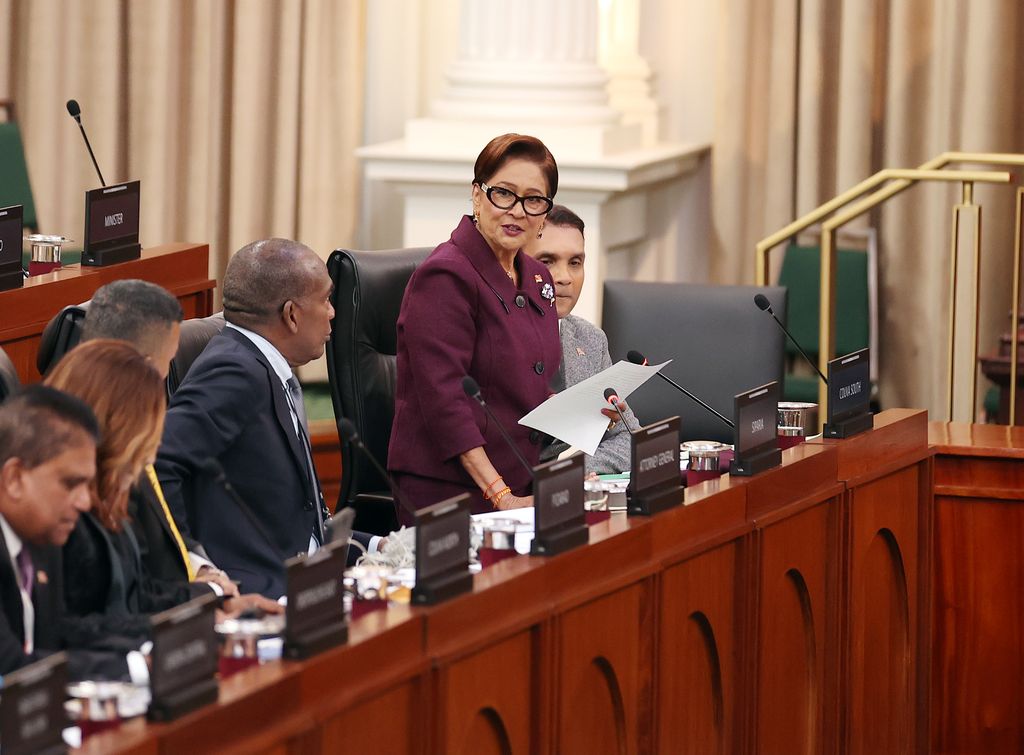
Although Prime Minister Kamla Persad-Bissessar told Parliament that officers operating in designated closed areas “must use” body-worn cameras, the Government’s newly introduced Special Operations Bill does not make their use mandatory in every circumstance.
The legislation, published online just hours after the Prime Minister’s statement yesterday, provides that a police officer or member of the Defence Force “shall, as far as is possible having regard to available resources, use a body-worn camera” while conducting special operations in a closed area.
That qualification means the requirement remains contingent on the availability of body cameras and other resources.
The provision mirrors wording contained in the Government’s previous Zones of Special Operations (ZOSO) Bill, which stated that members of the joint force were required to use body-worn cameras “as far as is possible having regard to available resources.”
The new bill, however, expands oversight of body-camera recordings by explicitly granting access to footage and related data to the Police Service Commission, Police Complaints Authority, police investigative bodies, the Director of Public Prosecutions and the Office of the Ombudsman.
Another significant addition is a sunset clause and power given to the President.
Clause 26 states that the Special Operations Act will remain in force for two years from the date of commencement, after which it will automatically expire unless Parliament enacts further legislation to extend or replace it.
No similar provision was included in the previous ZOSO Bill.
The revised legislation, which the Government says now requires only a simple majority to pass, also departs substantially from the framework of the earlier ZOSO proposal.
Unlike the previous bill, which expressly stated that it would operate notwithstanding sections 4 and 5 of the Constitution and therefore required a three-fifths special majority, the new legislation contains no comparable constitutional override. The earlier ZOSO Bill was ultimately defeated in the Senate after failing to secure the required special majority support.
Instead of creating Zones of Special Operations, the new bill divides Trinidad and Tobago into seven policing districts. Six districts comprise groupings of municipalities in Trinidad, while Tobago forms the seventh district.
Within those policing districts, specific locations may be designated as “closed areas” where enhanced security measures can be implemented.
Under the bill, the President may declare an area closed if satisfied on reasonable grounds that public safety and peace are threatened by escalating violent crime, including homicides, shootings, kidnappings, gang activity, illegal weapons or gang intimidation, and that ordinary law enforcement measures are insufficient to address the situation.
That is another notable departure from the former ZOSO legislation.
Under the previous bill, the Prime Minister had the authority to designate a geographical area as a Zone of Special Operations once certain conditions were met.
The new bill transfers that authority to the President, who may declare a closed area by order, subject to negative resolution of the House of Representatives.
Responsibility for imposing curfews within closed areas also rests with the President.
Once a closed area has been declared, the President may impose a curfew to facilitate a special operation, requiring residents to remain on their premises during specified hours unless exempted by the Order or authorised through a permit system.