
Lead Editor–Newsgathering
ryan.ba[email protected]
Four students of Northeastern College have publicly apologised for fighting on the very first day of the new academic year last week.
But despite the apology, the boys have been placed on extended suspension following the fight outside the school compound in Sangre Grande.
The students were initially suspended for seven days and instructed to attend the Sangre Grande Suspension Centre, where they would take part in a youth development programme focused on restorative practices, rehabilitation and conflict resolution.
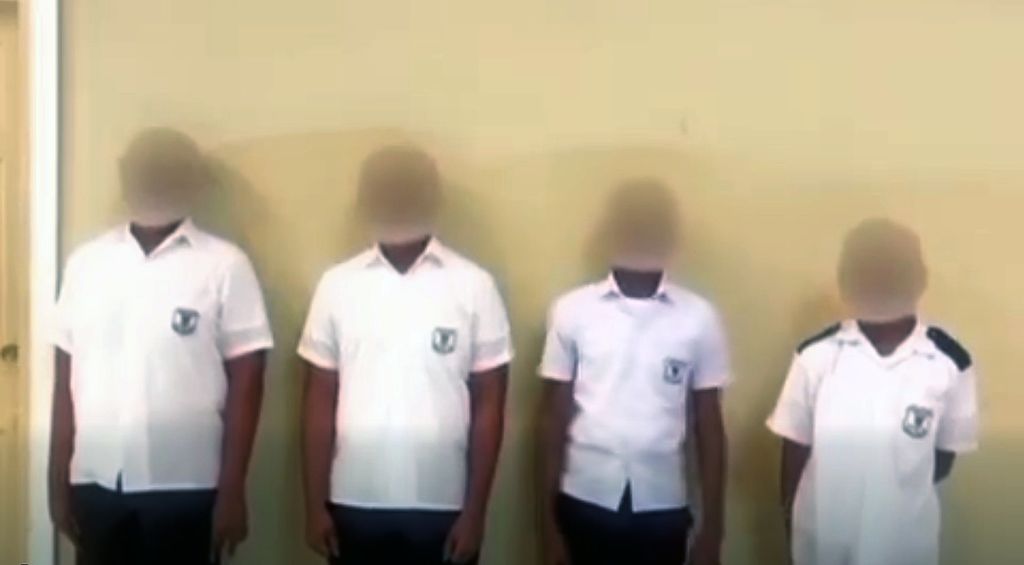
A video surfaced online yesterday showing four boys with their faces blurred, apologising for their behaviour. One said, “We came to the youth development programme to learn about our actions and our choices, and I just came to apologise for my actions and for embarrassing my school and my country.”
However, Education Minister Dr Michael Dowlath confirmed yesterday that following a thorough investigation, the students were placed on extended suspension and their suspensions had not been lifted.
“Following a thorough investigation into the physical altercation involving four students of Northeastern College on September 8, the students were placed on extended suspension. Their suspensions have therefore not been lifted,” Dowlath said.
He added, “The ministry is also aware of material circulating on social media in which students appear to be apologising. The creation and circulation of this material were not sanctioned by the Ministry of Education.
“Given that the matter involves minors, the ministry is reviewing the circumstances surrounding its production and publication and reminds all persons of the importance of protecting the privacy, dignity and welfare of students.”
Dowlath said the disciplinary matter continues to be addressed in accordance with the established procedures.
When asked what the next step in the process is, he directed Guardian Media to the National Schools Code of Conduct.
The ministry’s National Schools Code of Conduct outlines a range of possible consequences for student misconduct. These include student and parent conferences, intervention by Student Support Services, detention, in-school suspension, suspension of up to seven days and extended suspension. Other measures include mediation, community service, restitution, withholding of privileges, behavioural contracts and referral to law enforcement agencies where conduct may constitute a criminal offence.
The code also provides for an expulsion warning letter and, in severe or repeated cases, expulsion, subject to due process and consideration of the child’s best interests.
The ministry did not indicate what further disciplinary measures, if any, would be imposed on the four students.
TTUTA president Crystal Ashe said the union had no issue with the students being placed on extended suspension if the relevant authorities determined that it was necessary.
“TTUTA has no qualms with that. We are in support of that because if it is that you cannot behave in the space that you are provided with to get your education, and we know that the suspension of the students lies first of all with the principal, who has the authority to suspend them just for seven days,” Ashe said.
Ashe said the disciplinary action could also serve as a deterrent to other students who witnessed the incident.
“Other students will see and sort of be dissuaded, will not make the same mistakes and will not go down the same path,” he said.
However, he noted that suspension alone would not necessarily address the underlying issues affecting students, particularly those who may already be disengaged from school.