
Senior Reporter
shane.su[email protected]
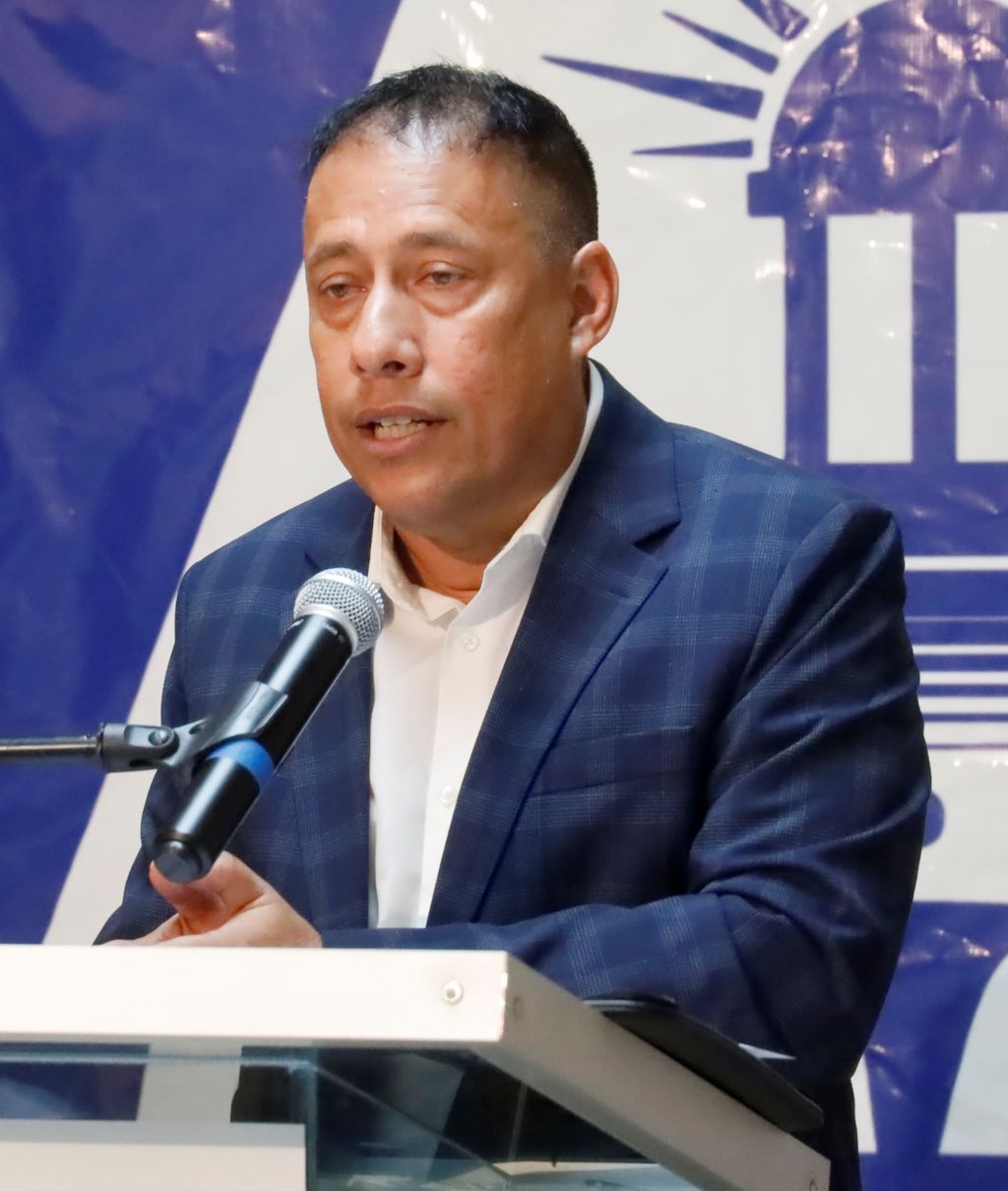
Former national security minister Gary Griffith has endorsed Government’s decision to classify Hamas, Iran’s Islamic Revolutionary Guard Corps (IRGC) and Lebanon’s Hezbollah as terrorist groups, saying it is a means of enabling the authorities to prevent financing to armed groups.
Responding to the decision during CNC3’s Morning Brew programme yesterday, Griffith referred to similar issues faced during his tenure as minister when terror group ISIS began a series of offensives in the Middle East.
Griffith noted that a United Nations framework policy targeting the group through sanctions and disrupting financing activities was accepted by the then government, noting that the latest decision was necessary to prevent terrorist groups from receiving funding.
“If this is not done, these terrorist groups... it happened with myself as minister with ISIS, it’s happening now with these three other terrorist organisations, they fund hundreds of millions of dollars, siphon it into different accounts into different arms that support them in different countries,” Griffith said.
“These organisations then use these funds to be able to train individuals and then try to get them to go across into the Middle East to become what is known as FTFs, they then bring them back into Trinidad and Tobago or whatever other country to spread that degree of terrorism.”
According to the Gazette, Justice Carol Gobin issued freezing orders on April 8 in relation to both Hezbollah and the IRGC. A separate order issued by Justice Jacqueline Wilson on April 9 listed Hamas as a declared entity.
The High Court orders directed that all property owned or controlled locally by the three organisations, whether wholly, jointly, directly or indirectly, must be immediately frozen. The measures also extend to assets that may be held through intermediaries or proxy arrangements.
Griffith said such proactive measures were necessary to prevent local groups from funding groups identified as terror groups, warning that diligent monitoring by financial groups would be key in enforcing and identifying suspicious transactions.
“That is why we have to be very careful... that is why the importance of the Financial Intelligence Unit, working with other financial intelligence agencies, to know that Hezbollah, ISIS or whoever, they are now putting funds into an organisation or an individual.”
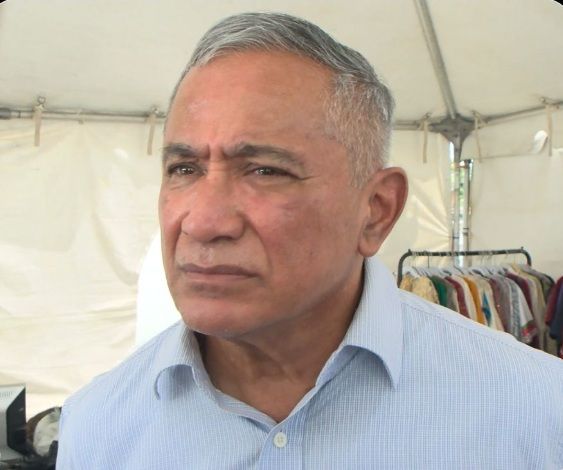
However, retired TT Coast Guard officer Norman Dindial is not convinced that the decision would better secure T&T.
In a video statement, Dindial, who worked as part of a United Nations (UN) selected team to combat terrorism and piracy in Mogadishu, Somalia, said there was no legal basis for the classifications, as he raised concerns over how T&T would be perceived internationally.
“Trinidad and Tobago has no legal obligation and no national security justification to designate Hamas, Hezbollah, or the IRGC as terrorist organisations. The UN Security Council has not done so. The ICJ has not done so. Unilateral sanctions based on foreign lists are legally dubious and politically risky,” Dindial said.
“The IRGC is a constituted army of a UN member state and cannot be reclassified as a terrorist group without violating core principles of international law.
“This policy does not make Trinidad and Tobago safer. It makes us a client state in other nations’ conflicts, and it places our legal and diplomatic standing at risk.”
Dindial said the Government’s decision to take such a stance could carry serious consequences, as it not only affects this country’s status of neutrality, but also places it at risk of facing legal redress.
He also questioned the reasoning for the designation, noting that the IRGC was founded as a legitimate state-sponsored arm of Iran’s armed forces, likening it to another government placing similar sanctions against our military.
“If foreign states can designate our army or protective services, the precedent endangers our own security institutions.”
Guardian Media sent questions to the Financial Intelligence Unit (FIU) on the issue via email but was told by an official at the office that the public affairs official was on sick leave. The questions were also forwarded via email to the Ministry of Finance’s corporate communications department, who acknowledged receipt but did not provide a response up to press time.
Questions to the strategic communications advisor of the Ministry of Defence on the issue also went unanswered up to press time.