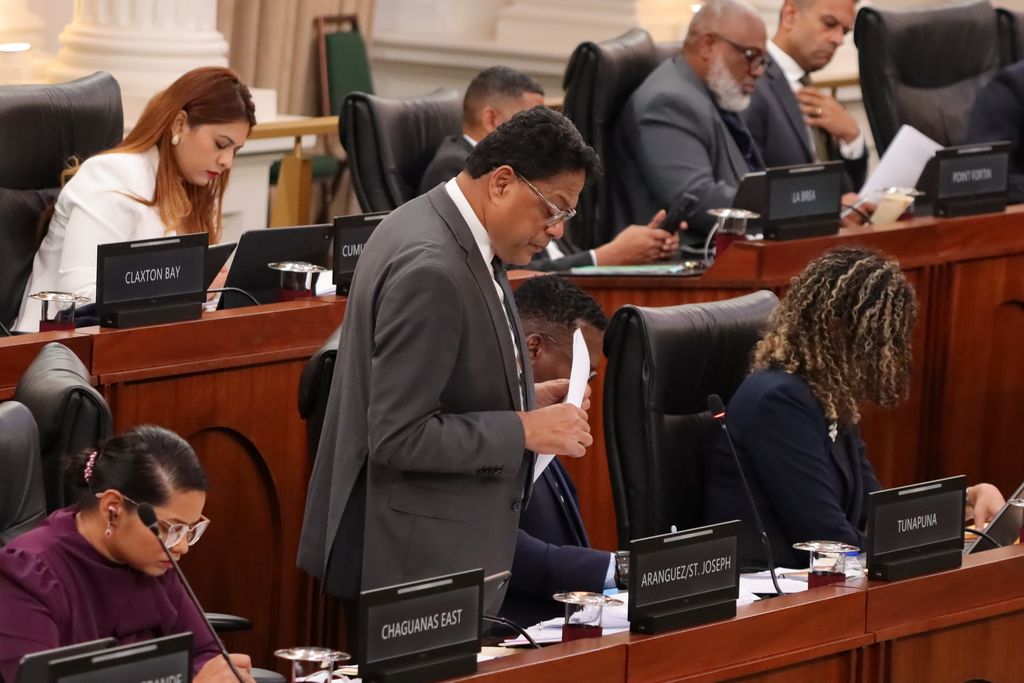

Justice Minister Devesh Maharaj has warned that Trinidad and Tobago’s prisons are “a sitting time bomb” as the Probation of Offenders Amendment Bill was passed unanimously in Parliament yesterday, introducing a hybrid system of jail time and probation amid severe overcrowding.
People’s National Movement (PNM) MP Keith Scotland said the Opposition would support the bill but proposed amendments, arguing that it affects people’s liberty.
Scotland also rejected Justice Minister Maharaj’s claim that the previous PNM government did nothing on probation systems, outlining the party’s various initiatives instead.
Speaking in Parliament yesterday, Maharaj said one of the key reasons for the legislation was the prison population of 3,456 inmates, stating it is “far past the capacity our prison system is supposed to have,” adding, “We’re sitting on a time bomb.”
Meanwhile, concerns over the wider prison system were also raised by the president of the Prison Officers’ Association (POA), Gerard Gordon, who warned that conditions inside the nation’s prisons continue to deteriorate due to severe shortages of equipment and resources.
Speaking on CNC3’s Morning Brew programme yesterday, Gordon said prison officers continued to contend with a difficult working environment as basic tools and resources remain unavailable for many officers.
When asked if there has been any relief for officers in recent times, Gordon said the problems of past administrations have continued.
“The prison service has collapsed; the only thing holding the prison service together with any semblance of order is the fact that prison officers continue to come to work, but when you look at the number of issues we face... simple things, no uniform, no tools, equipment failing, gates malfunctioning, panels malfunctioning, no HVAC or air conditioning in places that have no ventilation, a lack of water at a number of facilities, a lack of vehicles... the list goes on and on.
“I’m not speaking to any particular person, but those people who now have the responsibility to oversee and provide the resources to the prison service, I don’t think they have an understanding of what these needs are... not luxury items, and certainly we have not been seeing that kind of support from the Central Government for quite some time.”
When asked if the relocation of high-profile prisoners, which includes several reputed gang leaders, from the prisons to Teteron Barracks, has led to better security at the prisons, Gordon said the dangers persisted.
“I won’t say more or less as it relates to those specific individuals, what I would say is we continue to grapple with the challenges of having officers operate in a safe and secure working environment and then managing their safety when they leave the prison at the end of duty.
“There is no communication to us that enough has been done or enough is being done to mitigate how a prison officer feels... There is no prison officer you will speak to will tell you they feel completely safe.”
Gordon argued that basic resources were needed for officers to discharge their duties, noting that while these were long-standing issues, there was a need for them to be addressed sooner rather than later.