Caricom backs Guyana; warns against using regional platforms to advance territorial claims
 29 April 2026

Lead Editor-Politics
akash.sama[email protected]
Caricom has warned that its platforms must not be used to advance territorial claims, even as it reaffirmed strong support for Guyana’s sovereignty following concerns raised by President Dr Mohamed Irfaan Ali over recent actions from Venezuela.
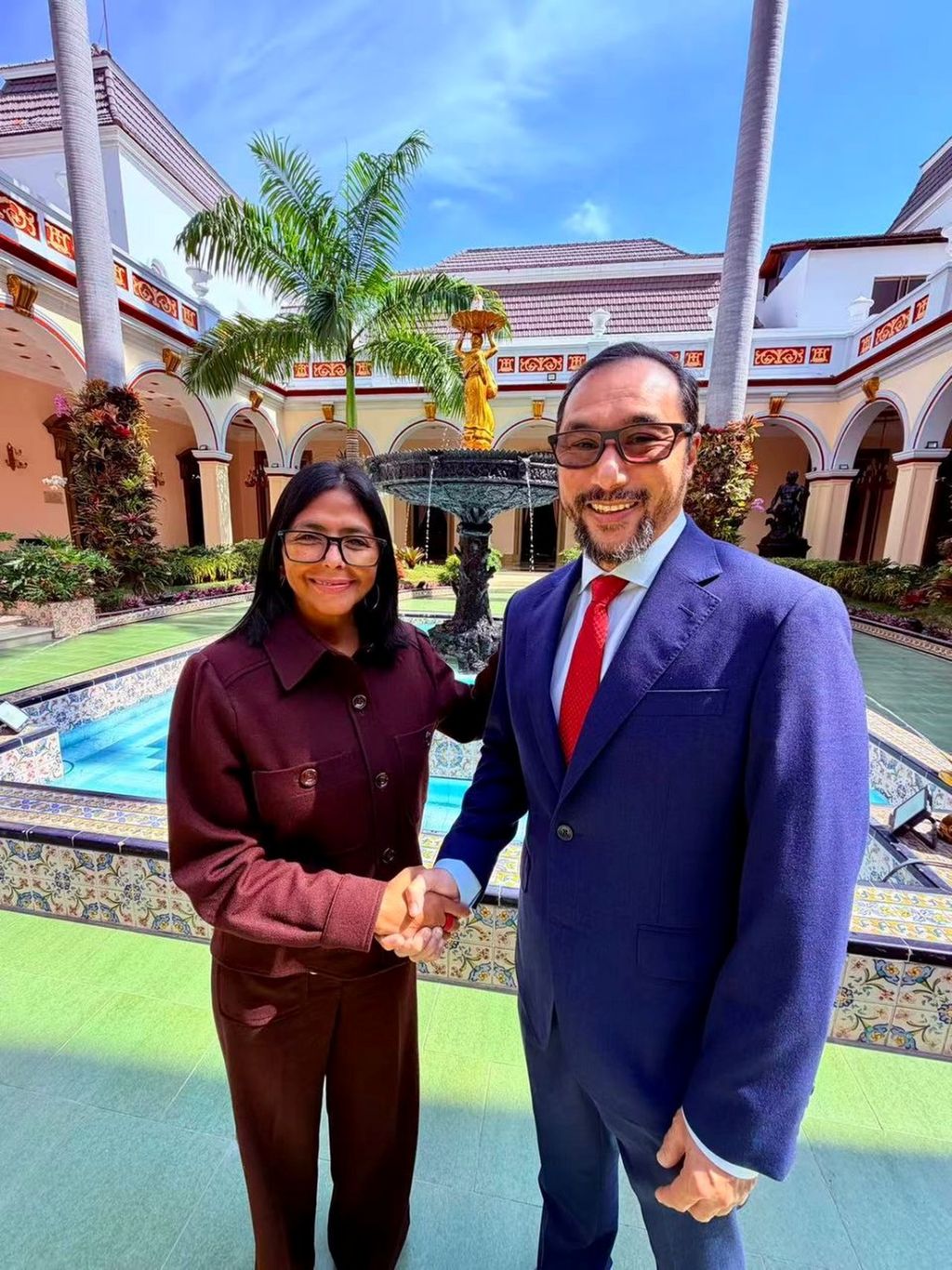
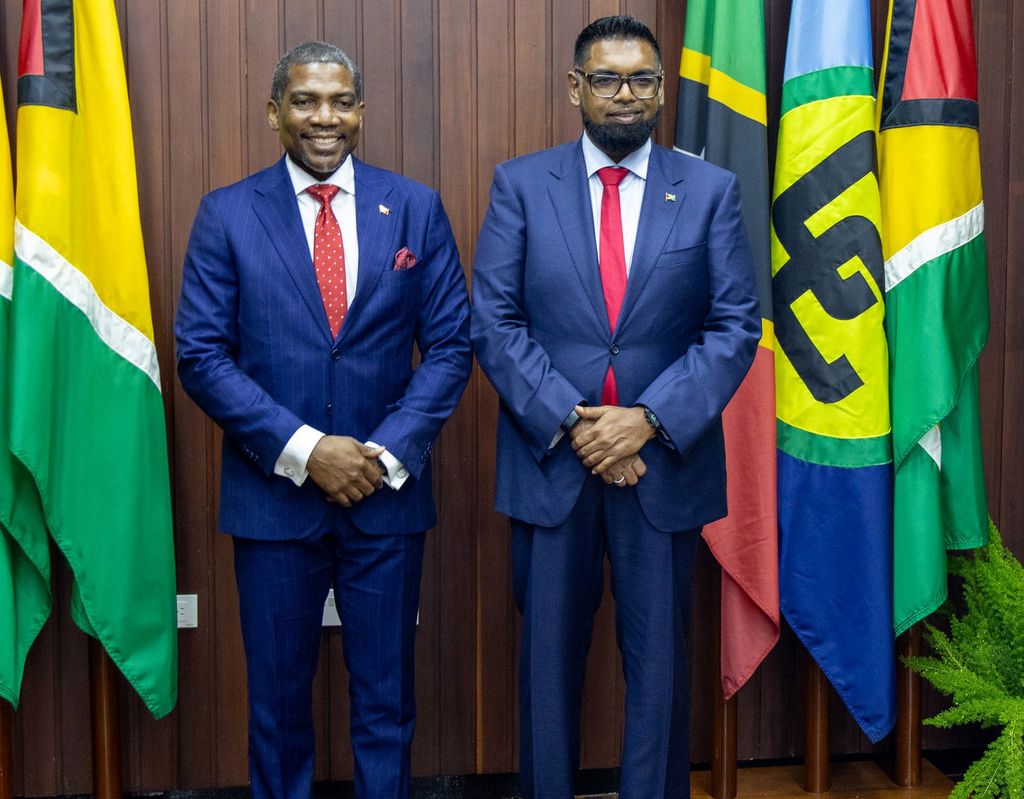
The response comes after President Ali wrote to Caricom chairman and St Kitts and Nevis Prime Minister Dr Terrance Drew, raising alarm over what he described as a “provocative” display by Venezuela’s acting President Delcy Rodríguez during recent visits to regional states.
In his letter, Ali objected to the use of imagery depicting Guyana’s Essequibo region as part of Venezuela during official engagements, warning that such actions risk undermining regional unity.
“I note with grave concern the public display of a map purporting to incorporate Guyana’s Essequibo region as part of Venezuela,” Ali wrote.
The “map” he’s referring to is a brooch worn by Rodriguez on her outfits.
He stressed that while Guyana respects the sovereign right of Caricom countries to engage Venezuela diplomatically, it is “deeply regrettable” that those engagements have been accompanied by symbols asserting Venezuela’s territorial claim.
“The use of Caricom engagements to project or promote a territorial claim risks being interpreted as acquiescence or tolerance,” Ali said.
The Essequibo region is a resource-rich territory comprising two-thirds of Guyana. Venezuela has consistently laid claim to the territory, while Guyana maintains legal ownership and is seeking a final judgment from the International Court of Justice. Tensions have spiked recently following major offshore oil discoveries, escalating the standoff over sovereignty and maritime rights.
In a statement responding to Ali’s April 28 letter, Caricom said it had taken note of “recent official engagements” within the region where material asserting Venezuela’s claim to Guyana’s Essequibo region was displayed.
While underscoring that each member state retains the sovereign right to conduct bilateral relations, the regional bloc stressed that those engagements must remain consistent with shared obligations under the Revised Treaty of Chaguaramas.
“At the centre of those commitments stands the Revised Treaty, which commits members to the preservation of the community’s integrity and cohesion in their external relations,” Caricom said via a media release.
The regional body added that in exercising their sovereign rights, member states must remain mindful of their responsibilities to uphold international law, respect judicial processes, and maintain good neighbourly relations.
Significantly, Caricom cautioned that its forums must not be used to legitimise claims currently before the International Court of Justice.
It reaffirmed its “longstanding and unequivocal support” for Guyana’s territorial integrity and for a peaceful resolution of the dispute through the Court, adding that this position “remains firm and unchanged.”
Meanwhile, Barbados Prime Minister Mia Mottley who did not directly address the correspondence from Caricom or the Guyanese President Dr Irfaan Ali, issued a statement on X yesterday evening after the letters became public.
Sharing a video of her meeting with Delcy Rodríguez, Mottley wrote: “Barbados and Venezuela are bound by more than geography. We are bound by the urgent need to work together for our people. We must not let history or language prevent us from finding the best possible cooperation for our two countries and our two peoples.”
Related News
Court injunction halts jet ski activity in Buccoo Reef and Pigeon Point
CoP concerned about PDOs issued to teens; promises more school-level intervention
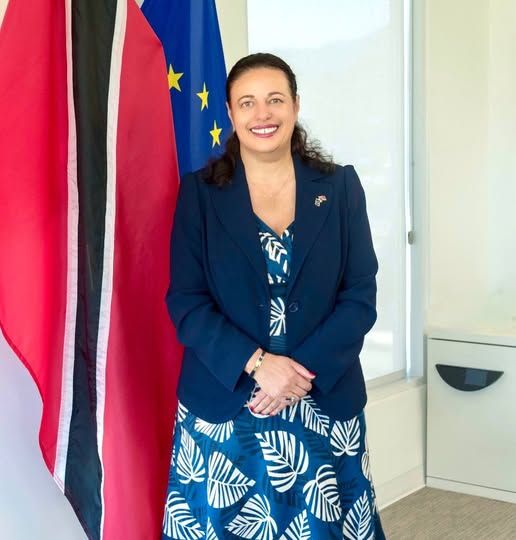
EU diplomat suggests 'confidential dialogue' can resolve Caricom disputes