
Lead Editor-Politics
akash.sama[email protected]
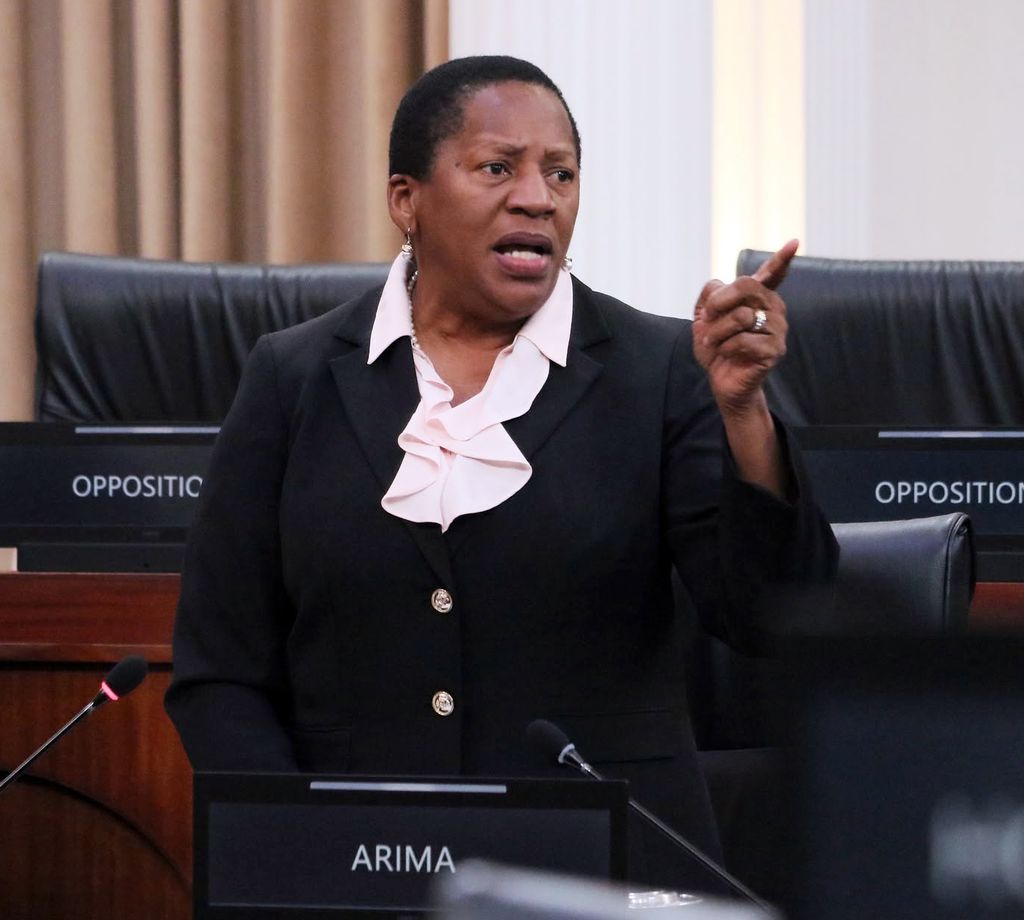
Opposition Leader Pennelope Beckles says the People’s National Movement (PNM) remains willing to work with Government in the fight against crime, but warned that cooperation should not be mistaken for unconditional support, as she criticised the administration’s request for a further three-month extension of the State of Emergency (SoE).
Contributing to Wednesday’s parliamentary debate on the extension motion, Beckles said crime affects all citizens regardless of political affiliation and requires a united national response. However, she maintained that Government had failed to provide sufficient evidence that the continued use of emergency powers was the answer.
“I have said it before and I will say it again, that the Opposition is willing to work with the Government,” Beckles told the House.
“But guess what? I never hear the Government say they’re willing to work with the Opposition.”
She added, “Don’t feel that you could imply any threat to suggest to me that because anything you bring, I support it. That is not what it means.”
Beckles said there was broad agreement that crime remained one of the country’s most pressing challenges, and insisted no responsible parliamentarian could deny the seriousness of the issue.
“No right-thinking member of parliament sitting here today would say that there isn’t a concern about crime. We all know that that is a genuine concern,” she said.
Beckles argued that criminals do not discriminate based on politics and urged leaders to avoid turning crime into a partisan issue.
“Bullets do not ask whether a victim supports the UNC or whether a victim supports the PNM. Criminals do not check constituency boundaries before they strike,” she said.
She pointed to communities across the country that have been affected by violent crime, saying the scourge extends beyond traditional crime hotspots.
“Whether it’s Erin, whether it’s Moruga, whether it’s Penal, whether it’s Morvant, whether it’s Chaguanas, whether it’s Laventille, crime has been all over Trinidad and Tobago. And we have a responsibility as members of parliament to work together to deal with that scourge of crime,” Beckles said.
Despite that willingness to collaborate, Beckles said the Opposition could not support the extension because Government had not presented a clear crime-fighting strategy or measurable objectives.
She questioned repeated claims by ministers that crime was declining and called for greater transparency regarding the administration’s plans.
“The Government neither has a crime plan, an anti-crime plan, or a strategy to deal with crime,” she said.
According to Beckles, simply citing reductions in murders and serious crimes was not enough.
“If it is you have a proper implementation strategy, you must be able to tell the public what is your target. Tell us what is your target. You are going to reduce serious crimes by X. You’re going to reduce whatever it is you’re going to do by X,” she said.
She also challenged statements from Government ministers regarding arrests and charges during the SoE, saying more detailed information was needed to properly assess whether the emergency measures were achieving their intended objectives.
Beckles further accused Government of relying excessively on emergency powers and restrictions rather than addressing the root causes of criminal activity.
Referring to regulations limiting protests near key state institutions, Beckles argued that the administration appeared increasingly intolerant of dissent.
“This Government is afraid of everybody,” she said, accusing officials of using regulations and legislation to intimidate citizens and discourage criticism.
Beckles also took aim at Attorney General John Jeremie over remarks he made earlier in the debate concerning alleged criminal elements and references to the so-called “one per cent.”
She challenged the AG to take any evidence of wrongdoing to law enforcement authorities rather than making allegations under parliamentary privilege.
“If you have any evidence against me, take it to the police,” she said.
“Don’t only come and use parliamentary privilege to make all kinds of accusations when you know you have no evidence.”
Beckles said the Opposition’s objection to the extension was not rooted in a refusal to confront crime but in Government’s failure to justify why additional emergency powers were necessary.
“We have a difficulty in supporting this extension because we have a firm view that the Government has not provided us with the information, the evidence, and they have not convinced us that this is going to deal with the issue of crime,” she said.
“We are asking the Government to please, at some point in time, say to the people of Trinidad and Tobago, what is your plan to deal with crime? What is your strategy to deal with crime?”
Related News

Portugal and Austria defeat Germany for seats on the UN Security Council
Alexander admits cops facing a ‘hard time’ but urges them to ‘keep the fight’

Govt bringing law to regulate children’s social media usage