
Senior Reporter
shane.su[email protected]
Former National Security ministers Marvin Gonzales and Gary Griffith say concerns over the veracity of information that formed the basis for the detention of businessman Dominic Hadeed and his wife Genevieve for the past 22 days persist, even as the couple remained in custody after the State got a late-night stay on an earlier ruling ordering their release from incarceration to house arrest by the Appeal Court.
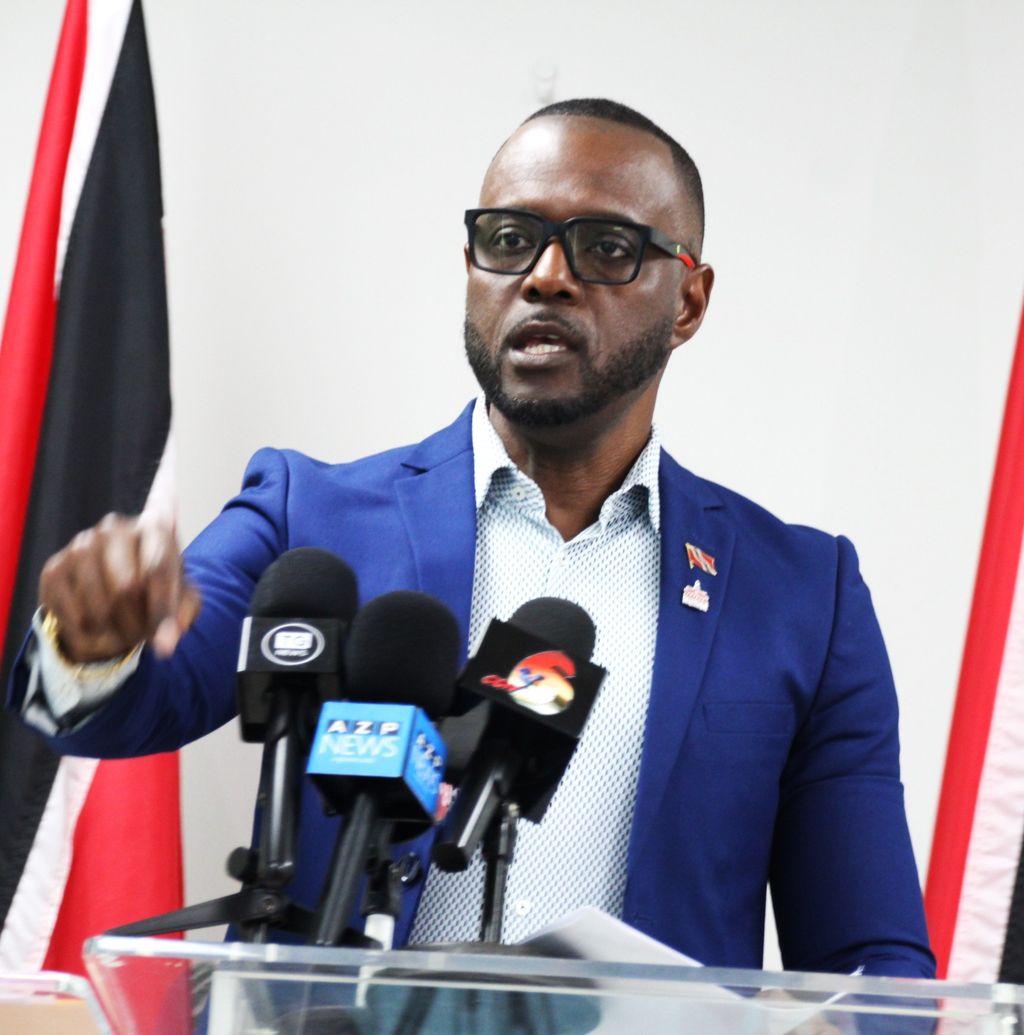
Speaking with Guardian Media hours before the late-night stay was granted, Gonzales, who is also People’s National Movement (PNM) chairman and was a National Security Council (NSC) member under the previous government, said the release of the Hadeeds reinforced concerns raised by the Opposition over the Government’s use of Preventive Detention Orders (PDOs) to detain people. He again accused Government of weaponising the ongoing State of Emergency (SoE) to bypass due process.
“We have heard nothing from the police as to what is the status of the investigation on these very serious allegations against the Hadeeds. The mere fact that they have been placed on a PDO for the past couple of weeks suggests that the State does not have any evidence to proffer charges against the Hadeeds and that to me is very serious, because it says to me that the State is prepared to use emergency powers vis-a-vis the issuance of Preventive Detention Orders, to incarcerate people who do not have and whom they (the authorities) do not have evidence to support any criminal charges against them.”
He added, “Again, it confirms the reason why so many people and citizens who have been placed on PDOs have been released without the police proffering charges against them.”
Referring to the claims made against the Hadeeds and their involvement in a purported plot to assassinate the Prime Minister and high-ranking Government officials, Gonzales stressed that such accusations should not be treated lightly and ought to be supported by sufficient evidence.
Also contacted for comment, Griffith, who is a former police commissioner, was cautious to avoid commentary on the incident, as it was still before the courts. However, he said the Hadeeds’ release was an example of a weakness in the intelligence-gathering abilities of the authorities.
Griffith took issue with the current system whereby the Minister of Homeland Security Roger Alexander has the sole authority to issue PDOs, noting that such serious decision-making should rest with the TTPS to prevent abuse by politicians.
“That shows there is a problem, there is something falling short in intelligence-gathering in the country. If something is so serious that you can’t accumulate enough intelligence to turn it into evidence and you can’t charge someone, you now turn it into a PDO.
“It cannot be a minister who has the sole authority to have a PDO; it must have a trigger solely from the Commissioner of Police, it cannot be an unnamed intelligence agency, reason being is because the SSA, for instance, ... the person there is appointed there by politicians and they can send a document that is hearsay.”
Griffith was also critical of the manner in which intelligence was gathered, as he accused the authorities of underutilising the National Operations Centre (NOC).
“Until we utilise the NOC in a proper manner, not the way it’s being used now, which is as a call centre and a dispatch centre, we will continue to have problems.”
Meanwhile, retired Lt Cmdr and National Transformation Alliance (NTA) leader Norman Dindial agreed the Hadeeds’ release did not give reassurance that the Government was using the SoE responsibly.
Referring to the significance of the accusations being made against them, Dindial asked, “What changed? The threat didn’t disappear overnight ... what changed was the public pressure and the legal weaknesses in your case.
“Who gave the order? Because PDOs are a political signature and this now looks like a political witch hunt dressed up as national security. You can’t use Emergency Powers to suppress speech, to punish critics or to send a message, that is not policing, that is intimidation.”
Guardian Media attempted to contact Homeland Security Minister Roger Alexander for comment but was unsuccessful up to press time.
Efforts to contact Attorney General John Jeremie via phone call and WhatsApp were also unsuccessful.