
Senior Reporter
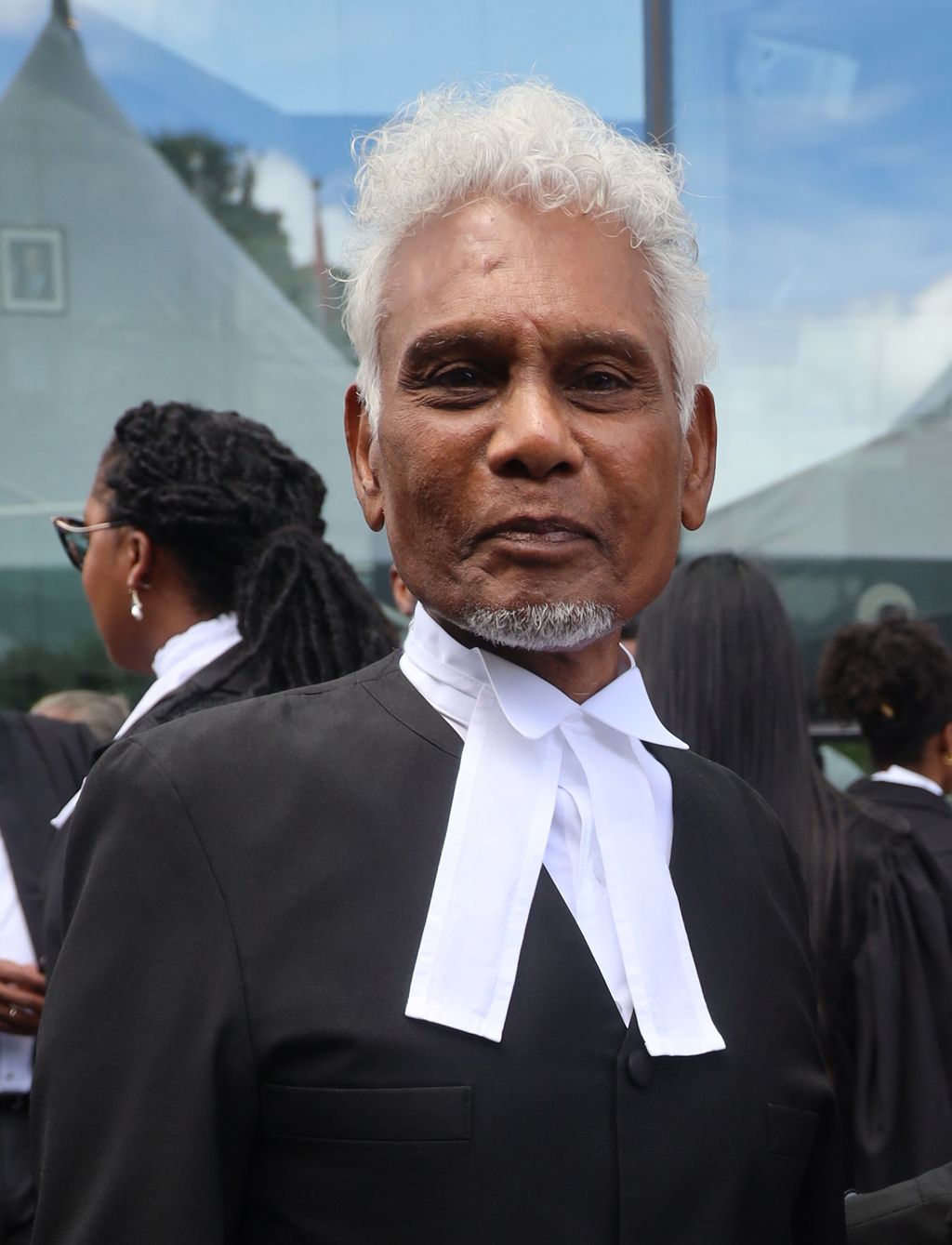
Criminal Bar Association president Israel Khan, SC, says the decision to release Dominic and Genevieve Hadeed from prison and place them under house arrest has only underscored the socio-economic inequalities that exist in this country.
The Hadeeds were arrested on June 24 and spent 22 days in custody before being ordered released from prison yesterday and placed under house arrest by the Appeal Court. However, the State last night secured a stay of that decision from another Appeal Court panel of judges, pending a challenge of the earlier decision to the Privy Council.
Responding shortly after the initial virtual decision was handed down by Justices of Appeal Peter Rajkumar, Mira Dean-Armorer and Joan Charles in the Port-of-Spain High Court yesterday, Khan said, “This could signal to the country that there’s one law for the impoverished and another law for the rich, and I hope not.”
Despite this, he added, “I have confidence in the Judiciary and that due process has taken place.”
The Hadeeds had been detained under Preventive Detention Orders under the ongoing State of Emergency and incarcerated at the Maximum Security Prison and the Women’s Prison in Arouca, respectively.
Told that the couple’s release was subject to conditionalities restricting their liberty and freedom of movement, Khan agreed the authorities “could really monitor them.”
However, he questioned, “What about other persons who are in a similar position? Would they be treated equally? I do not know.”
He added, “I have confidence in the Judiciary, but I hope it does not signal to the misguided that there’s one law for the rich and one for the poor.”
Saying the decision had set a precedent, he said, “Let’s hope everything works out to the best because they have not been charged at the same time.”
Khan also urged people to be cautious about speculating further on the case.
“We do not know the evidence, whether it is cogent and compelling against them, or whether the police could carry out their investigations while having them, virtually, under house arrest.”
Pressed on the alleged credible intelligence that had been relied upon by the T&T Police Service (TTPS) to initially arrest the couple on charges of conspiracy to murder the Prime Minister and other Government members, Khan said, “The public cannot look at that.”
He said what the public ought to be concerned with was the intelligence and evidence the TTPS had in their possession.
“We do not know the quality of the evidence, or the cogency of the evidence and the information, but they do not need strong evidence. They need prima facie evidence, which could be true or false, to investigate,” he explained.
“What the public have to look at is if there’s other people in similar situations with 22 days (in custody) and no charges, and they do not know the quality of the evidence, whether they will get a similar consideration.
“But in the final analysis, I have confidence in the Judiciary. They might have done the right thing and that will cause the Commissioner of Police and those who are investigating to speed up their investigation.”
Also contacted yesterday, attorney Criston Williams praised the judicial ruling, which he hailed as “great.”
And just like Khan, he too questioned what it meant for other people in SoE detention who do not possess the same wealth as the Hadeeds.
Acknowledging that it would have taken considerable financial resources for the Hadeeds to pursue the matter, he said, “It highlights fundamentally the plight of the other 99 per cent of persons who are still currently detained under PDOs.”
Williams said the ruling had brought into sharp focus just how intelligence had been juxtaposed against national security concerns.
“And I do not think there’s one report that any politician could stand on, that they have justified the use of national intelligence, both across the UNC and or the PNM, especially with regards to the operations of the SSA.”
Like Khan, Williams was also concerned about other PDO cases.
“This definitely opens the floodgates. This definitely opens the financial purse of the State, which is up to every single person that has been detained by way of a PDO. And the intelligence just may not be accurate. It is a very concerning position.”
Calling on several office holders, including Attorney General John Jeremie, Justice Minister Devesh Maharaj, Homeland Security Minister Roger Alexander and Police Commissioner Allister Guevarro, to shut down these “floodgate arguments,” Williams demanded they investigate the use of intelligence immediately.
Stating that the police usually relied on strong intelligence to make their cases, he said, “Too many people have died. Too many people have suffered. And too many people are suffering with wanton disregard for the damage it causes by speculative media assertions, speculative statements under the cover of Parliament. It just simply is wrong and it must stop.”