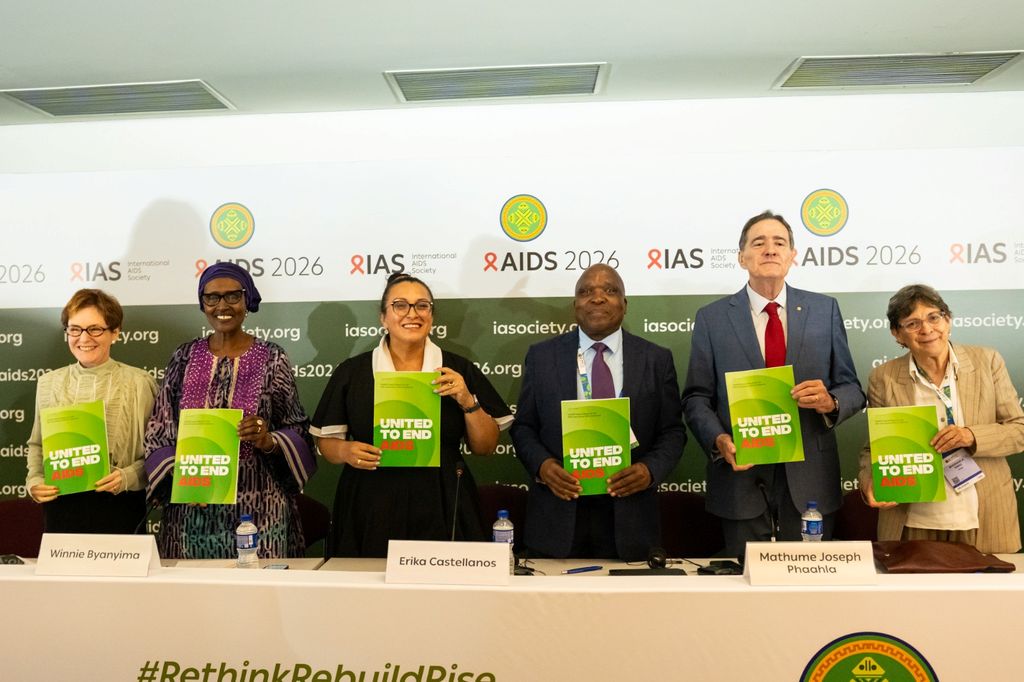

A special report presented by UNAIDS on the occasion of the 26th International AIDS Conference, held in Rio de Janeiro, Brazil, from 27 to 31 July, reveals that reductions in international funding and cuts to HIV prevention services and community-led services could cause a resurgence of the epidemic.
In Latin America and the Caribbean, the epidemic presents contrasting realities. The number of people who acquired HIV fell by 30% and AIDS-related deaths declined by 65% between 2010 and 2025 in the Caribbean. Seven countries recorded reductions in new HIV infections. By contrast, in Latin America, new HIV infections rose by 25% during the same period.
"Given the current funding realities, Governments must move with alacrity to translate political commitments to increase domestic funding for HIV prevention programmes and community-led initiatives that can help in reducing the number of new infections. The progress in reducing AIDS-related deaths and eliminating mother-to-child transmission of HIV, in several countries, show us what is possible in the Caribbean when political commitment turns into action," said Luisa Cabal, UNAIDS Regional Director for Latin America and the Caribbean.
In the Caribbean, new HIV infections declined by 31% among men and 28% among women since 2010- including a 38% and 39% decline respectively among young people aged 15–24- but the pace remains too slow to meet regional targets. In Latin America, three out of every four new HIV infections occur among men. Among young people the picture is divided: new HIV infections fell by 12% among young women but rose by 16% among young men. AIDS-related deaths show a gender gap as well, with a 46% reduction among men compared to 23% among women between 2010 and 2025. Whether or not a gender gap exists, the trend is a clear signal of the need to accelerate combination HIV prevention efforts, expand access to options such as PrEP, strengthen timely diagnosis, improve linkage to care, and ensure sustained access to antiretroviral treatment for men, women, and young people across the region.
"Despite the innovations announced as essential prevention tools to accelerate the response, most countries in the region have been excluded from the voluntary licences that would enable greater access for the people who need them. This is simply an injustice, and it is unacceptable," Cabal stated.
International funding for HIV fell by more than US$1.5 billion, from US$8.8 billion in 2024 to US$7.3 billion in 2025, an 18% reduction and the lowest level in nearly two decades, following a 23% drop in official development assistance globally. In Latin America and the Caribbean, where several countries are in transition and will stop receiving support from external donors, it is essential to ensure that this transition is effective and puts people at the centre.
"With the disruptions to the global health architecture, it is important to focus the HIV response on five key actions to translate political commitment into concrete measures: domestic funding to sustain the response, equitable access to prevention innovations, supporting community leadership, closing treatment gaps, including addressing the high rates of advanced HIV, and combating HIV-related stigma and discrimination," Cabal said.
In June 2026, the Caribbean was among the 149 United Nations Member States in the General Assembly that committed to the roadmap to 2030: the Global AIDS Strategy 2026-2031 and resoundingly adopted a Political Declaration on HIV and AIDS.
The Political Declaration includes targets such as reaching 40 million people on treatment and 20 million people with access to antiretroviral-based prevention by 2030. The targets also include that fewer than 10% of people living with or at risk of HIV experience stigma and discrimination, that fewer than 10% of women and girls and of people living with or at risk of HIV experience gender inequality and violence, and that fewer than 10% of countries have punitive legal and policy environments that deny or limit access to HIV services. If fully met, the commitments would prevent an additional 3.2 million new HIV infections and 1.3 million AIDS-related deaths by 2030.
The new UNAIDS report show that the region's efforts must be renewed to reach the ambitious targets of the Political Declaration.