
Trinidad and Tobago is emerging as the Caribbean’s anchor for green fuel bunkering, according to a landmark regional study unveiled at the 24th Caribbean Shipping Executives’ Conference (CSEC) in Willemstad, Curaçao.
The study, commissioned by the Caribbean Shipping Association (CSA) and funded by the Inter-American Development Bank (IDB), identifies Trinidad’s established methanol, LNG and ammonia industries as the foundation for supplying cleaner fuels across the region.
The Caribbean Shore Power and Green Fuel Bunkering Study, conducted by Kenesjay Green Limited (KGL), sets out a phased roadmap for maritime decarbonisation tailored to Caribbean realities. Rather than waiting for regulatory mandates, the study emphasizes that commercial demand will drive early adoption of clean energy solutions in regional ports.
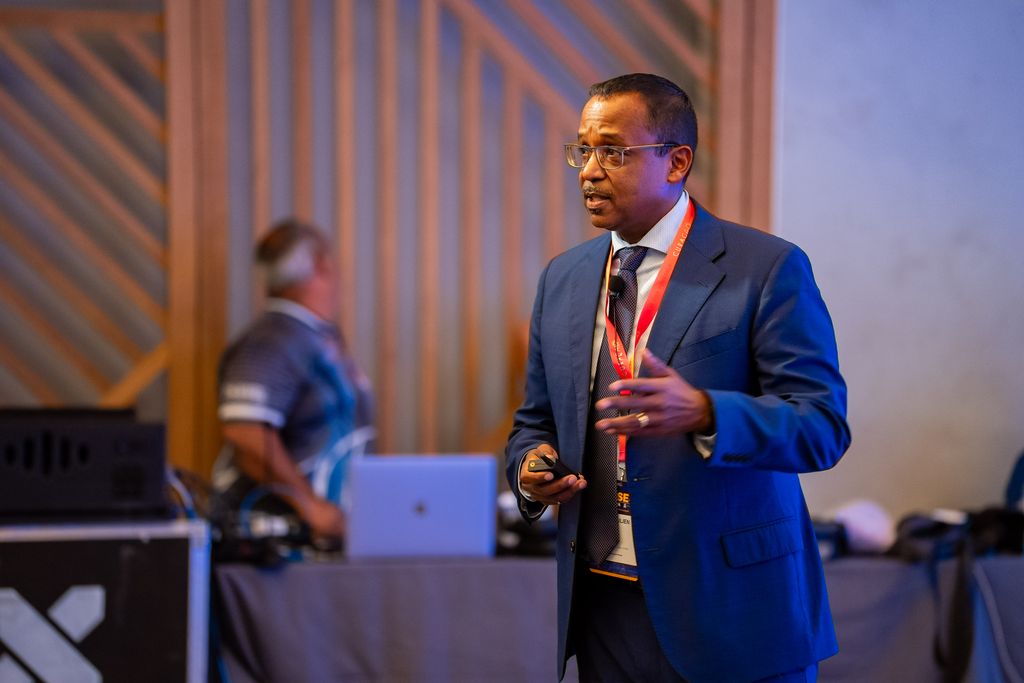
“Trinidad and Tobago has the industrial base and energy expertise to lead the Caribbean’s transition to green fuels,” said Philip Julien, Chairman of KGL. “This is not about starting from zero. The infrastructure and know-how already exist, and the study shows how we can sequence investments smartly to avoid stranded assets.”
The report recommends a hub‑and‑spoke model, designating Trinidad and Tobago as the green fuel bunkering hub, while Barbados and The Bahamas take the lead on shore power pilots. Receiving ports such as Jamaica and Suriname would then be integrated in later phases, enabling efficient scaling without duplicating heavy infrastructure.
For Trinidad, the findings reinforce its role as a regional energy leader at a time when global shipping is under pressure to cut greenhouse gas emissions. The study highlights that the country’s methanol and ammonia sectors can pivot toward supplying low‑carbon fuels, positioning its ports as critical nodes in the Caribbean’s decarbonisation strategy.
“This work is part of the IDB’s effort to support stronger, forward-looking energy planning in the Caribbean,” said Roberto G. Aiello, Energy Coordinator for the Caribbean at the IDB. “Understanding future demand for cleaner fuels and shore-side power will be essential to guiding efficient and well-timed investments.”
The report cautions against premature capital commitments, urging ports to prioritize policy alignment, grid studies and safety codes before breaking ground. It also warns of the risks of stranded assets if infrastructure is built ahead of demand.
Regional stakeholders are already taking note. The UWI-Caribbean Shipping Lanes Project has signalled it will integrate the study’s insights into its work at the International Maritime Organization, while the Belize Port Authority has welcomed the findings as a resource for evidence-based decision-making.
For Trinidad and Tobago, the message is clear: its energy legacy can be leveraged to secure a leadership role in the Caribbean’s maritime transition, ensuring competitiveness while advancing climate goals.