SHALIZA HASSANALI
Senior Reporter
shaliza.has[email protected]
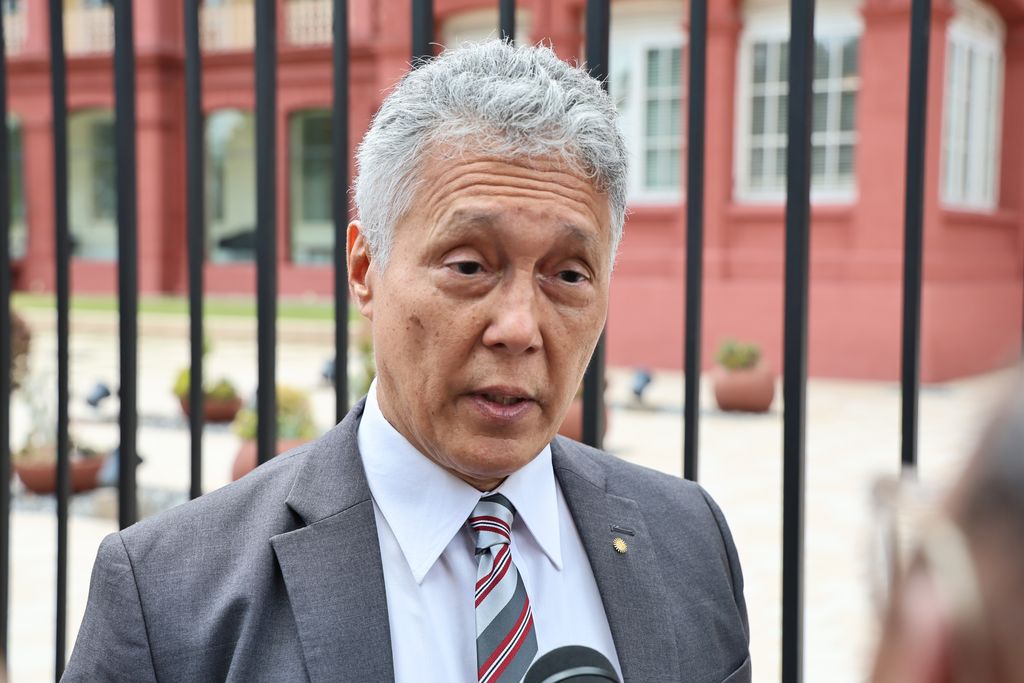
Attorney Fareed Ali yesterday urged the Government to clear the air over the authenticity of the audio recording involving Genevieve Hadeed and her aunt Star Sabga, which has become the centre of an escalating public debate on social media.
Ali said the State must confirm whether the recording circulating publicly is a leaked version of the audio relied upon when Preventive Detention Orders (PDOs) were issued against members of the Hadeed family and Star Sabga.
“That audio clipping, the State needs to come out in the open and say whether this is indeed a leaked version. What I would expect now is for the responsible State body to step forward and responsibly indicate that what is in the public space was leaked or what is in the public space is not what they relied upon or isn’t something that one should assign value to,” Ali said during a telephone interview yesterday.
The 15-minute recording captures a private conversation between Sabga and Hadeed, during which Sabga was openly critical of Prime Minister Kamla Persad-Bissessar, her relationship with the current United States administration and the Government generally.
The debate over the recording comes ahead of Sabga’s return to court today, after excerpts of the recording were used in an affidavit presented to the court by Homeland Security Minister Roger Alexander on Friday.
Information contained in the 19-page affidavit dated July 24, 2026, sworn by Alexander, showed intercepted conversations involving Hadeed and Sabga.
Ali said the public does not yet know whether the audio circulating is the same recording the State relied upon “before forming a view and before issuing PDO’s in the name of the Hadeeds.”
“If it is indeed the audio, questions would arise as to how that intelligence that was in the position of the State came to be leaked.”
Ali said this would mean that officially or unofficially, someone acting in the capacity of an officer of the State chose to release it into the public domain.
He said a statement was needed from the Trinidad and Tobago Police Service (TTPS), while cautioning that opinions should not yet be formed.
Ali said the first issue to be determined was whether the audio clip was authentic.
“If this recording was tampered with in some way by whoever was first in receipt of it...and what we are getting now is an edited version and a professionally edited version, then it may cause persons to wrongfully form a view as to the actions of the State, whether it was proportionate or whether it was correct in acting as they do.”
He said no one knows whether the voices heard in the recording are those of Sabga and Hadeed.
“They have not come out and even made a public statement. I think it is dangerous to have a recording in the public space at this time, especially when we have a third party, someone who is subject to a PDO, still sitting in a cell somewhere. We need clarity in this situation.”
Ali said another factor to consider was whether there was one audio recording or multiple clips.
“If indeed it is not the official audio clipping that the State was in receipt of...that they acted upon when issuing the PDOs, then we can’t put any value on that audio clipping.”
He said there may have been editing to the recording currently circulating.
“So to the lay person who is listening, they may assign value to what they hear and find it very innocuous...meaning harmless. It may sound at the first glance to be the rant of somebody who is frustrated and therefore may not be willing to act any further in relation to the comment they made. Meaning... they are giving vent. They don’t have any intent to take it further.”
Ali said a proper assessment of the threat allegedly posed by the individuals could not be based solely on the recording now in the public domain.
The attorney warned members of the public to be cautious about forming views based on leaked information.
He said social media had reacted strongly to the recording, causing public mayhem.
He said what constitutes evidence is not just the audio itself “but the relevance and admissibility of it.”
In terms of evidence presented in court, Ali said it must always meet the threshold of relevance and admissibility.
Meanwhile, former attorney general Garvin Nicholas expressed concern “about the widespread phone tapping” and the ongoing State of Emergency, which has restricted citizens’ rights.
He said the Government owed the country an explanation as to how the audio was leaked.
“I am very concerned based on the contents of the leaked audio. If that is the reason that persons were detained for over a month and have their rights and liberties denied...because I don’t see that as a threat. But not only do I not see it as a threat based on what the Court of Appeal said.”
Nicholas said the information would have been shared with the Court of Appeal.
“The Court of Appeal did not think it a conspiracy. We cannot continue arbitrarily cloaking everything in national security when it is clear that the actions and behaviour of government officials do not match the alleged threats against them.”
On the procedure for wiretapping and obtaining warrants, Nicholas said authorities must approach the court with evidence to obtain permission.
“If it is that the Government properly approached the Court and they were granted it based on proper evidence, that is one thing. But what I can tell you is based on what they got from the eventual tapping and what is placed in the public domain, it certainly does not warrant the detention of citizens and the prevention of their human rights or denial of human rights based on that conversation.”
If there is additional evidence that the public is unaware of, Nicholas said, the country would have to wait and see.
However, he said he could not support that kind of behaviour as a former government minister.
He said the enemies of the country were not its citizens or ethnicities.
The Hadeeds and Sabga were arrested last month under Preventive Detention Orders during a State of Emergency.
Last Thursday, Alexander revoked the Hadeeds’ PDOs, allowing them to walk free without being charged.
However, Sabga remains detained at the Women’s Prison in Arouca since June 24.
Guardian Media reached out to Alexander, Attorney General John Jeremie, Police Commissioner Allister Guevarro, Faris Al-Rawi and Strategic Services Agency director Alicia Henry, but did not get a response up to press time.