
Senior Political Reporter
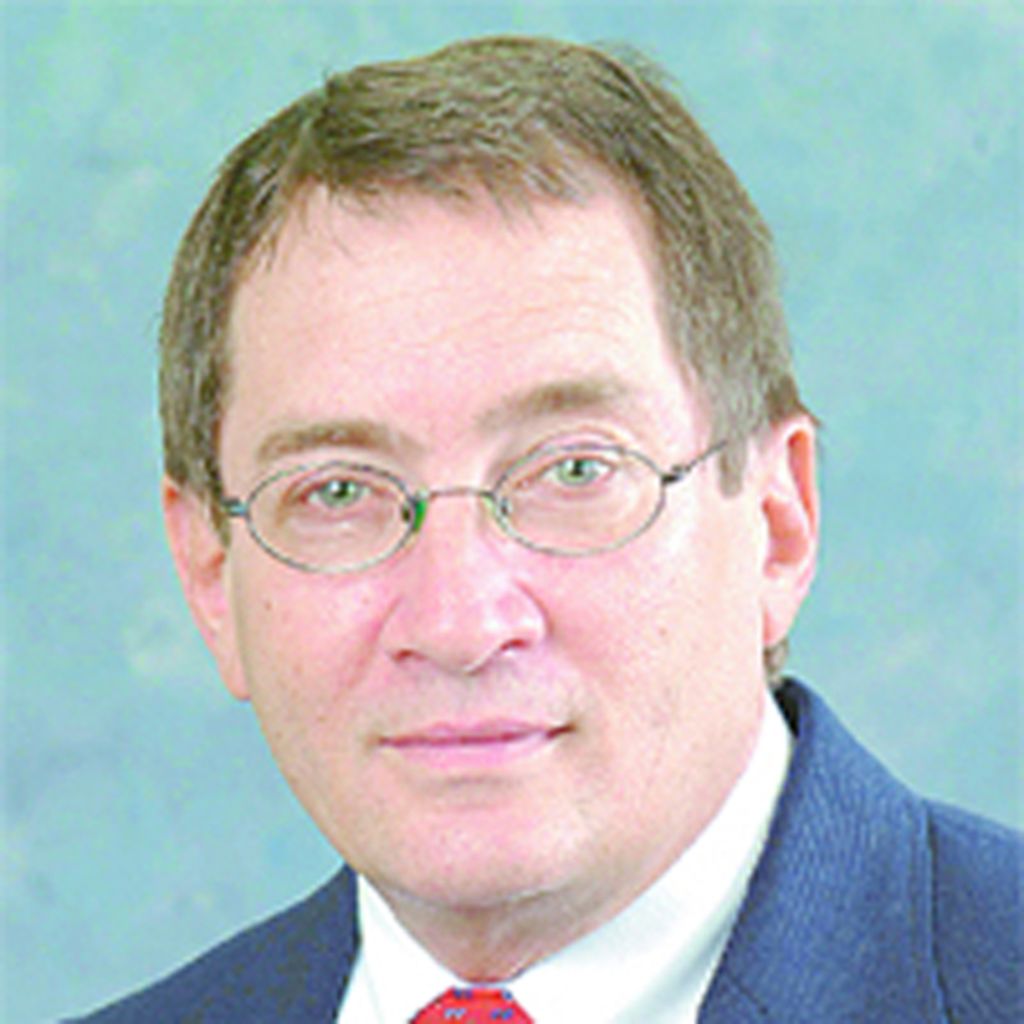
As the Senate returns today to debate another bill that could result in a 15-15 deadlock, former Senate president Timothy Hamel-Smith has weighed in on the exercise of a casting vote in the Upper House.
Hamel-Smith, who served as Senate president from June 2010 to February 2015 during the People’s Partnership administration, said the issue of a casting vote never arose during his tenure.
“So I cannot claim to have established a practice on that issue myself,” he said from London.
He noted, however, that while the Constitution requires the Senate President to cast a vote when the chamber is equally divided, it does not prescribe whether that vote should be cast for or against a bill. Nor do Parliament’s Standing Orders require reasons to be given for rulings made by the presiding officer.
“My starting point, if I were faced with this issue, would have been the Senate’s own Standing Orders. They direct the presiding officer, where applicable, to look to the practice of the UK House of Commons,” Hamel-Smith said.
Hamel-Smith was responding to a query from Guardian Media following Senate President Wade Mark’s controversial tie-breaking vote last Wednesday during debate on the Special Operations Bill, which enabled the legislation to pass.
Government senators voted 15-strong in support of the bill, while the six Opposition senators and nine Independent senators combined to oppose it, resulting in a 15-15 tie. The legislation required a simple majority to pass, meaning the Government needed one additional vote. Mark’s casting vote broke the deadlock in favour of the bill, departing from the convention traditionally followed by parliamentary presiding officers, who generally use casting votes to maintain the status quo. Mark later said he had conducted research before taking that decision.
The Senate is today scheduled to debate the Public Procurement and Disposal of Public Property (Amendment) Bill, 2026, which has generated significant concern over provisions that would exempt several sectors from oversight and limit the powers of the Procurement Regulator. The bill was passed in the House of Representatives last week by a simple majority, with Government members voting in favour and the PNM opposing it.
Like the Special Operations Bill, the procurement legislation requires only a simple majority for passage in the Senate, meaning the Government’s 15 votes would need the support of at least one additional senator.
Hamel-Smith pointed to the principle associated with former House of Commons Speaker John Evelyn Denison, commonly known as Denison’s Rule.
“The principle associated with Speaker Denison is that, on a final decision where further discussion is no longer possible, a casting vote should not bring about a change without a majority. A previous Trinidad and Tobago Senate President has expressly used those principles when explaining casting votes,” he said.
Hamel-Smith acknowledged that some may argue the decision of the elected House of Representatives should carry particular weight.
“There’s an argument that the elected House’s decision deserves particular weight. But that argument should be considered alongside our Standing Orders and Senate precedent; it does not, by itself, settle how a casting vote should be exercised.”
Based on the information available to him, Hamel-Smith said he would have regarded Denison’s Rule as the stronger, though non-binding, guide at the final reading stage.
“I’d have regarded Denison’s principle as the stronger non-binding guide at a final reading, while recognising that another president could reach a different conclusion,” he said.
He stressed, however, that he did not closely follow the Special Operations Bill debate.
“Having said that, being out of Trinidad and Tobago, I did not follow the Senate proceedings regarding the Special Operations Bill and therefore do not claim to be privy to all the surrounding events.”
Hamel-Smith also noted that the Senate Standing Orders require reference to House of Commons practice only in “so far as they are applicable,” leaving room for differing interpretations.
“In this context, it is also noteworthy that the UK’s unelected second chamber does not treat Denison’s ‘no final decision without a majority’ principle as controlling every tied vote on a bill. It also has a process for sending amendments back to the Commons for reconsideration,” he said.
“The UK process gives the Lords a practical way to seek improvements while preserving the Commons’ ultimate authority over most public legislation.”
Hamel-Smith stressed that his comments should not be interpreted as a criticism of Mark.
“I make no allegation about the Senate President’s motives. The proper question is whether the parliamentary principle behind the vote is persuasive.”
He added that his position was grounded in Senate Standing Orders 2 and 54, the recorded use of Denison’s principles during a 2022 Senate sitting, and the parliamentary authority Erskine May.
“In the present context, I make no suggestion that the casting vote was legally invalid or that the Senate President acted improperly,” Hamel-Smith said.
Related News

Relatives seek answers after man killed by cops at beach lime

Medz Boss threatens legal action against Al-Rawi over PoS peace deal claims
Dowlath: Delinquent students disciplined, reintegrated