

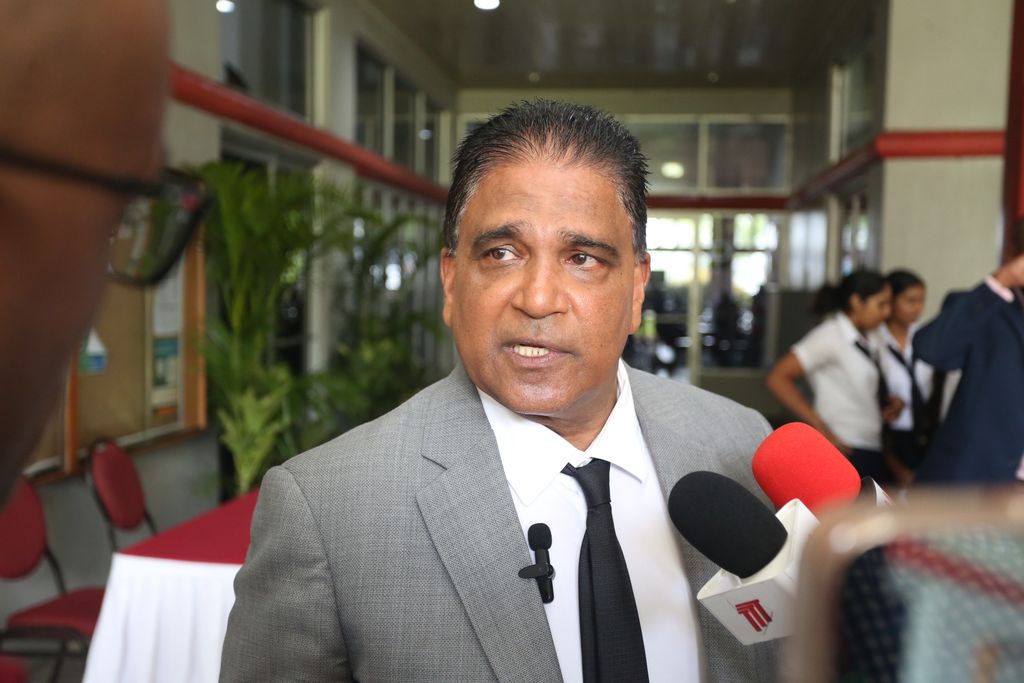
Minister of Finance Davendranath Tancoo has proposed a 12.5 per cent VAT on digital services supplied by foreign providers, which currently include streaming platforms such as Netflix, Hulu, AppleTV, HBO Max and Disney+, and a higher surcharge on high residential electricity consumption. This introduces two additional costs for households in Trinidad and Tobago under the 2027 Budget.
The measures form part of nine new revenue-raising initiatives expected to generate $1.18 billion, despite repeated Government assurances that household electricity rates would not rise and Prime Minister Kamla Persad-Bissessar’s pre-budget declaration: “No taxes.”
Delivering the 2027 fiscal year package in Parliament yesterday, Tancoo announced a $0.05-per-kilowatt-hour surcharge on residential electricity consumption exceeding 3,000 kilowatt-hours over a two-month billing period.
Asked by Guardian Media whether the fiscal package would include any new taxes outside the Red House before the budget presentation, however, Persad-Bissessar had said, “No taxes.”
Explaining the proposed streaming tax, Tancoo said many digital services consumed in Trinidad and Tobago are supplied by businesses based outside the country.
“These entities do not contribute to our country’s income,” he said.
To facilitate compliance and collection, he said Government will introduce a simplified registration process for non-resident suppliers. This will include suppliers of taxable services connected with real property situated in T&T, allowing them to register, collect and remit VAT electronically.
“This measure will broaden our tax base, strengthen the collection of VAT and promote more consistent tax treatment between services supplied from abroad and those supplied domestically,” Tancoo said.
The streaming tax is expected to generate $18 million in revenue and will take effect on March 1, 2027.
According to FlixPatrol, Netflix had 162,500 subscribers in T&T at the end of December 2025, while Disney+ had 118,440 subscribers as of September 2025.
Tancoo said the electricity surcharge was intended to encourage energy conservation while supporting households with low electricity consumption.
He said the threshold of 3,000 kilowatt-hours over a two-month billing period would ensure that average households with moderate electricity usage remained unaffected.
“The revenue generated from this surcharge will help finance the existing electricity subsidy provided to households with very low levels of electricity consumption,” he said.
The surcharge on residential households is projected to generate $17.8 million in revenue and will take effect on January 1, 2027.
The measure comes despite repeated pledges by ministers in the current administration that household electricity rates would not increase.
On May 3, 2025, the day the Cabinet was sworn in, Public Utilities Minister Barry Padarath publicly reaffirmed a campaign promise to keep electricity and water rates unchanged, rejecting previous recommendations by the Regulated Industries Commission (RIC) for tariff adjustments.
A four-person household in Chaguanas that consumed 4,089 kilowatt-hours of electricity during July and August paid $1,438.93. If the household used the same amount of electricity in January and February 2027, its bill would rise to approximately $1,500, an increase of 4.23 per cent.
The Ministry of Finance expects the nine revenue-raising measures to generate $1.18 billion in fiscal 2027. The electricity surcharge and streaming tax account for $35.8 million of that total.
The measures represent approximately 1.97 per cent of the Government’s projected revenue of $59.729 billion for the fiscal year.
Of the nine measures, the Government expects a proposed limit on the use of carried-forward losses by businesses to generate the most revenue, at $430 million.
“Our tax system must strike a balance between supporting business activity and ensuring that profitable enterprises make a fair and timely contribution to the revenues required for our national priorities,” Tancoo said.
He explained that businesses can currently carry forward accumulated losses to reduce taxable profits in subsequent years.
While acknowledging that the provision allows businesses to recover from periods of financial difficulty, Tancoo said the Government believed there should be an appropriate limit on the amount of accumulated losses that could be applied in any one year.
“Accordingly, I propose to limit the utilisation of carried-forward losses for all businesses to 75 per cent of chargeable profits in any income year,” he said.
Related News
Moonilal says discussions still underway: Government not closing door on Nutrien

Police seek public’s help to find missing 16-year-old

Man believed to be from Jamaica killed near Busy Corner