
The Central Bank of Trinidad and Tobago has reduced its greenhouse gas emissions by 13.8 per cent since 2019, with lower electricity use and reductions in value-chain emissions contributing to the decline.
The Bank’s 2025 Carbon Footprint Assessment found that estimated greenhouse gas emissions fell from 9,591.1 tonnes of carbon dioxide equivalent (tCO₂e) in 2019 to 8,264.9 tCO₂e in 2025.
The assessment measures emissions across three categories, known as scopes.
Scope 1 covers direct emissions from sources controlled by the Bank, including fuel used in vehicles and generators, refrigerant leaks and natural gas consumption.
Scope 2 accounts for indirect emissions from purchased electricity, while Scope 3 includes selected value-chain emissions such as business travel and employee commuting.
The Bank said the results show progress across several areas of its operations.
Scope 2 emissions declined by 11.9 per cent, largely due to lower electricity consumption during the assessment period.
Scope 3 recorded the largest reduction, falling by 27.7 per cent.
However, Scope 1 emissions increased by 10.5 per cent, highlighting areas where the Bank said further emissions management is needed.
The Bank said its 2025 emissions are equivalent to the annual emissions from approximately 22,836 diesel-powered passenger vehicles or 2,283 gasoline-powered sport utility vehicles.
They also equate to the electricity consumption of about 25 average wind turbines operating for one year, or the carbon absorbed by approximately 158,590 tree seedlings grown for ten years.
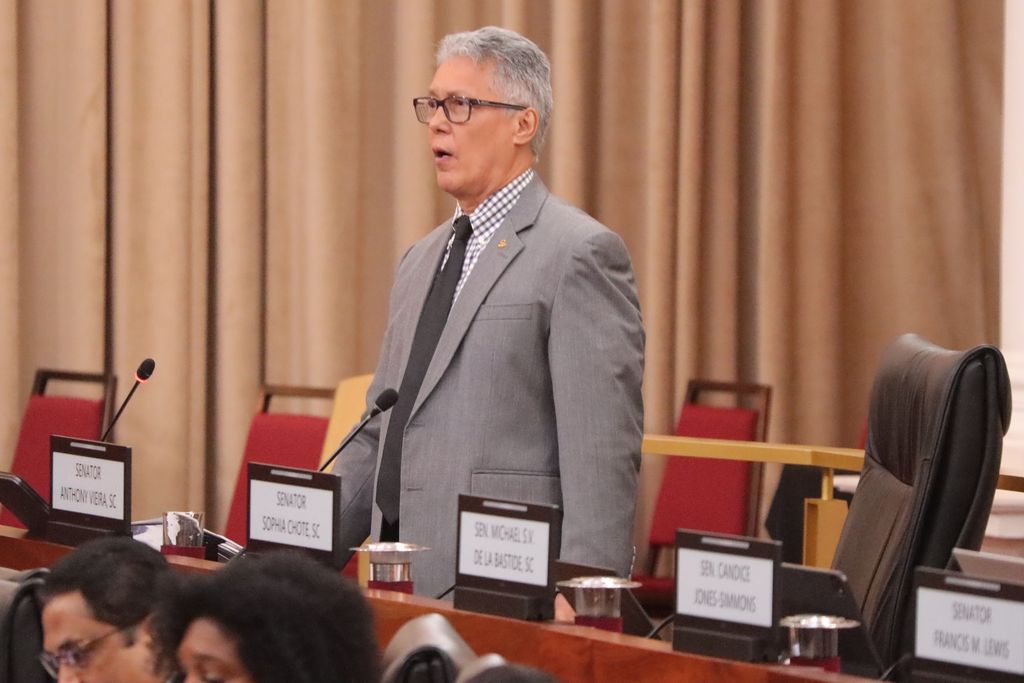
Central Bank Deputy Governor Dr Dorian Noel said measuring and managing the institution’s carbon footprint was an important part of strengthening sustainability.
He said the reduction since the 2019 baseline demonstrated that operational changes could produce measurable environmental benefits.
Noel said the Bank would continue identifying opportunities to improve energy efficiency and reduce emissions through measures including sustainable waste management, reduced paper use and greener procurement.
He also said the institution intended to incorporate climate change considerations more extensively across its operations and network of influence.
The Bank said it would continue publicly disclosing its carbon footprint measurements, emissions-reduction activities and efforts to strengthen climate resilience.
According to Noel, transparency would be important to the Bank’s efforts to build credibility as it works towards greening the financial system and advancing its commitment to net-zero central banking.
The Bank said its approach is aligned with its partners in the Network for Greening the Financial System (NGFS), a global network of central banks and financial supervisors focused on addressing climate-related risks in the financial system.