Scotland vows to mobilise constituents against bill: ‘We do not agree with this’
 20 September 2026

Senior Reporter
otto.carring[email protected]
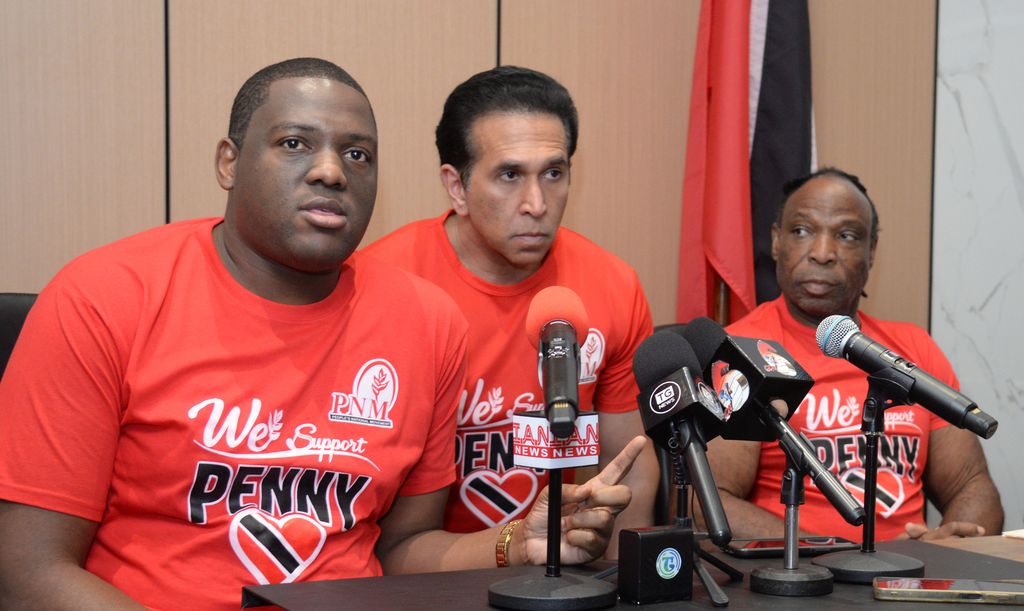
Port-of-Spain South MP Keith Scotland says he will mobilise his constituents against the Special Operations Bill, as former attorney general Faris Al-Rawi and Laventille West MP Kareem Marcelle are questioning how much power the Prime Minister will have under the bill.
Al-Rawi called for its immediate withdrawal and warned that the Senate’s decision could determine whether the country moves towards what he called a police state.
The Special Operations Bill 2026 was passed in the Lower House early yesterday morning without support from the Opposition People’s National Movement. The bill now heads to the Senate on Wednesday for debate.
Speaking during a PNM news conference after a General Council meeting yesterday at Balisier House, Scotland said he intended to organise his constituents to express their opposition.
“My next step is to meet with my constituents and mobilise them. Mobilise them in a legal framework to let their voices and their feet be heard.
“We will first go on our knees and then we’ll rise from our knees, and we’ll be on our heels and toes because we do not agree with this.”
Scotland said constituents were raising concerns about searches and the seizure of property without court intervention.
Scotland compared what he described as identification requirements under the proposed arrangements to restrictions associated with apartheid in South Africa.
“We will not be marginalised and will not have people walking around with a card as if we in Soweto. That is not going to happen,” he said.
Marcelle said he was curious about the authority of those who would lead operations in designated areas, arguing that the bill left important safeguards to their discretion.
He also raised concern about the amount of power now being placed in the Prime Minister’s hands.
“Section 80 of our Constitution guarantees that unless the bill has specific words relative to the President exercising her own discretion, it is really a rubber-stamping exercise where it is the Cabinet of Trinidad and Tobago, the Prime Minister, the political leader of the UNC can determine when and where and how long a community becomes a closed area,” he stressed.
On body cameras, he said even having sufficient equipment would not necessarily guarantee its use.
He linked that concern to the ability of journalists to independently scrutinise operations, saying media workers were not among those expressly exempted from restrictions in closed areas.
Marcelle questioned why journalists were not included, particularly when curfews and other restrictions could limit residents’ movements.
“Why does this Government want to keep the media out of closed zones when they are doing their operations and when curfews are in effect?” he asked.
Al-Rawi, meanwhile, said attention must now turn to the Senate, where he argued that the outcome of the vote would have far-reaching consequences.
“One vote alone is going to affect what happens, whether a police state is born where the Prime Minister has unholy powers outside of a state of emergency or not,” he said.
He contended that the legislation required a special majority—three-fifths—because of its constitutional implications.
In the Lower House, it passed with a simple majority.
He also objected to the role he said the bill would give the Prime Minister in initiating and revoking the arrangements.
“We in the PNM are so sure that this thing is fundamentally flawed that at this point our concern is that it is withdrawn,” he said, calling for proper consultation.