
Trinidad and Tobago and Panama are exploring opportunities for greater cooperation in marine research, technology, environmental sustainability and the development of the blue economy.
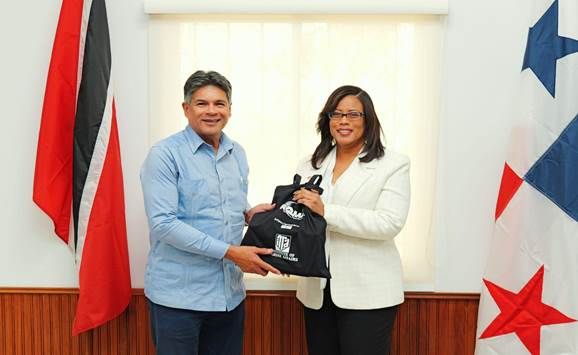
The discussions took place during a courtesy visit by Panama’s Ambassador to Trinidad and Tobago, Diomedes Heraclio Carles Cleghorn, to the Institute of Marine Affairs (IMA) in Chaguaramas on September 10.
Cleghorn, accompanied by Third Secretary Indra Peralta, met with IMA Director Dr Ava Maxam and senior researchers to discuss potential institutional partnerships, knowledge sharing and joint research.
Maxam said the IMA was interested in collaboration with Panama in blue economy development and marine technologies.
She also identified potential cooperation in areas including logistics and economic development, as well as the IMA’s work in oil fingerprinting, nature markets and sargassum valorisation.
Cleghorn said Panama’s position as an international hub provided opportunities for learning and cooperation, while noting the importance of technology to the Caribbean.
“Panama is a hub and host to the world, but there is something to learn from Trinidad and Tobago. The Caribbean is unique, and technology is very important,” he said.
During the meeting, the IMA presented its Republic Bank-funded “Beyond the Blue” project, which seeks to increase public awareness of the blue economy, promote smart technologies in marine and coastal management, encourage innovation and create sustainable livelihood opportunities.
A key component of the project is a National Coastal and Shoreline Atlas, which contains historical shoreline and coastal data to support coastal planning and evidence-based decision-making.
The IMA also outlined research in sargassum valorisation, blue carbon, mangroves, biodiversity, fisheries and aquaculture, marine spatial planning, coastal erosion, sea-level rise, ocean acidification, microplastics, coral reef monitoring and oil spill surveillance.
Senior Research Officer Dr Maurice Narcis said research, development and outreach remain central to the institute’s blue economy work.
Sargassum was identified as an area of particular interest, with the two sides discussing ways of transforming the environmental problem into economic opportunities through value-added products and research. Panama also shared research into potential medicinal applications of sargassum.
The countries also discussed marine litter and plastic pollution. Panama highlighted its experience with measures to reduce single-use plastics, including its national ban on plastic bags, while the IMA outlined its Prevention of Marine Litter in the Caribbean Sea project.
Water security and climate resilience were also discussed, with Panama sharing its experience with drought and its impact on operations of the Panama Canal. Possible technological responses, including water conservation and desalination, were considered.
The visit concluded with a tour of IMA laboratories, including facilities involved in remote sensing, blue carbon research and oil spill monitoring.
Both sides expressed interest in continuing discussions on research, education and technology cooperation.