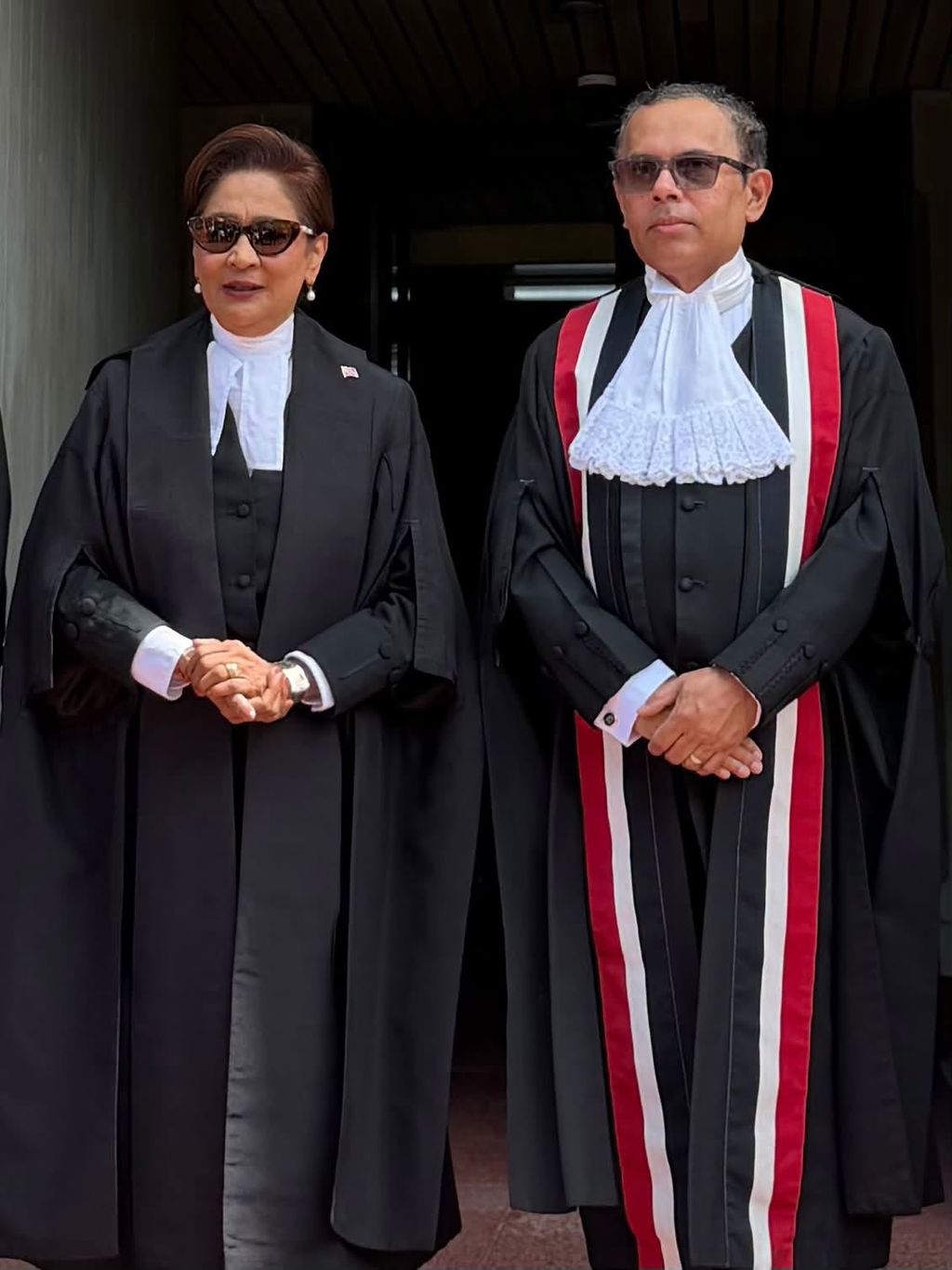

Prime Minister Kamla Persad-Bissessar says her Government will continue supporting measures aimed at making the justice system faster, more efficient and more accessible to citizens.
In a message marking the opening of the 2026–2027 Law Term of the Supreme Court of Judicature, Persad-Bissessar said the Executive was ready to support initiatives to improve the delivery of justice.
“Justice must never be distant from the people. It must never be beyond the reach of the ordinary citizen,” she said.
The Prime Minister said since taking office in April 2025, her Government had been working with stakeholders across the justice system to identify obstacles to efficiency and improve the delivery of services.
She pointed to several legislative measures, including legislation to digitise the nation’s laws and make them available through a single online portal.
Persad-Bissessar said the move would make the law more accessible to citizens and help strengthen confidence in the justice system.
The Government also passed the Civil Division Act, No. 5 of 2026, which she said was intended to address systemic weaknesses in the administration of civil justice, including staffing and administrative challenges.
The legislation is also aimed at tackling delays and backlogs, establishing specialised subdivisions and improving operational efficiency.
On crime and bail, Persad-Bissessar pointed to the Bail (Amendment) Act 2026, No. 10 of 2026, which introduced Bail Source Hearings.
The hearings allow the courts to determine whether cash or real property being used to post or secure bail was obtained through legitimate means.
She said the measure formed part of the Government’s wider efforts to tackle organised crime, money laundering and other serious criminal activity.
The Prime Minister also highlighted amendments to probation legislation, saying the Probation of Offenders (Amendment) Act 2026 modernised legislation dating back to 1947 and gave the Judiciary greater scope to use split sentencing.
Under the approach, periods of incarceration can be combined with supervised probation, including electronic monitoring, curfews, community service and vocational training.
Persad-Bissessar said the Government would continue providing the Judiciary with resources to improve efficiency.
She also welcomed the reopening of Magistrates’ Courts throughout Trinidad and Tobago, saying the Government had provided the necessary resources.
She used Mayaro as an example of the difficulties citizens previously faced when accessing probation services, with some people having to travel to San Fernando because probation officers did not have designated working spaces at Magistrates’ Courts in their jurisdictions.
“Justice must not depend upon where you live,” Persad-Bissessar said.
She said probation officers would now be able to resume operations within the respective courts in their areas following the reopening.
The Prime Minister also linked the opening of the new Law Term to the start of the new school term, saying about 777 schools reopened on Monday.
She said the Government would continue working to eradicate school violence and, where necessary, work with the Trinidad and Tobago Police Service and other stakeholders to protect students, teachers and school communities.
Persad-Bissessar said her Government was “rebuilding”, “modernising” and “strengthening” institutions while working to restore confidence in the rule of law.
She also reaffirmed the Government’s commitment to respecting and empowering an independent Judiciary.
“The work before us is significant, but so too is our determination,” she said.
Related News

Salaries for Reserve troops sent to banks today

PM doubles down on call to remove violent students from schools: Take them into your homes

Federal investigators probe Amazon cargo jet’s fiery runway crash that killed 5 in Miami