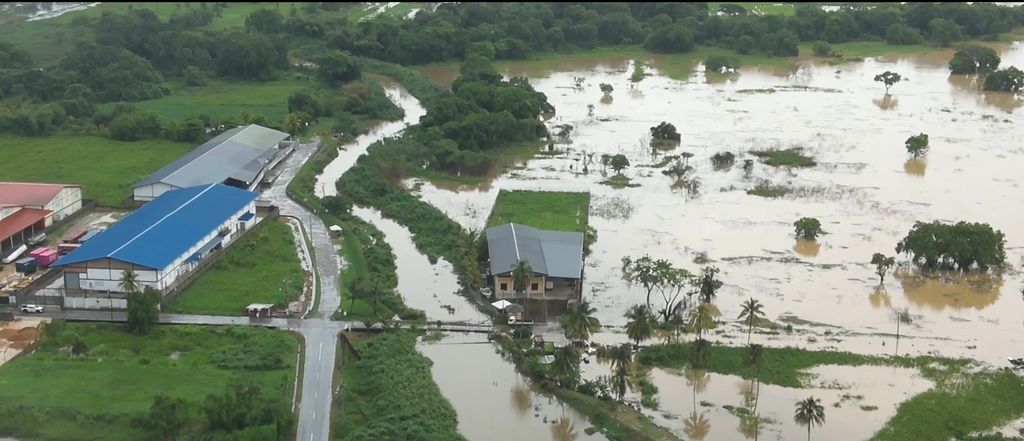

As climate change intensifies storms, flooding, droughts and coastal erosion across the Caribbean, regional leaders are calling for a fundamental shift in how countries prepare for disasters, from reacting to crises to building resilience before they occur.
That call echoed throughout the opening day of the Disaster Risk Management Conference 2026 (TTDRM2026) at the Hyatt Regency, Port of Spain, where policymakers, emergency managers, development agencies and private-sector leaders gathered to explore how Caribbean nations can better withstand and recover from growing climate and disaster risks.
Held under the theme “Resilience 360: Bridging Knowledge and Action,” the three-day conference, which concludes on Wednesday, is examining a range of issues including resilient infrastructure, climate adaptation, disaster risk financing, early warning systems, business continuity, community preparedness and the role of technology in strengthening national resilience.
Conference chair and TTDRM Managing Director Stacey-Ann Pi-Osoria said resilience must become a national priority for countries facing increasing climate uncertainty.
“TTDRM2026 and its theme, underscores the urgency of building national resilience in a world where climate shocks threaten small island states and their economic existence,” she said.
Pi-Osoria said resilience requires a broader understanding of risk, recognising that disasters do not affect sectors in isolation but can disrupt economies, healthcare systems, transportation networks, tourism and food security simultaneously.
She also highlighted the economic value of investing in preparedness.
“In disaster risk management, this means that for every US dollar spent on mitigation and preparedness, it saves US$10 in future response and recovery costs,” she said.
From the perspective of infrastructure, Minister of Works and Infrastructure Jearlean John said resilience must move beyond strategy documents and become visible in the systems communities depend on every day.
“Resilience cannot remain in policy papers, technical reports or academic discussions,” John said. “It must be translated into roads that remain passable during floods, bridges that continue to carry communities through extreme events, drainage systems that are maintained before disaster strikes and coastal works that protect rather than displace risk.”
She said resilience also begins with individual responsibility, pointing to poor waste disposal and illegal dumping practices that continue to worsen flooding throughout the country.
“These are the practical things,” she said. “Resilience is not only about big infrastructure and big words. It’s about the little things we do, or refrain from doing, that help us mitigate against disaster.”
For Dr Arlene Laing, Coordinating Director of the Caribbean Meteorological Organization (CMO), resilience depends heavily on how well people understand and respond to risk information.
“The goal of a warning is not just transmission. The goal of a warning is behavioural change,” she said.
Dr Laing outlined the growing role of impact-based forecasting in the Caribbean, explaining that modern warning systems are designed not only to predict weather conditions but also to communicate what those conditions mean for communities, infrastructure and essential services.
“It shifts the focus from asking what weather will occur to asking, what will this weather do?”
She identified stronger meteorological services, clearer public communication, greater collaboration among agencies and improved public response to warnings as critical components of regional resilience-building.
As discussions continue over the next two days, delegates will explore how governments, businesses and communities can work together to strengthen resilience in the face of increasingly complex climate and disaster risks.
The overriding message: resilience is no longer simply about recovering after a disaster. It is about building systems, institutions and communities that can anticipate, withstand and adapt to the challenges ahead.