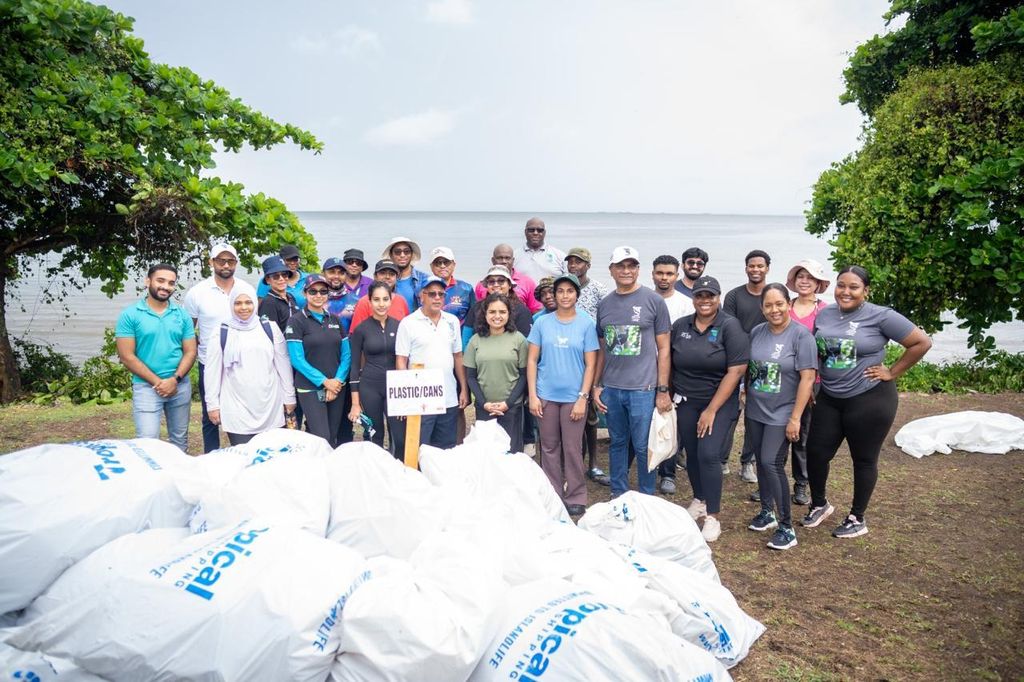

Approximately 4,000 pounds of waste were removed from the Port of Spain foreshore during this year’s International Coastal Cleanup (ICC) on Saturday.
About 240 volunteers gathered along the Foreshore, Audrey Jeffers Highway, as part of the 2026 ICC, the world’s largest volunteer coastal cleanup effort.
The waste collected included 1,200 pounds of plastic, 130 pounds of glass and 2,600 pounds of miscellaneous waste, including tyres, metals and other discarded materials.
The cleanup was site-managed by the Ministry of Planning, Economic Affairs and Development (MPEAD), the Environmental Management Authority (EMA) and the Institute of Marine Affairs (IMA).
Plastic beverage bottles, plastic bags and bottle caps were among the commonly recorded items collected during the cleanup.
The Environmental Management Authority said the waste collected provided an important snapshot of the types of debris found in the coastal environment and highlighted the need for greater awareness and responsible waste management to prevent waste from reaching beaches, drains and waterways.
Minister of Planning, Economic Affairs and Development, Senator Dr Kennedy Swaratsingh, urged citizens to take greater responsibility for how they manage waste and protect the environment.
He called on the public to avoid littering, reduce the use of single-use plastics, use reusable bags and properly dispose of garbage.
EMA chairman Doolar Ramlal said the ICC demonstrated that protecting the environment required collective action.
“ICC reminds us that protecting our environment is not the responsibility of one organisation or one group of people but requires collective action,” Ramlal said.
EMA director Avinash Phagoo was also present at the cleanup.
EMA Managing Director and CEO Dr Joth Singh said the authority was undertaking a new Environmental Literacy Survey to assess the public’s knowledge, attitudes and practices towards the environment.
The last survey was conducted in 2016.
Singh said the new survey would measure how environmental awareness and behaviour had evolved over the past decade and determine whether greater awareness was translating into action.
He also said the EMA was examining ways to place a value on waste, particularly materials such as plastic bottles, so they could be viewed as resources rather than simply garbage.
According to Singh, incentives for people to collect and return recyclable materials could encourage greater participation in recycling, reduce litter and keep waste out of drains, waterways and coastal areas.