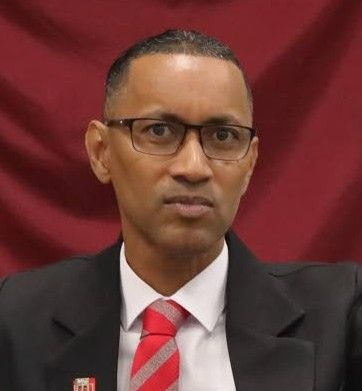

The Trinidad and Tobago Unified Teachers’ Association (TTUTA) says violence has no place in schools, but warned that suspensions, expulsions and police intervention alone will not solve the problem.
TTUTA said decisive intervention is necessary where students pose a threat to teachers or other students and acknowledged that suspensions and expulsions are legitimate disciplinary measures where circumstances warrant them.
It also said police intervention may be necessary when serious violence threatens the safety of a school community.
However, the association said safer schools require more than removing or policing students.
“Safe schools require more than removal, suspension or policing. They require a functioning system of prevention, intervention, support and rehabilitation,” TTUTA said in a media release on Wednesday.
The association is calling for strengthened guidance and student support services, including social workers and mental-health professionals, as well as early intervention, conflict resolution and violence-prevention programmes.
It is also calling for greater parental and community involvement, improved physical security and safer school infrastructure, and clear protocols governing police intervention in schools.
“We cannot arrest, suspend or expel our way out of school violence,” TTUTA said.
“Students and educators must first be protected, but the underlying causes of violent behaviour must also be addressed if we are serious about preventing its recurrence.”
TTUTA said it had raised many of these concerns and proposed solutions in the past but had not received the level of meaningful engagement it believes is necessary.
The association has called on Education Minister Dr Michael Dowlath to respond to its correspondence and engage TTUTA in meaningful consultation.
“School safety is too important for stakeholders to work in isolation,” it said.
However, Couva South MP and Leader of Government Business Barry Padarath has thrown his support behind Prime Minister Kamla Persad-Bissessar’s tough stance on school violence, saying parents must take greater responsibility for their children’s behaviour.
Padarath said the Government was actively pursuing parental responsibility legislation, with the policy framework currently under review.
He said the legislation would be aimed at addressing the responsibilities of parents whose children repeatedly engage in serious misconduct.
Padarath said the Government supported the Prime Minister’s position that students who cannot behave in schools should be sent home to their parents.
He criticised TTUTA, the National Parent-Teacher Association and the Opposition for what he described as a failure to advance meaningful solutions to school violence over the past decade.
Padarath also defended the presence of police officers in schools, arguing that their role is to protect students and teachers from serious violence.
He said the Government would not back away from its approach to school safety, adding that upcoming parliamentary business would include legislation aimed at addressing concerns about the behaviour of young people.
Padarath said decades of programmes and policies targeting at-risk youth had failed to eliminate school violence and argued that parents must accept responsibility for their children’s behaviour.
“If you as a parent cannot put a handle on your child’s behaviour, then you have failed your child,” he said.
TTUTA, meanwhile, said it remained willing to work with the Ministry of Education, law enforcement, parents and other stakeholders to build safer schools.
“No educator should teach in fear. No child should learn in fear,” the association said.
“Let us move beyond rhetoric and work together to create the learning environment our educators and children deserve.”