
Senior Reporter
T&T National Nurses Association (TTNNA) is calling for urgent wage negotiations to begin, warning that growing frustration among healthcare workers is already disrupting services, with the Eric Williams Medical Complex (EWMC) severely short-staffed over the weekend.
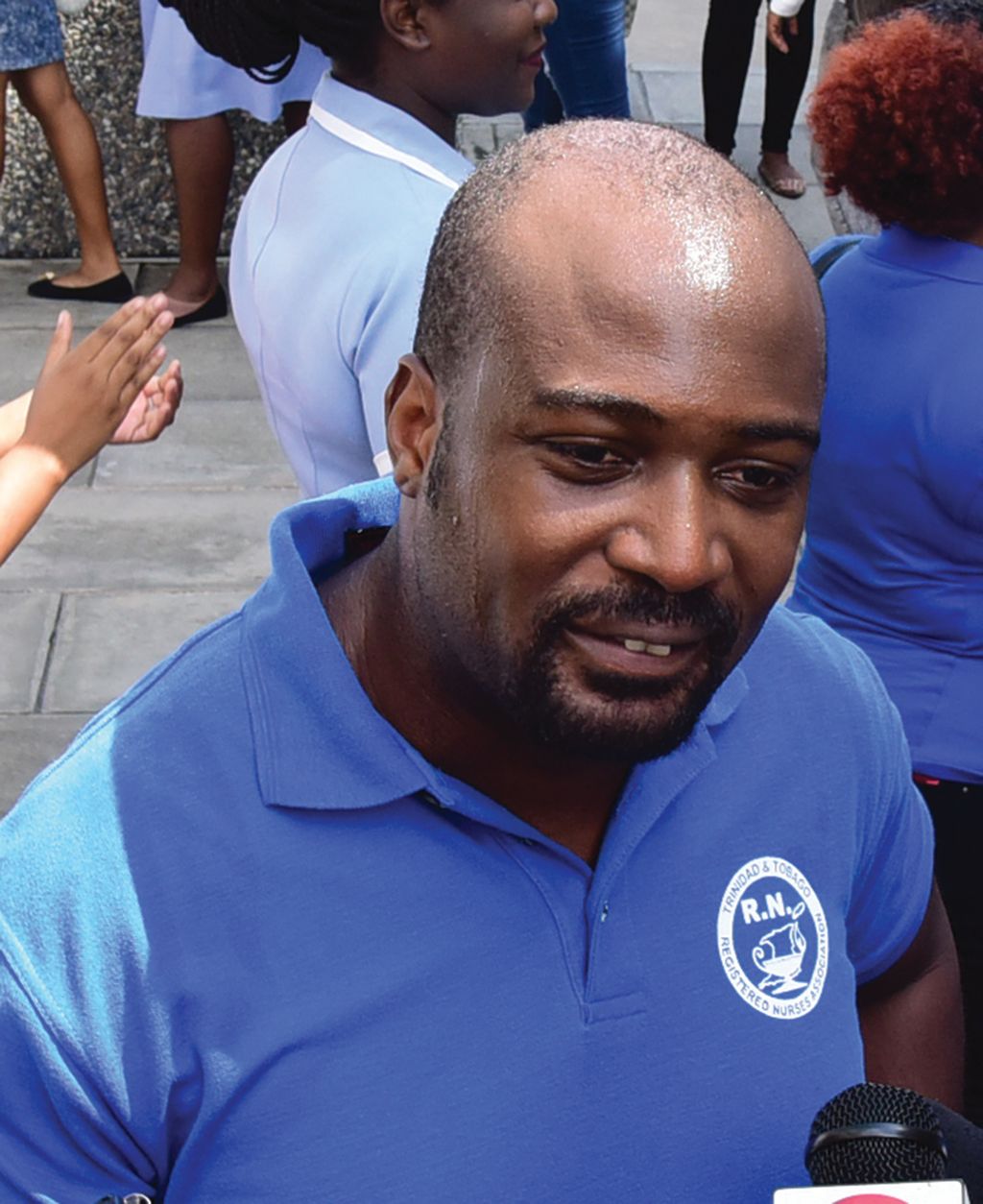
TTNNA president Idi Stuart told Guardian Media yesterday, the association has written to the chief executive officers of the Regional Health Authorities (RHAs), urging them to move swiftly to settle negotiations in the interest of public health, patient safety and industrial stability.
“We want negotiations to start as soon as possible,” Stuart said. “The sentiment on the ground right now is extremely volatile. It would be in the Government’s best interest, particularly in the health sector, to resolve these issues quickly.”
Stuart said healthcare workers across the RHAs feel short-changed, unappreciated and deeply demotivated after years of stalled negotiations, warning that the situation could deteriorate further if action is delayed.
“That level of discontent would not bode well in the coming days,” he said. “We are already seeing it begin to play out.”
Stuart said reports received by the association indicated that disruptions have been occurring sporadically across different hospitals and on different days, driven by frustration among workers.
“At Eric Williams Medical Complex on Saturday, the situation was really bad,” he said. “That institution, and others under the North Central Regional Health Authority, are extremely short-staffed. When even one or two nurses stay home, it cripples services.”
He explained that in facilities already operating with minimal staff, the absence of just a few nurses can severely disrupt patient care, affecting clinics, wards and scheduled procedures.
“In hospitals that are better staffed, the impact might be felt but not as severely,” Stuart said. “But in short-staffed institutions, patients are the ones who suffer most.” Stuart stressed that the association does not want patients to bear the brunt of the industrial unrest.
“As a professional association, we do not want this for the country,” he said. “We want the unease patients are experiencing right now to come to a quick end.”
On Friday, scheduled surgeries at the Port-of-Spain General Hospital were disrupted after operating theatre attendants called in sick, an action that was said to be linked to their frustration over being informed that they would not receive backpay this month.
While health workers employed by the Ministry of Health will receive part of their backpay this month following the December 2 “ten per cent” agreement between the Public Services Association (PSA) and the Chief Personnel Officer (CPO), there is another group of health workers employed directly by the RHAs who will not get a similar payday. Those workers are also represented by the PSA.
Finance Minister Davendranath Tancoo called on health workers not to disrupt patient care and essential services. They have threatened to embark on a “go-slow” the week of Christmas.
Yesterday, Stuart warned that unions have limited control over members when frustration reaches a breaking point.
“Healthcare workers are extremely disgruntled and are taking sporadic days, which is leading to serious disruption,” Stuart said. “Otherwise, there is really little that unions can control in terms of what members may decide to do.”
Stuart is now hoping that the Minister of Finance will give immediate approval for RHA CEOs to begin negotiations for the workers that the TTNNA represents, stressing that Christmas should not be used as a reason for delay.
“We are ready and willing,” Stuart said. “We are prepared to meet as early as tomorrow (Monday), and we are willing to work through the Christmas period for the benefit of the health sector.”
He expressed confidence that negotiations could be concluded quickly, pointing to the pace at which the recent Public Services Association talks were settled.
Stuart clarified that negotiations for RHA workers are conducted directly with RHA CEOs, once authorised by the Minister of Finance, and do not involve the Chief Personnel Officer.
Looking ahead, he said that once negotiations are completed, RHA workers, many of whom are still effectively on 2013 salary levels, will be entitled to significant backpay. In the interim, the TTNNA has called on the Government to consider extending a $20,000 advance on backpay to RHA workers, similar to what was granted to public servants.
“That would be a good show of faith,” Stuart said. “The backpay owed would far exceed $20,000 in many cases, so it can simply be deducted later. It would go a long way in easing the frustration workers are feeling right now.”
Stuart added that resolving the issue swiftly is critical, warning that continued delays will only deepen disruptions and place further strain on an already fragile healthcare system.