
Senior Reporter
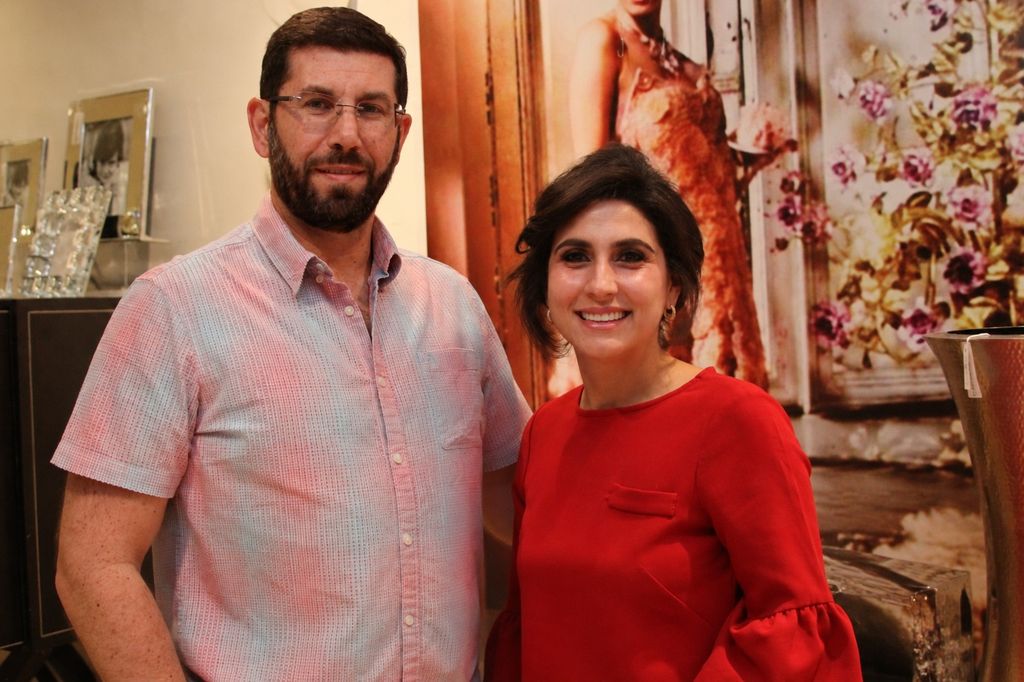
Lawyers representing the State will now have to consider the future of their appeal over a decision by three Court of Appeal members to order that businessman Dominic Hadeed and his wife Genevieve be placed under house arrest, after Preventive Detention Orders (PDOs) against them were lifted by Homeland Security Minister Roger Alexander yesterday.
Alexander’s decision in relation to the couple came hours after the Privy Council indicated that it could not facilitate a challenge to the Appeal Court’s ruling on their interim relief before it (the court) goes on its annual vacation period next Friday.
The couple then received positive news yesterday morning, as the Appeal Court ordered that their substantive case, alleging that they are being targeted by the State based on their ethnicity and a legal challenge over a move to terminate their leases for State land, will be heard expeditiously by a High Court judge.
Guardian Media understands that in an email sent yesterday, the United Kingdom-based appellate court’s Registrar indicated that the earliest the appeal could take place would be in October.
“The court does not wish to deal with the appeal in a rush in the last few days of the term, and that it appears to use that the immediate issue of the respondents’ continued detention could be addressed more conveniently by means of an application by the respondents to lift the stay,” the Privy Council said.
The Hadeeds’ lawyers were reportedly in the process of taking the Privy Council’s advice and were drafting an application to have the stay lifted when Alexander issued the notice revoking the PDOs.
Guardian Media understands the application would have been made based on a change in circumstance, as the stay was granted by another panel of the Court of Appeal led by Chief Justice Ronnie Boodoosingh, largely on the understanding that the appeal before the country’s highest appellate court would be heard expeditiously.
The decision on the PDOs essentially rendered the appeal academic, as the couple are no longer in custody or require release on house arrest pending the determination of their substantive case. However, the appeal may still be pursued, as the case deals with the levels of particulars the minister must disclose in order to issue PDOs against citizens.
Shortly after receiving news of the Privy Council’s decision, the couple’s lawyers and those for the State appeared before Appellate Judges Eleanor Donaldson-Honeywell and Joan Charles for a hearing of their appeal over the refusal of High Court Judge Vigel Paul to deem the couple’s substantive constitutional challenge urgent.
During the virtual hearing, attorney Gerald Ramdeen, who is representing the T&T Police Service (TTPS) and the Office of the Attorney General, did not object to the appeal being heard urgently.
Ramdeen said while his clients were initially opposed to the case being treated as urgent, they were now willing to facilitate such based on fresh medical evidence over Hadeed’s deteriorating health and the couple’s failed bids to secure their interim release. He was careful to note that the State still maintained that Justice Paul was correct to initially refuse the request, as the medical evidence presented on behalf of the couple at that time was not sufficient.
Ramdeen’s position was praised by the appeal panel, which highlighted the need for their legal challenge to proceed urgently.
“That is an excellent approach to the matter. We agree the need for expedition and not for time to be wasted before the Court of Appeal,” Justice Donaldson-Honeywell said.
Both judges raised concerns over Hadeed’s current medical condition.
Faris Al-Rawi, SC, who is representing the Hadeeds, stated that while his client was medically examined by his specialist doctors during detention over the past month, he still had not received the necessary treatment and physiotherapy to address several medical conditions he suffers with.
“His condition continues to significantly deteriorate and can impact his mobility and overall health,” Al-Rawi said.
Ramdeen denied suggestions that he and State officials were seeking to block Hadeed from receiving medical care.
“I am not here in any happiness by seeing the condition of Mr and Mrs Hadeed,” Ramdeen said.
He claimed the Hadeeds’ lawyers had failed to propose a treatment plan and schedule which could be facilitated.
Donaldson-Honeywell reminded the parties that CJ Boodoosingh and two colleagues had ordered the State to facilitate medical treatment for Hadeed when they granted a stay of an order issued by three colleagues directing that they be placed on house arrest last Friday.
“We urge you to work together to get it done...If it is not, it would be contempt and could endanger their lives,” Justice Donaldson-Honeywell said.
In ordering that the substantive case before Justice Paul be expedited, the appeal panel noted that he (Justice Paul) would have to decide whether he would continue to preside over the case or transfer it to a colleague who has been assigned to work through the court’s annual vacation period, which begins next month.
The case is scheduled to come up for hearing today before Justice Paul.
The couple and 70-year-old relative Star Sabga were arrested late last month based on purported intelligence gathered by the Strategic Services Agency (SSA).
The couple’s bid for interim release was initially blocked by Justice Frank Seepersad. Although he acknowledged the conditions in prison the couple have had to endure, Justice Seepersad said they could be compensated through damages if they are eventually successful in their legal challenge.
Delivering a judgment late last week, Appellate Judges Peter Rajkumar, Mira Dean-Armorer and Joan Charles found that Justice Seepersad was wrong.
In their judgment, the appeal panel said Justice Seepersad could not be faulted for giving deference to national security concerns raised by the State. However, they found that he failed to properly consider that Alexander provided insufficient grounds to warrant their detention under the PDOs.
“A conspiracy to kill senior members of government requires particulars of that conspiracy in order to justify preventive detention. It is not sufficient to indicate that the first appellant (Hadeed) has the means to carry out such a conspiracy if the conspiracy itself has not been identified,” the judges said.
The panel also took issue with the fact that Alexander relied on intelligence reports in the PDOs.
The State then obtained a stay of the judgment pending a final appeal to the Privy Council from another Appeal Court panel led by Chief Justice Boodoosingh.
CJ Boodoosingh and Justices Mark Mohammed and Ricky Rahim ruled that the balance of justice required the stay pending the final determination of an appeal before the country’s highest appellate court.
Like Justice Seepersad, CJ Boodoosingh stated that the potential risk of the couple continuing an alleged plot to assassinate key Government officials if they are released under the supervision of the police was greater than concerns raised over Hadeed’s deteriorating health since being detained. He suggested that the medical concerns could be assuaged by State officials facilitating access to his specialist doctors while he remains under detention.
The TTPS and the AG’s Office then filed the appeal alleging that the first panel made three major errors in weighing in on the Hadeeds’ appeal.
In the substantive case, the couple’s lawyers have not only challenged their detentions based on PDOs under the Emergency Powers Regulations (EPR) for the SoE.
They also claimed the move by the Kamla Persad-Bissessar-led Government to extend the SoE last month was unconstitutional as it sought to target members of the Syrian/Lebanese community, a minority ethnic group, and Hadeed personally.
They extensively quoted statements made by Attorney General John Jeremie, SC, during the SoE extension debate in Parliament, in which he repeatedly described members of the community as “the one per cent” and accused them of being financiers of the now-Opposition People’s National Movement (PNM) and of stealing state land. They suggested Jeremie was referring directly to Hadeed, as the allegation arose after he publicly criticised Government policy in March and after the Cabinet sought to unilaterally terminate leases to State land held by his Blue Waters Limited in May.
They referenced a letter sent to Hadeed by Jeremie’s office indicating that the police were investigating the issue of the granting of the leases. They pointed out that the couple and their relative were only arrested based on “intelligence” purportedly gathered by the Strategic Services Agency (SSA) through intercepted communications, a day after Hadeed threatened legal action over the terminated leases.
Through the lawsuit, the Hadeeds are seeking a series of declarations, including over the legality of the SoE extension and their detentions under PDOs. They are also claiming that over a dozen of their constitutional rights were breached by the alleged actions of the TTPS and the Government and are seeking financial compensation.
On Sunday, the SoE Review Tribunal recommended the release of the Hadeeds and Sabga.
Lawyers representing Alexander, led by Anand Ramlogan, SC, wrote to the tribunal calling on it to withdraw its recommendations and give him (Alexander) an opportunity to respond to the challenges.
The Hadeeds are also being represented by Douglas Mendes, SC, Gilbert Peterson, SC, Rishi Dass, SC, Chase Pegus and Carlon Mc Leod.
The AG’s Office and TTPS are also being represented by British King’s Counsel Sir James Eadie, Dayadai Harripaul and ASP Ramdath Phillip.
Related News
On La Guaira’s beaches, Venezuela quake survivors improvise showers and toilets amid wat...
PM mourns passing of cricket legend Sir Garfield Sobers
Boy with rare liver disease seeks help for surgery