Should Guyana Look To Sweden’s Microgrid Revolution To Finally End Its Blackout Crisis?
 05 October 2026
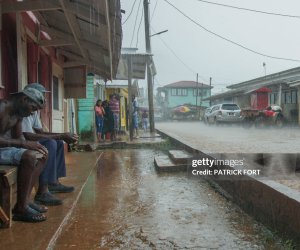


News Americas, NEW YORK, NY, Sun. Sept. 27, 2026: Guyanese continue to live with a maddening contradiction: a country now producing nearly 1% of the world’s oil, sitting on more per-capita oil wealth than almost any nation on earth, still cannot keep the lights on reliably in Guyana. Blackouts, load-shedding, and an aging, overstretched grid have been a fact of life in Guyana for generations – long before Exxon’s discovery, and stubbornly persistent since. In fact, since I was a little girl growing up there.
So a story out of an unlikely place – Lund, Sweden, population under 135,000 – is worth Georgetown’s full attention.
Swedish entrepreneur Jonas Birgersson, once known as “Broadband Jesus” for his role pioneering residential fiber Internet, is now applying that same networking logic to electricity. Instead of one giant, centralized grid vulnerable to a single point of failure, his company ViaEuropa is building networks of small, local “microgrids” — each capable of generating, storing, and sharing power independently, and linked together the way routers share data across the internet. If one node goes down, the rest of the network keeps running.
The model is already live in an apartment and commercial complex in Lund, generating solar power, storing it in batteries, and sharing it among tenants since April 2025. Birgersson’s team is now retrofitting a 1960s-era public housing project – 10 buildings, 278 apartments – with the same architecture, using old incinerator rooms to house storage batteries and burying cable between buildings.
The pitch, in Birgersson’s words: “Many. Small. Cheap. Digitally orchestrated.” Cheaper to build, easier to expand a piece at a time, and dramatically more resilient than a single sprawling grid — the kind of grid that, as the Times reported, nearly took down all of Europe’s power system in 2021 after a single substation failure in Croatia, and that left millions of Ukrainians without power after Russia attacked centralized infrastructure.
That resilience argument should land hard in Guyana, where the national grid has long been blamed for cascading, system-wide outages triggered by single points of failure – not unlike the very vulnerabilities decentralization is designed to eliminate.
Here is the question I think Georgetown needs to be asking: with billions in oil revenue now flowing and a $100 million Exxon-funded workforce and infrastructure commitment already on the table, why is Guyana still leaning almost entirely on a traditional, centralized grid model to solve a blackout crisis that traditional grids have failed to solve for 50 years?
Decentralized microgrid technology is no longer theoretical. The European Union’s own Grid Action Plan is pushing member states toward networks that are “more digitalized, decentralized and flexible.” NATO’s research arm is studying decentralization as a resilience and security strategy. A EU-funded research consortium – SAFEr GRID – is actively testing whether linked networks of small, independent grids can work at national scale.
Guyana doesn’t need to wait for Europe to finish proving the concept. With its oil wealth, its small and geographically dispersed population centers, and a grid that has never delivered consistent reliability even in the capital, Guyana is arguably a more natural candidate for this kind of leapfrog than a dense, already-built-out European economy. This is the same leapfrogging logic that let parts of the Caribbean and the developing world skip landline telephone infrastructure entirely and go straight to mobile.
The government doesn’t need to abandon its existing grid investments overnight. But it does need to ask, seriously and publicly: should a portion of Guyana’s oil revenue – the same revenue economists are already debating whether Guyana is getting a fair share of – be directed toward piloting decentralized microgrid projects in Georgetown, in the hinterland communities the national grid has never reliably reached, and in the new housing developments rising across the country?
Guyana has the money. It has the need. The only question left is whether it has the political will to try something other than what has already failed for half a century.
Editor’s Note: Felicia J. Persaud is the founder of Invest Caribbean, AI Capital Exchange and publisher of News Americas Now. Her work spans journalism, communications, entrepreneurship and access to capital.
Related News

Latitude Air Ambulance Remembers the Crew of Heartbeat 104 Medevac

Guyana Opposition Leader Azruddin Mohamed Granted Bail As Lawyers Allege ‘Calculated Att...

A US Marshal Rode Along For The Arrest Of The Presumptive Guyana Opposition Leader