
Lead Editor - Newsgathering
ryan.ba[email protected]
The alarm bells are ringing. They’ve been ringing for some time now, but the closer we get to a water crisis, the louder it sounds. The water issues in Trinidad and Tobago have transcended administrations.
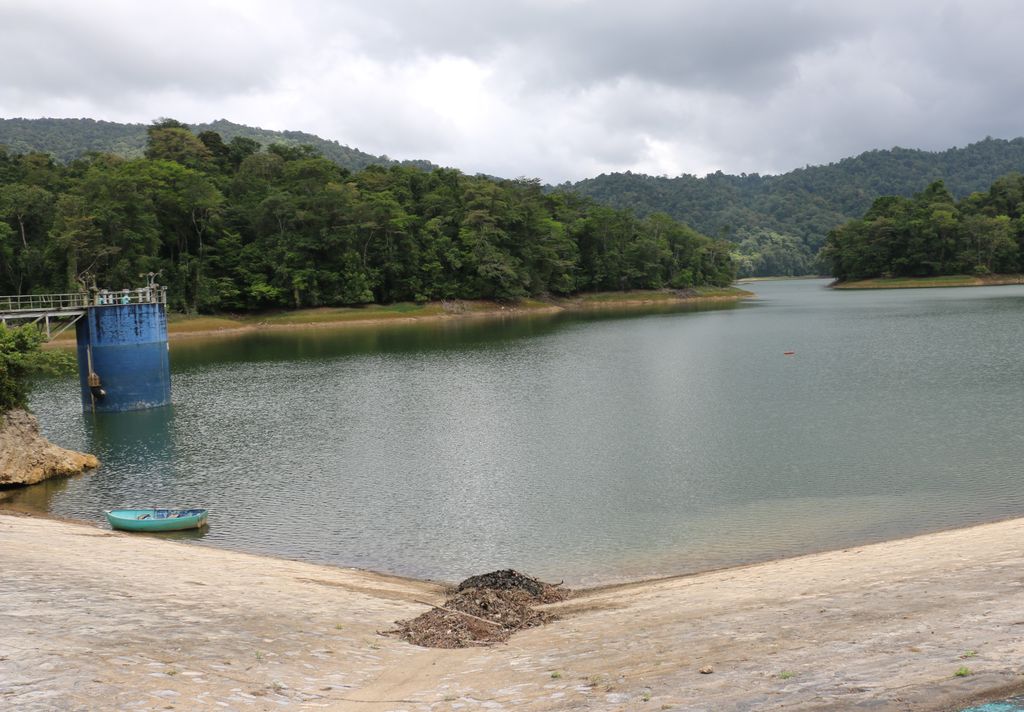
The year was 2009. A relentless drought, supercharged by an intense El Niño pattern, decimated the island’s water reserves. Following a disastrously dry rainy season that yielded only a quarter of its typical rainfall, the Water and Sewerage Authority (WASA) was forced to implement strict, widespread water rationing across the country.
The extreme aridity triggered an unprecedented surge in devastating bush fires that strained emergency resources, while withered crops left farmers facing mounting losses, prompting regional meteorologists to issue urgent drought alerts.
Since then, the ebb and flow of this country’s water supply has sometimes made it to the headlines, but the issue won’t go away.
This month, Arima residents were the latest to complain about a lack of water. It comes amid a hotter (and dryer) than usual wet season. But if we look outward, the issue of accessible water is both widespread and grimmer the further we look.
Last month, Puerto Rico enforced 48-hour water shut-offs. The Philippines was forced to ration water and cut services this month. Roughly 70 per cent of England is experiencing drought conditions affecting 20 million people. Germany, Italy, parts of the United States and the Middle East are all being severely affected.
And for T&T and the rest of the world, it is a race to adaptation as there is little sign things are going to get better anytime soon.
“We are definitely not alone in this challenge,” Laurayne Lucky said.
She is the executive director of the Caribbean Water and Wastewater Association (CWWA). Lucky said the Caribbean is experiencing the consequences of greater rainfall variability and more frequent and intense dry periods.
“Ultimately, this is not simply about managing a drought; it is about building long-term water resilience,” she added.
Dr Ronald Roopnarine, who serves as acting dean of the Faculty of Food and Agriculture, told the Sunday Guardian last week that while water stress levels can increase across the country, it may not amount to a drought.
He said, “Drought is not measured by just simply rain falling today, but really our water deficit accumulated over time. So, the reality is that the projections indicate that we will be in drought conditions. It’s serious, but it’s also not uniform.”
The seriousness of the situation has prompted both experts to warn that action must be taken to stave off the effects of dryer conditions that promise to worsen.
Roopnarine said, “Every single model is projecting that the Caribbean will become warmer with consequent higher evaporation rates, a general drying tendency. Trinidad and Tobago projections suggest that the dry season could actually lengthen by about eight per cent by 2050.”
It’s a tall task for a country that consumes 420 litres per person per day (reported as average national dry-season consumption in the 2024 Caribbean Sub-Regional Water Report). That’s more than twice the level reported for several Caribbean countries.
However, Dr Roopnarine said, with limited metering and approximately 50 per cent non-revenue water, it is difficult to separate actual consumption from leakage and other system losses.
“We cannot manage what we do not accurately measure,” he stated.
Roopnarine went further, “Our best available estimate is that approximately half of the water entering the distribution system generates no revenue. Not all of that is physical leakage, but the figure points to major infrastructure, metering and management deficiencies. In a drought, we cannot ask citizens to conserve every drop while the system may be losing or failing to account for roughly one in every two litres produced.”
He said authorities must be realistic on the amount of water they are working with and make decisions accordingly.
He said, “The reality is a lot of our communities, whether we do it formally or not, have sort of adapted in a way to not having a pipe-borne supply of water 24-7. Ultimately, the authorities must move away from reacting to water shortages after they occur and begin managing the system proactively, based on the water we actually have. This requires close coordination with the Water Resources Agency, which should provide the utility with clear, forward-looking assessments of current availability and projected inflows. The utility can then plan supply in advance and make realistic decisions based on the demand it is required to meet.”
Related News

CANPTT urges controlled fireworks; proposes drone displays

Contour Airlines announces nonstop service between Dominica and Trinidad
PNM denies Balisier allegations; accuses government of political witch hunt