
Lead Editor-Politics
akash.sama[email protected]
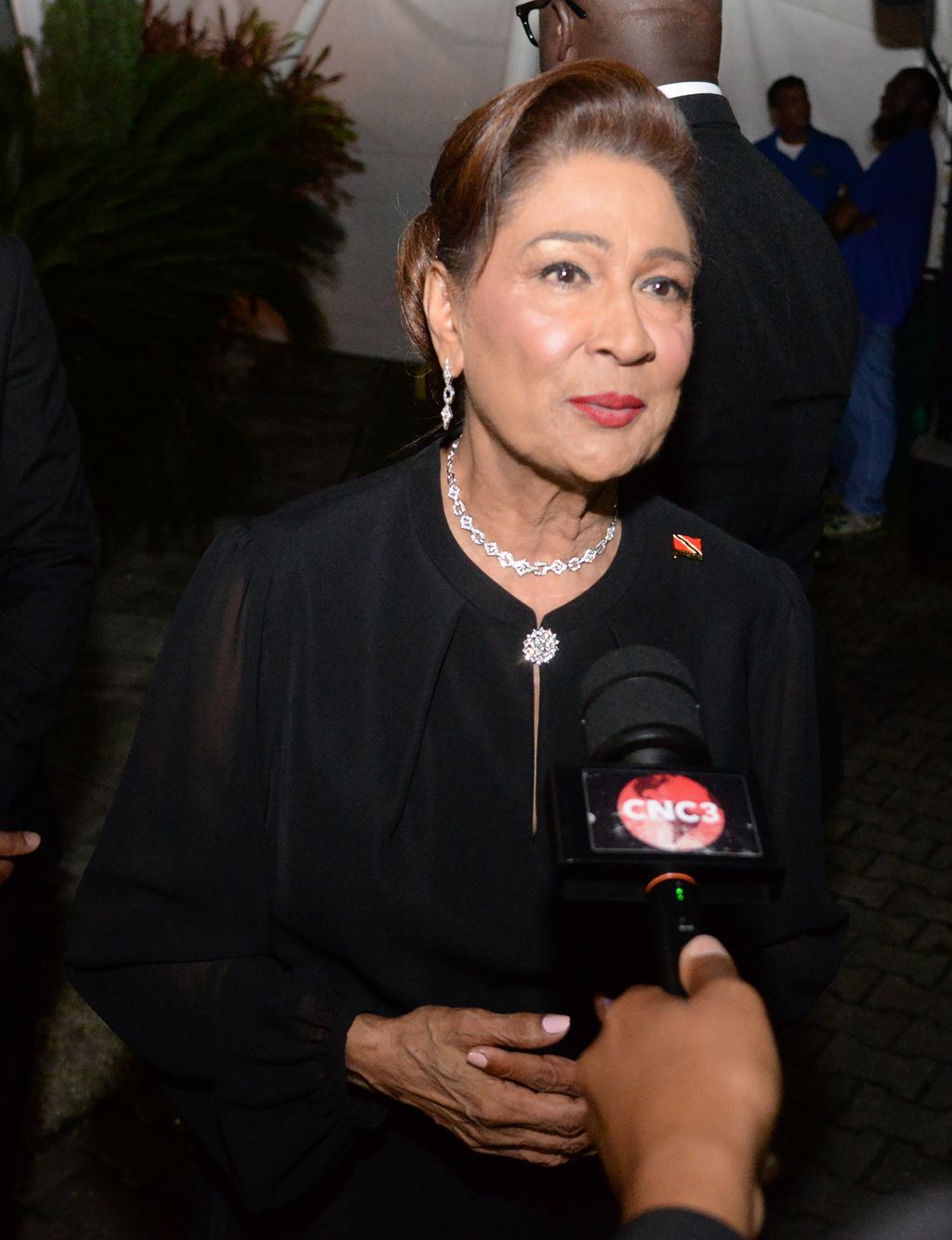
Prime Minister Kamla Persad-Bissessar has sought to reassure law-abiding citizens that measures will be put in place to minimise disruptions if they live or work in communities subjected to Special Operations.
“Law-abiding citizens have nothing to fear. Everything will be put in place to ensure minimal inconvenience to them during special operations,” Persad-Bissessar told Guardian Media yesterday.
Her assurance came after the controversial Special Operations Bill, 2026 passed both Houses of Parliament, paving the way for a new policing regime under which communities can be designated as “closed areas” where movement may be restricted.
The legislation cleared the Senate by a 16-15 margin after Senate President Wade Mark used his casting vote to break a 15-15 deadlock.
Asked when the bill would receive presidential assent, Persad-Bissessar replied: “Soon.”
However, she declined to say when the Special Operations framework would be activated, when Heads of Special Operations would be appointed, or whether any communities had already been identified for possible designation.
Under the legislation, people entering or leaving a designated closed area will generally require a permit.
Neither the Government nor the Police Service has yet provided detailed information on how the permit system will function, including how applications will be processed, how permits will be verified at checkpoints, or how residents will be accommodated in emergencies.
During debate on the bill, Defence Minister Wayne Sturge suggested permits could be applied for electronically, including via WhatsApp.
Guardian Media asked the Prime Minister when the legislation would be operationalised, whether areas had already been earmarked for designation, and whether she maintained her previously stated position that Special Operations would be limited to constituencies or local government areas controlled by the United National Congress (UNC) and Tobago People’s Party (TPP).
Persad-Bissessar declined to answer publicly.
“I will not make public answers to questions one to four as it will give information to criminals,” she said.
Asked what success under the initiative would look like, the Prime Minister responded: “Further decreases in the crime rate.”
When Guardian Media raised concerns that withholding operational details could leave residents unprepared for sudden restrictions, particularly given the permit requirements, Persad-Bissessar again assured that citizens had nothing to fear and that safeguards would be put in place to reduce any inconvenience.
The Prime Minister was also challenged on whether publicly stating that Special Operations would only take place in Government and TPP-controlled areas could effectively signal to criminals where the measures would not be enforced.
She rejected that argument and instead blamed the Opposition People’s National Movement.
“Not at all. The PNM publicly told the violent criminals that they will not allow special operations in their constituencies at a public press conference. It is the PNM who tipped off the violent criminals that their constituencies will be safe havens for violent criminals,” she said.
Persad-Bissessar said she had merely responded to the Opposition’s position to reassure residents in Government-represented areas that “they will be covered by SOs.”
She also said the Government’s programme of new police posts would support the Special Operations initiative.
According to the Prime Minister, six posts have already been completed, while another ten are expected to be built within the next month.
“We are on target to complete all before year’s end. They will be used to complement the Special Operations,” she said.
Political analyst Derek Ramsamooj says the Government owes citizens greater transparency on how a policy capable of restricting movement and other freedoms will operate.
“The Prime Minister must have a sense of responsible governance. Any policy that seeks to curtail the freedom of our citizens’ rights must be put forward in an open and transparent manner,” Ramsamooj told Guardian Media.
He argued that constructive criticism should be welcomed if it helps strengthen measures designed to combat crime.
Ramsamooj warned that withholding too much information risks creating the impression that the policy has not been fully developed.
“The country has yet to see a coherent strategic plan that will win public trust,” he said.
Asked whether the Prime Minister’s assurance that law-abiding citizens have nothing to fear was sufficient, Ramsamooj said it ultimately depends on confidence in those responsible for enforcing the measures.
“Law-abiding citizens will have nothing to fear if they have confidence and public trust in the persons entrusted with that responsibility,” he said.
He also criticised the idea of determining Special Operations zones along political lines.
Noting that constituencies contain numerous polling divisions with varying voting patterns, Ramsamooj described such an approach as “political folly.”
“The ill-conceived perspective of such a programme affecting UNC-only constituencies is indeed a very, very bad posturing of shallow political thinking,” he said.
PNM chairman and former national security minister Marvin Gonzales also called on the Prime Minister to explain how the legislation will be implemented.
“She owes the country an explanation as to how she intends to operationalise this unconstitutional and dangerous piece of legislation in this country,” Gonzales said.
He argued that concerns about national security should not be used to shield the policy from public scrutiny.
“She must not hide behind the veil of national security,” he said.
Gonzales urged citizens to closely monitor the implementation of the legislation, arguing that the new powers have implications for constitutional rights and freedoms.
The Government, however, has maintained that the Special Operations framework is intended to target violent criminal activity and restore safety in affected communities.
Related News
Kamla to limit special operations to UNC areas only
4,000 pounds of waste removed from Port of Spain foreshore

Saudi Arabia shuts down a pipeline as Houthis seize an island, opening a new front in the ...