
Muslim groups across Trinidad and Tobago met in an emergency session yesterday to discuss Government’s decision to officially designate three organisations - Hezbollah, Hamas and Iran’s Islamic Revolutionary Guard Corps (IRGC) - as terrorist entities.
The decision has not only triggered a major legal and financial response under Trinidad and Tobago’s Anti-Terrorism Act but also placed Muslim bodies locally in a bind, as it could also affect funding to their organisations locally.
Guardian Media was told last evening that the groups may either issue a media release or host a joint media conference today to highlight their concerns over the decision.
Individuals who were part of the meeting revealed that the Shia Muslim community in Trinidad and Tobago is made up of multiple independent organisations and centres, rather than a single unified body, hence the reason for yesterday’s meeting to discuss the development. Sources told Guardian Media that discussions centred on the implications of the Government’s position on Iran and the designation of the IRGC and wider geopolitical fallout.
Of serious concern was the belief that the decision seemed unjustified, since there was no evidence provided to show the three groups had any influence in T&T. Members also felt the act was prompted only by an edict from the United States, adding it could also be considered an attack on the religion, since it stigmatised all Muslims.
According to Gazette notices published on Monday, the High Court has ordered the immediate freezing of all property and financial assets linked to the three organisations pending further proceedings.
The Financial Intelligence Unit of Trinidad and Tobago (FIUTT) has since directed full compliance across the banking and financial sector, instructing immediate compliance with the freezing measures and reinforcing obligations under the country’s anti-money laundering and counter-terrorism financing regime. Affected institutions have been moving to implement the court-ordered restrictions, Guardian Media was told.
The orders are subject to ongoing oversight, with six-month judicial and Attorney General reviews built into the legal framework governing the listings.
The gazetted notices also came days after the Shia Masjid in Port-of-Spain was visited by members of the T&T Police Service.
The move places Trinidad and Tobago alongside a growing number of jurisdictions internationally that have recently expanded terrorist designations targeting Iranian-linked organisations and their regional allies.
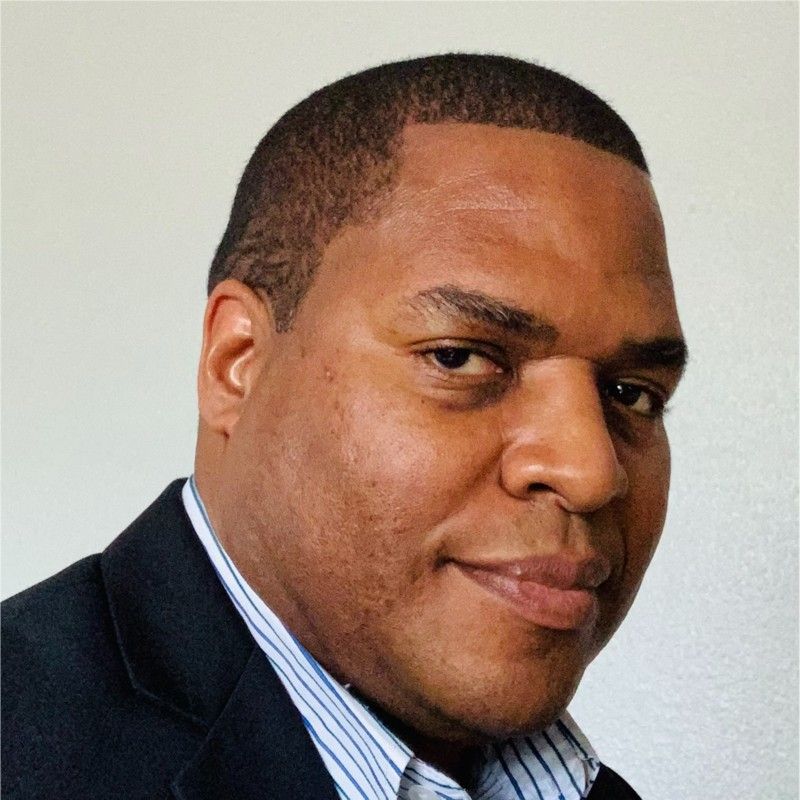
Speaking to Guardian Media yesterday, Dr David Muhammad, the Trinidad and Eastern Caribbean representative of Louis Farrakhan and the Nation of Islam, acknowledged the possibility that his organisation may run into issues due to longstanding ideological and religious engagement with Iran and Shiite Muslim communities, describing it as part of broader international Islamic solidarity and outreach.
He confirmed that his organisation maintains religious and cultural connections with Shiite Muslim groups in Trinidad and Tobago and globally, including participation in shared events and exchanges involving Iranian-linked guests during Ramadan 2026 programming at the Kwame Ture Centre in Port-of-Spain.
“There is a relationship and a spiritual understanding between ourselves and Shiite Muslims, and that extends into Iran as well,” Muhammad said, adding that these engagements are rooted in religious fellowship and shared Islamic identity, rather than political structures.
He pointed to joint iftar gatherings involving Shiite Muslim participants and visiting individuals connected to Iran, describing them as “moments of unity within the broader Muslim community in Trinidad and Tobago.”
“We have hosted brothers and sisters from different parts of the Muslim world, including those with ties to Iran and those engagements are centred on faith, Ramadan, and community building,” he said.
But Muhammad stressed that such interactions should not be interpreted as political alignment with any state or government.
“Religious connection is not the same as political affiliation. Our work is about faith, upliftment, and moral responsibility — not geopolitical positioning,” he said.
In fact, he strongly emphasised his independence from party politics, saying his public commentary is guided by principle rather than political loyalty.
“I am not a member of any political party. I do not support any political party, and I have never allowed my views to be shaped by partisan considerations,” he said.
He added that his position as a public figure and state board chairman was also based on professional experience rather than political association. Muhammad is the chairman of the board at the National Library (Nalis).
“My work in education, correctional institutions and community development stands on its own. That is where my authority comes from, not political endorsement,” he said.
In a sharply contrasting position, however, Islamic Front representative Umar Abdullah condemned the Government’s designation, questioning both its justification and its relevance to Trinidad and Tobago.
“I cannot understand what national security threat is being claimed here. These groups have no operational footprint in Trinidad and Tobago,” Abdullah said.
He said he believed the decision reflects external geopolitical pressure rather than domestic necessity.
“This looks less like local policy and more like imported foreign policy. We are being pulled into conflicts that are not ours,” he said.
Abdullah defended the ideological origins of the groups, linking them to regional conflicts.
“These organisations did not emerge in a vacuum. They emerged from decades of occupation, war and resistance in the Middle East,” he said.
“These groups were formed as a result of resistance against Israeli aggression against Palestinians and Lebanese people,” he added, asserting that their classification as terrorist organisations ignores the historical and political context of their emergence.
He also escalated his criticism to international powers, accusing the United States and Israel of war crimes claims widely disputed in diplomatic and academic circles.
Abdullah further called for the expulsion from T&T of foreign diplomatic missions from both countries, stating that, in his view, they should be held accountable for their action in the Middle East under international law.
Hezbollah
Hezbollah is a Shia Islamist political and military organisation based in Lebanon. It is known for combining armed resistance with political participation in Lebanese governance. It emerged in the 1980s with Iranian backing during the Lebanese Civil War and has since built a powerful military wing that has fought multiple conflicts with Israel. Hezbollah is widely known for its role in regional proxy conflicts and is designated as a terrorist organisation by several Western countries, while also maintaining significant political influence inside Lebanon.
Hamas
Hamas is a Palestinian Sunni Islamist organisation that governs the Gaza Strip and maintains an armed wing. It is known for its military confrontation with Israel, including rocket attacks, armed operations and governance of Gaza since 2007. Founded in 1987 during the First Intifada, Hamas combines political administration with armed resistance. It is designated as a terrorist organisation by the United States, the European Union, the United Kingdom and others, and is a central actor in the Israeli–Palestinian conflict.
Islamic Revolutionary Guard Corps
Islamic Revolutionary Guard Corps is an elite branch of Iran’s armed forces created after the 1979 Iranian Revolution. It is known for protecting Iran’s political system, overseeing key military and intelligence operations, and extending Iran’s influence abroad. Through its Quds Force, it supports allied armed groups across the Middle East. The IRGC is also heavily involved in Iran’s economy and internal security structure. It is designated as a terrorist organisation by the United States, while other countries do not apply a universal designation.