
Senior Reporter
shane.su[email protected]
Residents in several Morvant communities say they are not opposed to the proposed Zones of Special Operations (ZOSOs), but remain sceptical about the results the initiative can achieve, arguing that years of promised crime-fighting measures have failed to make their communities safer.
A revised version of the Law Reform (Zones of Special Operations) (Special Security and Community Development Measures) Bill 2026 includes several new provisions, among them a two-year sunset clause, specialised policing districts covering the entire country, the power for the President to declare closed areas and curfews within designated zones, and a requirement for officers assigned to these districts to wear body cameras where available.
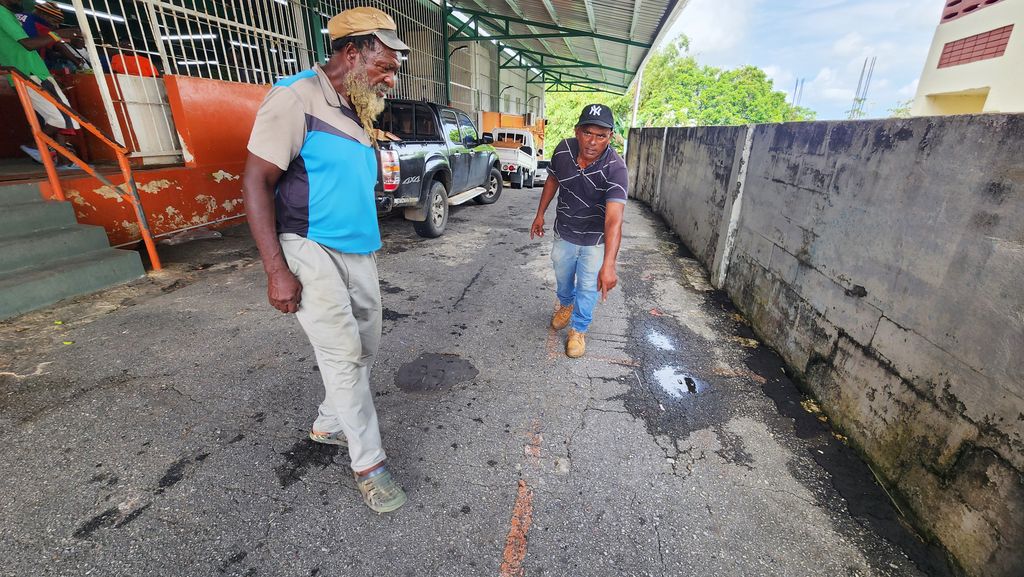
Guardian Media visited several Morvant neighbourhoods, where four murders were recorded within a 48-hour period last week.
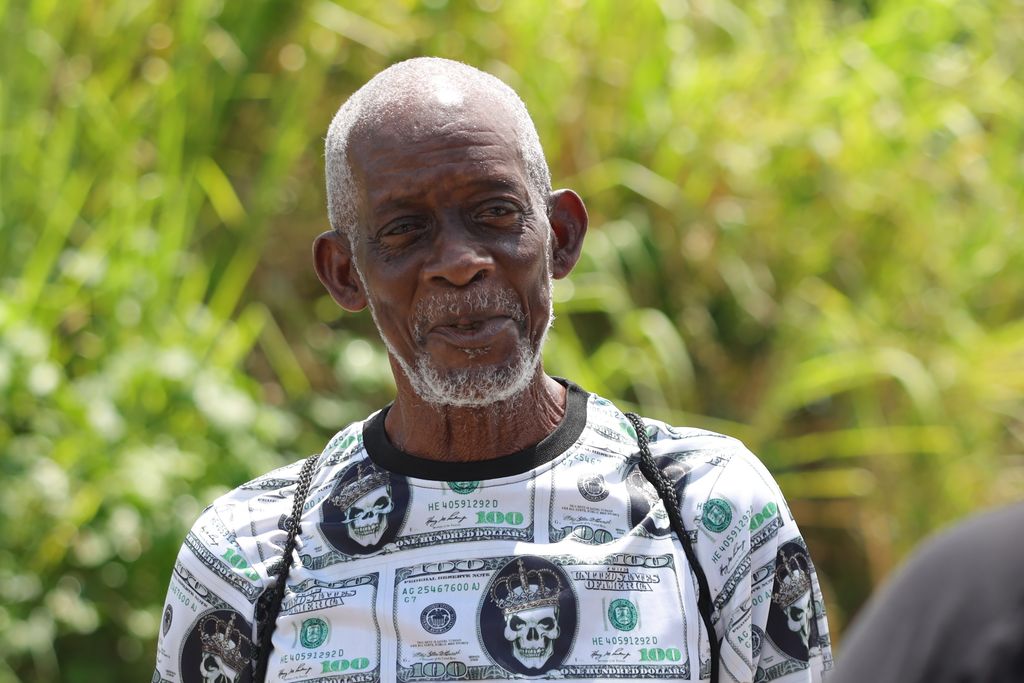
In Second Caledonia, where three of the killings occurred in separate incidents, one resident, a retired postman who asked to be identified only as Anthony, said he believed ZOSOs could help improve security if implemented responsibly.
Anthony, who delivered mail in his community and parts of Laventille for 40 years, described the initiative as “worth a try,” noting that a strong sense of community still existed among law-abiding residents.
“I think it could still be a good idea. Anytime the police are working, I won’t say no to that.
“I’m not opposed to that.”
Anthony said a more targeted and consistent police presence would help expand security coverage and reduce response times.
“It’s something that a lot of people would want to feel more comfortable. I have no problem with it, especially now.”
He added that although he understood the fear and uncertainty many residents felt, he personally did not feel threatened because of his long-standing relationships within the community.
“I walked this route for years and I know everyone, from when a lot of them were small children right up to adulthood.
“I know it could be dangerous, but I don’t feel afraid. Everything is cool with me.”
However, another Second Caledonia resident, who requested anonymity, said he was unimpressed by the proposal, arguing that it sounded similar to previous anti-crime initiatives such as Operation Anaconda in the early 2000s.
“I hear people talking about the ZOSO and, to me, I haven’t heard anything different from what was done before.
“They say they can introduce a curfew depending on how bad things get, and that might make a difference, but won’t they eventually have to lift the curfew? Then will we just be waiting for the next person to die?”
The resident, who said he is a retired soldier and has lived in the area since 1990, also questioned Clause 13 of the Bill, which allows the Head of Special Operations to establish a cordon or “closed area” to assist in apprehending criminals. While he acknowledged the measure could be useful, he argued that Morvant’s geography would make enforcement challenging.
“There are so many roads, tracks and valleys all up and down these hills, and not all of them are paved.
“For years the police have been chasing people through these alleys and tracks. You could chase someone down through St Francois Valley and end up in Belmont. On the eastern side, you could follow someone and end up in Malick. Then you could be chasing somebody through Morvant Old Road and end up somewhere in Laventille. So I don’t see how they will manage all of that, including traffic, if they really need to lock down an area.”
Under the proposed legislation, Morvant, Diego Martin, Port of Spain, Laventille and San Juan would comprise District One of the new policing framework.
But another lifelong Morvant resident, 61-year-old Leroy Bennett, said he believed the large-scale deployment of police envisioned under the ZOSO strategy was unnecessary.
“It’s a waste of time because they aren’t understanding what they’re doing.
“If you want to deter crime, all you need is one police van driving through every hour and everything will be quiet. You don’t need all these posts and checkpoints they want to put up.”
Bennett nevertheless acknowledged that the recent violence in Morvant was troubling. He said the cluster of murders in Second Caledonia had left many residents uneasy and recalled hearing gunfire from his home on several nights.
For that reason, he urged authorities to consult residents before making a final decision on the legislation.
Meanwhile, a Mon Repos resident, who also requested anonymity, expressed cautious optimism that the ZOSO strategy could address some aspects of crime. While stopping short of fully endorsing the proposal, he welcomed the requirement for officers assigned to ZOSOs to wear body cameras.
The resident, who claimed he had previously been profiled and subjected to police brutality, said the provision would offer greater protection for citizens.
“That’s a really good feature because a lot of things happen that should be captured on a body camera. I’ve been hearing about body cameras for years and they still haven’t been fully introduced.
“There are a lot of things some police officers do that shouldn’t be happening. Body cameras would help because you can’t tell me you want to rough up people like me because we have cane rows, wear a gold chain or a pair of Clarks.”
However, he maintained that crime was driven by deeper social and economic problems that could not be solved through policing alone, pointing to his own struggles to find employment.
“I can’t say it won’t work. At the end of the day, seeing is believing, but we need more than a ZOSO.
“I have all my qualifications and I still can’t find a job. A ZOSO can’t help me with that.”
The resident said the Government must address broader societal issues if it hopes to reduce crime over the long term.