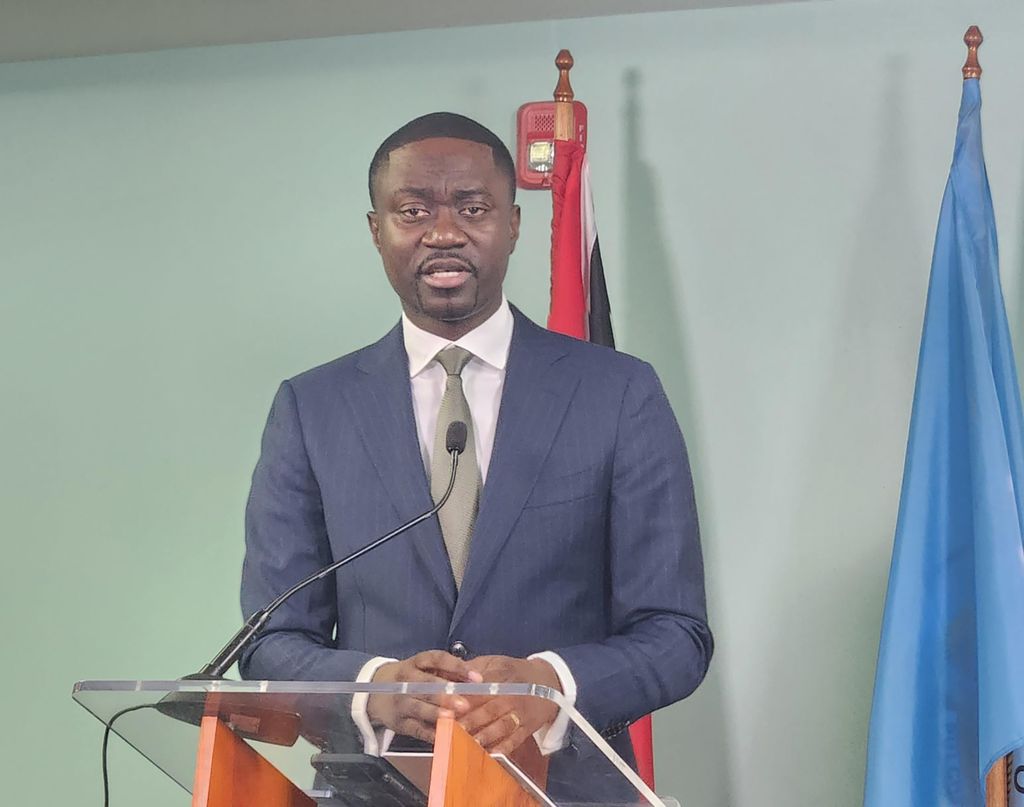
Although Homeland Security Minister Roger Alexander has agreed to issue a Minister’s Permit allowing Christopher “Chris Must List” Hughes back into T&T to attend his upcoming trial next month, he has not indicated if he will honour a request to recuse himself from the matter.
Responding to questions yesterday, he said, “I don’t need to be part of that matter.”
Challenged on the lawyers’ argument about possible bias, he having previously featured on Hughes’ streaming platform in content published on May 24, 2024, whilst he was a police officer, Alexander responded, “That sounding like too-too from a cow. I guess that’s cow dung.”
Told that Hughes’ attorneys may call him as a material witness when the trial begins on July 22, Alexander said, “They can do anything they want.”
Attorneys Criston Williams, Aaron Lewis and Blaine Sobrion wrote to Alexander on June 25, requesting him to lift the Order of Deportation on Hughes, which was preventing him from returning to the country so he could be present for the trial, and to also recuse himself from the matter.
The request for the recusal reportedly resulted after the legal team became aware of communications between Alexander (when he was an officer) and Hughes regarding matters which touch and concern the criminal proceedings against Hughes.
As such, the team has suggested that Defence Minister Wayne Sturge be the one to rule in respect of Hughes’ request to lift the Deportation Order.
The attorneys indicated that if Alexander refused to accede to the requests, that he outline his legal and factual reasons in writing, which Hughes could then submit to the court if necessary.
In urgent correspondence dated June 30 and addressed to both Alexander and Director of Public Prosecutions (DPP), Roger Gaspard, Hughes’ attorneys claimed, “The ministry has not responded to the applicant’s request that, should the relief sought not be granted, written reasons be provided identifying the legal and factual basis upon which the request has been refused. The provision of such reasons remains important to ensuring transparency, procedural fairness, and proper accountability in the exercise of executive discretion.”
Arguing that this matter was exceptional, the attorneys urged the DPP to get involved.
“The statutory discretion governing whether the applicant may re-enter Trinidad and Tobago to defend himself against the pending criminal charges falls to be exercised by the very minister who personally participated in events forming part of the factual matrix upon which the pending prosecution is founded,” the lawyers argued.