
Lead Editor-Politics
akash.sama[email protected]
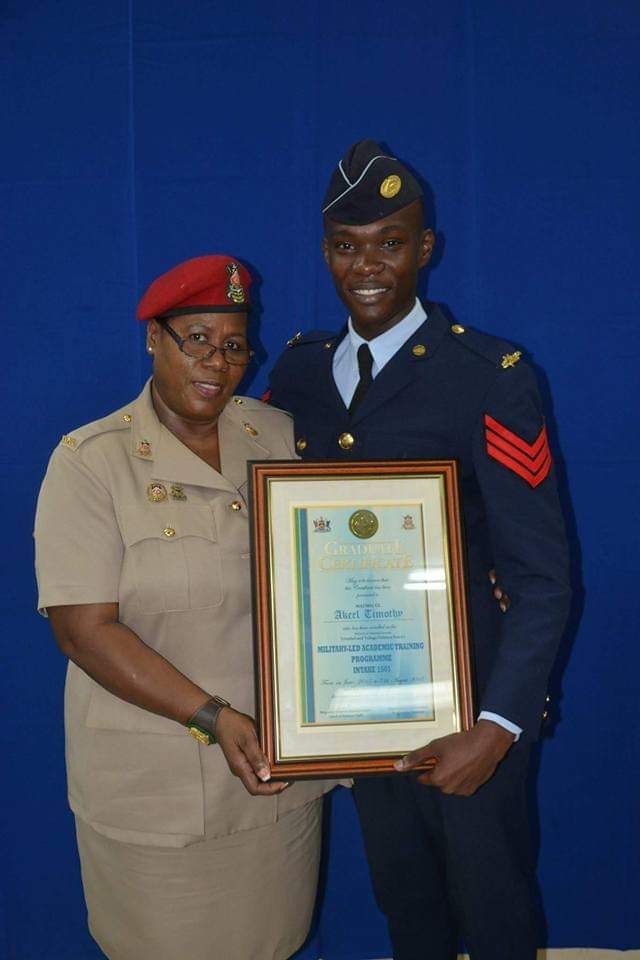
Akeel Timothy still remembers begging his mother not to send him to the Military-Led Academic Training (MiLAT) programme.
At 18, he believed he did not belong there. He had already spent more than six years in the Trinidad and Tobago Cadet Force, loved military life and was not the stereotypical troubled teenager many associated with the programme. But after sitting CSEC examinations twice and emerging with just one pass, his mother saw something he did not. She saw a young man who needed focus.
Eleven years later, the 29-year-old Diego Martin entrepreneur says that decision transformed his life.
Today, he owns several businesses, including transport, car rental and courier companies.
But as Government suspends MiLAT while reviewing its financial viability, Timothy fears hundreds of young men could now lose the same opportunity that changed his future.
Enrolling in 2015, Timothy said he found teachers and instructors who refused to let students fail.
“Some of them would stay with us until after one o’clock in the morning trying to help us understand something we didn’t get,” he said. “Then they still had to be up around 4.30 am to start physical training. They really went the extra mile.”
One teacher, Mrs Tony, left a lasting impression.
After attending a funeral, she returned to school shortly before class ended and noticed Timothy had given up on an English summary-writing assignment.
“She picked up the paper and thanked me,” he recalled. “The next day she came back with that same paper and worked through it with me.”
The result was something Timothy once thought impossible.
“Today, I have a Grade One in English.” By the time he graduated in 2017, Timothy had increased his academic achievements from a single CSEC pass to six overall, earning five additional subjects during his two years at MiLAT.
But he insists academics tell only part of the story.
Timothy said MiLAT’s greatest achievement was transforming young men from communities plagued by violence into disciplined, productive citizens.
“You had boys coming from some of the roughest communities in Trinidad and Tobago. Today, a good number of my batch are serving in the military.”
He rejects the long-standing stigma that MiLAT catered only to delinquent youth.
That is why news of the programme’s suspension left him deeply unsettled.
“I felt hurt. I felt disappointed. My anxiety started to rise,” he admitted. His greatest concern is not for graduates like himself, but for those who had only recently entered the programme.
“What are we going to tell those young men?” he asked. “Do we tell them to go back home? What if this was their last chance? What if they end up falling back into crime? Some may not even have been involved in crime before, but now they may fall into it because they have lost this opportunity.”
Timothy is urging Government to exhaust every alternative before contemplating permanent closure.
He also challenged Defence Minister Wayne Sturge’s argument that there is no statistical evidence linking MiLAT to reductions in crime. For Timothy, however, the strongest evidence is found not in numbers but in the lives of the graduates themselves.
His own intake, Batch 1501, was once considered among the most difficult cohorts in MiLAT’s history.
Yet, he said, it went on to produce more than 20 soldiers and sailors, alongside entrepreneurs and other professionals.
“If what people considered the worst batch could produce businessmen, soldiers, sailors, airmen and productive citizens,” Timothy said, “then imagine what this programme can continue to do if we give it the chance.”