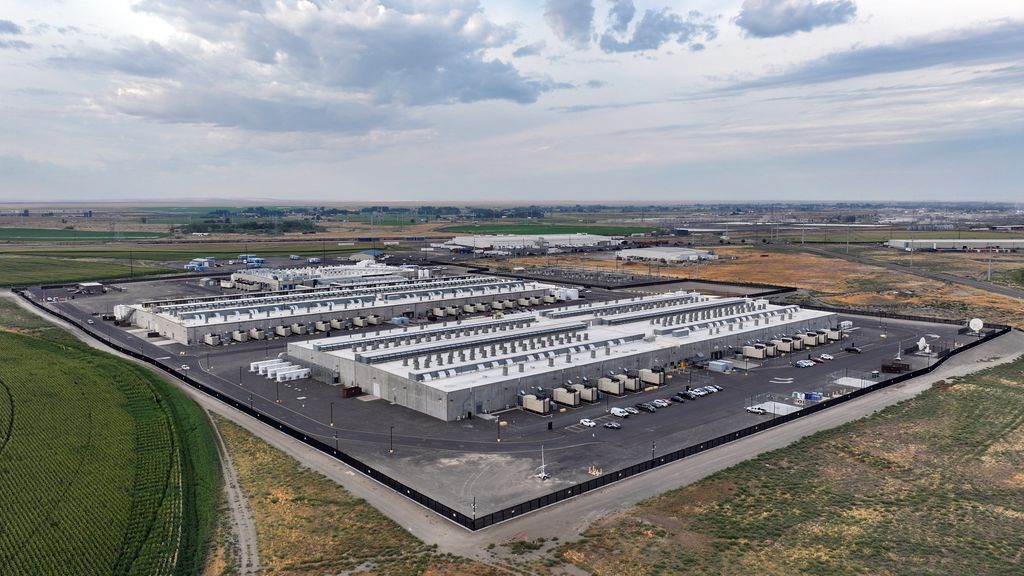

The Government has already established and equipped a Tier 4 data centre (the most powerful) in T&T, but has not disclosed its location.
In December 2025, according to procurement notices by the Ministry of Public Administration and Artificial Intelligence (MPAAI), the Government sole-selected and leased land for 20 years for the data centre.
In an additional notice, it sole-selected a contractor to conduct civil works for the data centre to be completed last month (June), with a 10-day standstill period.
It also procured rated engines, equipment, operation staff, janitorial services, security services and preventative maintenance services for one-year periods. (SEE TABLE).
That Tier 4 data centre project began in 2022 under the former People’s National Movement (PNM) administration.
In 2023, the then government, through iGovTT, invited tenders for a proposed Tier 4 data centre facility at Phoenix Park Industrial Estate. That initial tender had also included a solar park, capable of producing 500 kilowatts of electricity and that the data centre should, “at a minimum Tier 3 certification at the point of commissioning if the elements for Tier 4 are not available within the timeline specified.”
In 2024, that estate, a flagship project of China-Trinidad and Tobago cooperation under the Belt and Road Initiative, was opened and is close to the Point Lisas Industrial Estate. The data centre is not listed as part of the estate’s tenants.
The data centre was funded by a US$120 million CAF Development Bank of Latin America and the Caribbean loan. It was done through the Ministry of Digitalisation, now MPAAI. Guardian Media understands that the equipment for the centre had already been acquired prior to the April 2025 general election and has since been set up.
To date, the Government has not made the details of that data centre or its location public, even as it has drawn down from its CAF loan to fund the facility.
There has been no public information about the project and since post election and no publicly available information on any modifications done to the project.
Further, there is no publicly available information on whether it is operational or has established agreements with the country’s utilities.
Instead on July 10, the Government of T&T signed three MOU’s with two of them being for the proposed establishment of large-scale data centres and artificial intelligence (AI) infrastructure- one with Ernst & Young (EY) LLP to partner with third parties on a 300-megawatt data centre and another with Hummingbird AI Holdings, for a proposed 150-megawatt centre with the ability to scale up other 500 megawatts.
As it stands, T&T already has five data centres- Fujitsu, TSTT, Digicel, Cable and Wireless and Air Link. Those would be classified as Tier 3 data centres.
The Government’s data centre, as well as the proposed Hummingbird and EY centres, would be classified as Tier 4.
An industry source raised concern about the Government signing MOUs with companies rather than a country, for instance, the United States. He noted that under the country’s procurement regulations, if the project advances, it will have to fall under the Office of the Procurement Regulation.
Line Minister Dominic Smith did not respond to questions from Guardian Media on the status of that centre or why it has not disclosed it to the public.
As concerns about data centres in T&T mount, Hummingbird AI Holdings LLC founder Marc Farrell said the company “was formed specifically to pursue the Trinidad and Tobago opportunity”.
The company is incorporated in Delaware, United States.
“While members of our consortium have been collaborating on AI infrastructure and data centre projects for some time, the Trinidad opportunity itself was only conceived about a year ago, and the Delaware entity was established expressly for that purpose,” he clarified on Friday.
Several companies, including Fortune 500 companies such as Amazon and Alphabet, are incorporated in Delaware because of the state’s corporation-friendly laws and tax benefits. The state does not require the names of shareholders or LLC members to be listed on public formation documents and does not impose corporate income tax on companies that are formed there but conduct business elsewhere.
For Farrell, his proposal is for a large-scale AI infrastructure campus in T&T.
“The country has a long history of operating complex industrial and downstream energy infrastructure, supported by a highly skilled engineering and technical workforce and decades of experience delivering mission-critical industrial facilities. Combined with competitive access to natural gas, globally competitive industrial electricity costs, robust subsea connectivity into both North and South America, and a growing national focus on economic diversification, Trinidad possesses many of the ingredients required to support next-generation AI infrastructure. Importantly, the opportunity extends well beyond the construction of a data centre. If developed successfully, Trinidad and Tobago has the potential to establish itself as an AI and digital infrastructure hub serving the wider Americas, creating a platform for future investment, innovation and long-term economic growth,” he said in a note shared with Guardian Media.
At the heart of AI and data centre investment in the country is its cheap electricity.
T&TEC’s electricity rates are the cheapest in the region. However, the utility is hamstrung by its billion-debt to the National Gas Company (NGC) for natural gas, even as the limited availability means there is not enough natural gas to meet the needs of the downstream industries.
Last Thursday, US Embassy Economic Officer Jeff Cernyar identified the Point Lisas Industrial Estate as the preferred location for at least one centre, with Debe also under consideration.
He said T&T’s electricity system already has substantial unused generating capacity.
“Normally, if you talk about building a data centre somewhere, it’s a four-year project. But two of those years are meant to bring your electrical grid up to the capacity it needs to supply the electricity,” he had said.
“This is the first time I’ve served in a country where there is excess capacity in generating and transmission on the grid. T&T has about a quarter of its generating capacity that is not used.”
Cernyar had said that industrial estates such as Point Lisas provide the ideal environment for large-scale data centres because they already accommodate heavy industry and are located away from residential communities, addressing one of the main public concerns surrounding the developments.
“You’re basically converting methane, natural gas, into knowledge, into information. This is a defining moment. It’s a new industrial revolution, a knowledge revolution, and T&T can be in the driver’s seat as part of that, in partnership with the United States,” he had said.
One source reasoned that the fundamental challenge is that the project depends on attracting international customers, yet those are exactly the organisations that conduct the most rigorous technical and commercial assessments.
“Trinidad and Tobago’s strongest selling point is electricity cost, but that alone is unlikely to outweigh concerns about connectivity, resilience, operating experience and long-term infrastructure reliability.”
“Even customers whose computing work is less sensitive to delays and who mainly prioritise low operating costs can find comparable or lower electricity prices in larger, better-connected markets that already have multiple internet routes, established operators and mature data centre ecosystems. Those buyers therefore have stronger reasons to choose those locations instead.”
According to industry insiders, a diligent assessment of any MOU raises concerns about establishing Tier 4 data centres.
“When an international company chooses where to place a data centre, the first questions are always: Will it stay online? Is the internet connection reliable? Is there backup if something fails? Can the operator meet strict service guarantees? Can the company comply with international regulations? Cheap electricity is only a deciding factor if all of those other requirements have already been met. On those more important tests, Trinidad and Tobago falls short,” a source explained.
Some of the factors they identified are:
“The country’s biggest weakness is connectivity. Every international internet cable comes ashore at the same location in Chaguaramas. That creates a single point of failure. There is no geographically diverse second path. If that landing station is damaged by an accident, equipment failure or a major storm, the entire country’s international internet connection can be disrupted. Global customers looking for highly resilient infrastructure generally expect multiple, physically separate routes so that one incident cannot take everything offline. Most international traffic has to pass through Puerto Rico or Florida before reaching the rest of the world. That means higher delays in communication and greater dependence on telecommunications networks (Digicel/Liberty) outside the country’s control,” the source said.
Another source explained that while low power cost is its single advantage, it is both fragile and insufficient to offset the rest.
The source reasoned that the argument that T&T offers exceptionally cheap electricity is also less secure than it appears.
“Those low prices depend on subsidised natural gas, yet the country is facing declining gas production. Several major industrial facilities have already reduced or suspended operations because of gas shortages, and the government is increasingly relying on gas imports from Venezuela. That means any promise of low-cost electricity over the next decade or more carries significant uncertainty. Governments facing limited gas supplies will naturally face pressure to decide where that gas should go. Electricity prices that look attractive today can change if subsidies are reduced or if gas becomes more valuable in export markets. International customers considering investments lasting 10 or 15 years pay close attention to that kind of risk,” the source explained.
An industry insider noted that in the case of Hummingbird, there is no track record of coordinating or managing a billion-dollar project. The source said both centres would incur significant consultant costs, and because there is little publicly available information on the MOUs, there is no explanation of who will cover the costs of numerous studies to be undertaken. “For international customers making billion-dollar technology decisions, an untested operator represents an additional layer of delivery and operational risk. Large technology companies usually prefer facilities run by organisations with established records of completing similar projects on time, within budget and to internationally recognised technical standards. Building a major artificial intelligence data centre for the first time is a very different proposition from operating businesses in unrelated industries,” one source said.
“There are no multiple, independent data centre regions within the country that customers can use as backups for one another. If a company needs redundancy, meaning a second location that can immediately take over if the first one fails, it would still have to place that backup facility in another country.
“The country also has relatively little internet exchange infrastructure and limited connections to the world’s largest cloud computing providers. That means customers do not benefit from the network advantages that exist in established data centre markets,” one source explained.
“Modern artificial intelligence computing equipment produces enormous amounts of heat and often requires significant water resources unless more expensive cooling technologies are used. In a country already experiencing water shortages, that raises questions not only about operational reliability but also about environmental and political risks. Customers increasingly consider environmental, social and governance issues when deciding where to invest. If a data centre becomes associated with water shortages or public opposition, that creates reputational risks that many companies would rather avoid,” a source said.
“Many require internationally recognised certifications covering information security, operational resilience and data protection before they will host sensitive information in a facility. Those credentials are still limited in T&T compared with more established data centre markets. Dependence on gas supplies linked to Venezuela introduces another layer of geopolitical uncertainty. Large multinational companies generally try to minimise exposure to politically sensitive supply chains wherever possible.”
Related News
Tropical Wave development threat fades but bad weather still coming
Aid convoys being assembled for Venezuela quake relief operation

Alexander on recent bomb threats: ‘An arrest is imminent’