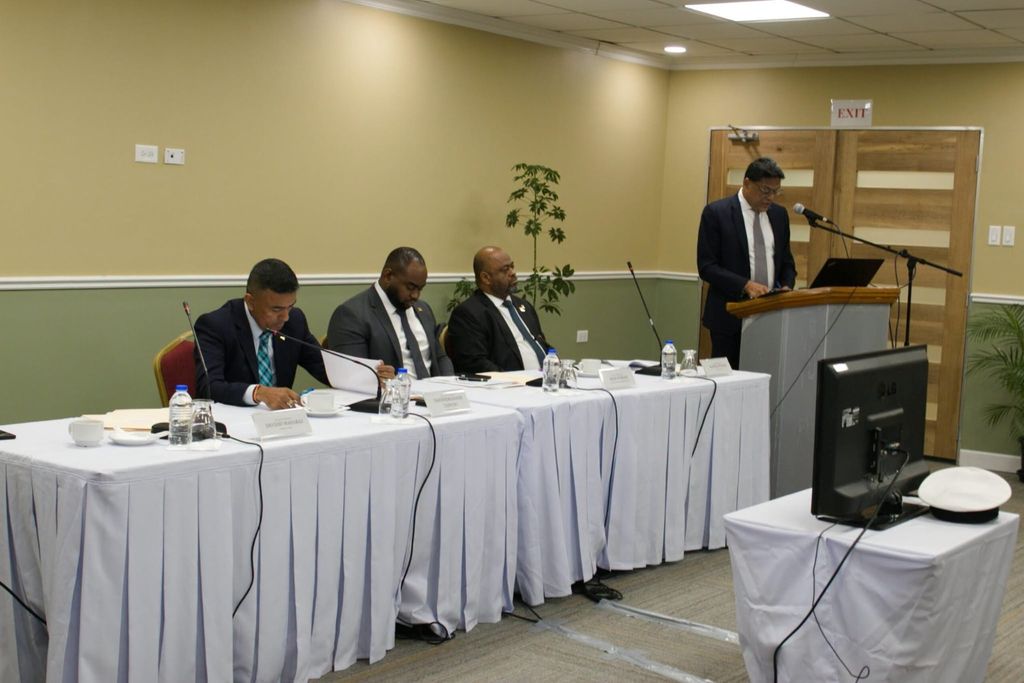

Trinidad and Tobago’s counter-terrorism strategy is placing greater emphasis on financial oversight, border controls and inter-agency cooperation as Government moves to implement the 2025 National Counterterrorism Strategy.
The second meeting of the Inter-Ministerial Committee for Counter-Terrorism (IMCCT) on Wednesday examined the role of various ministries in the national strategy, with Finance Minister Davendranath Tancoo saying financial systems are central to efforts to disrupt terrorist financing and organised criminal activity.
According to releases from the Ministries of Finance and Defence, Tancoo said modern terrorist organisations and transnational criminal networks rely on financing, international trade and technology to operate, making the detection and disruption of illicit financial activity a key component of national security.
“Before an attack is carried out, money must move, goods must cross borders and illicit proceeds must be generated and concealed. If we detect and disrupt those activities early, we reduce the ability of criminal and terrorist organisations to operate,” he said.
Tancoo said the Ministry of Finance is working to strengthen financial intelligence through the Financial Intelligence Unit, modernise Customs administration and improve collaboration with international partners on border security and organised crime.
The Defence Ministry said the meeting also addressed the contribution of other portfolios to the country’s counter-terrorism efforts.
Foreign and CARICOM Affairs Minister Sean Sobers spoke about the role of regional and international partnerships in improving intelligence sharing, institutional resilience, interoperability and the protection of critical infrastructure.
Justice Minister Devesh Maharaj addressed the importance of legal and forensic systems in supporting investigations and prosecutions related to terrorism offences. He referred to measures including the Deoxyribonucleic Acid (DNA) Act as part of the broader legislative framework supporting law enforcement efforts.
Defence Minister Wayne Sturge said the committee also received operational updates on the implementation of the National Counterterrorism Strategy, legislative and policy matters, border security, critical infrastructure protection and national preparedness exercises.
The 2025 National Counterterrorism Strategy is built around five pillars: Prevention, Protection, Preparedness, Response and Recovery. It provides a framework for coordination among ministries and agencies to address emerging threats and improve national resilience