
The Food and Agriculture Organization of the United Nations (FAO) and the Environmental Management Authority (EMA) have demonstrated how bird-banding and data collection are helping to protect Tobago’s biodiversity, with particular focus on the threatened White-tailed Sabrewing hummingbird.
The demonstration was held on Tuesday at the Main Ridge Forest Reserve in northeastern Tobago as part of a United Nations Trinidad and Tobago mission to mark UN Day.
About 35 representatives from the diplomatic corps, development agencies, government agencies and the Tobago House of Assembly gathered at the Main Ridge Visitors’ Centre for a briefing before hiking to the Blue Copper Trail to observe the trapping, banding and release process.
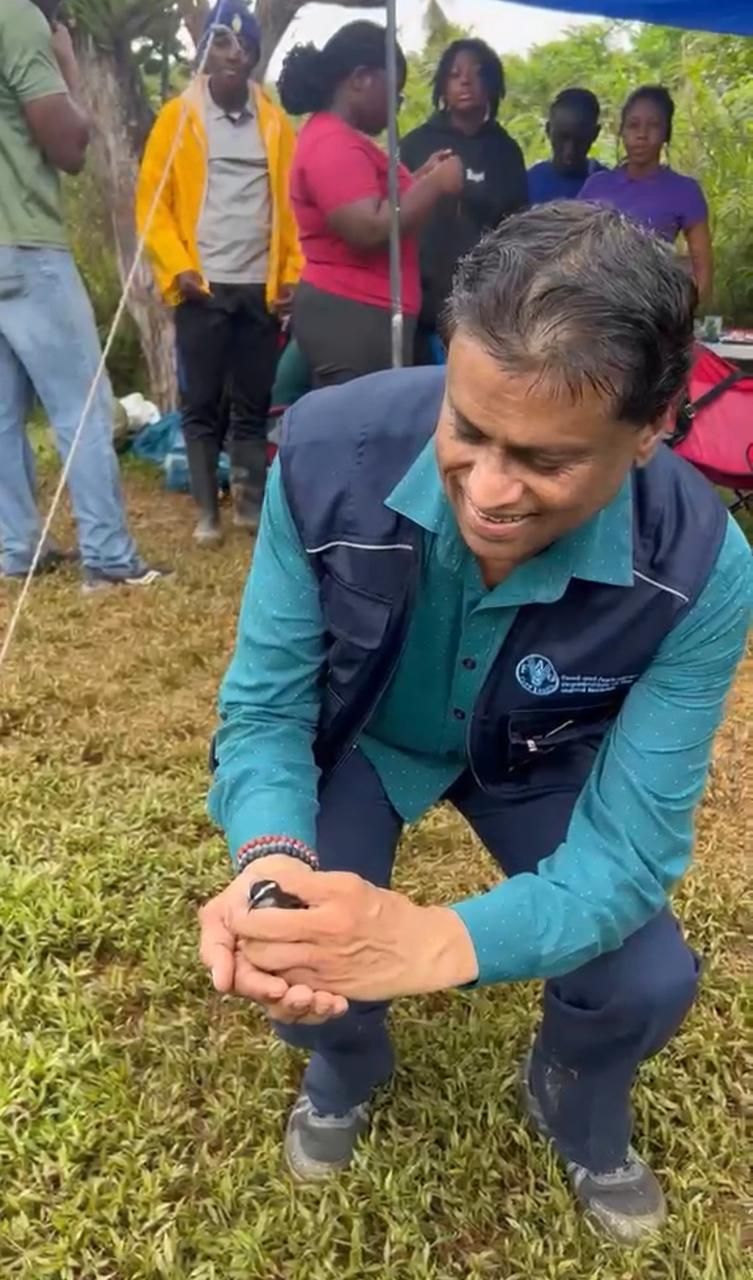
The exercise was overseen by internationally certified bird bander Deveka Boodram, a teacher at Speyside High School, who was assisted by her Environmental Science students. Participants were also allowed to handle birds under the strict supervision of the experts.
The activity forms part of the BIOREACH project, funded by the Global Environment Facility and led by the Ministry of Planning, Economic Affairs and Development, with the FAO serving as implementing partner.
The project collects scientific data on the White-tailed Sabrewing, which is classified as threatened by the International Union for Conservation of Nature. The hummingbird is found only in Tobago’s Main Ridge Forest Reserve and a small area of northeastern Venezuela.
The species is also considered important to Tobago’s bird-watching tourism sector.
Project activities have generated scientific information on the bird’s activity cycles and mating seasons. Five Tobagonians have also received certification from the North American Bird Banding Association, strengthening local capacity for continued monitoring.
FAO representative for Trinidad and Tobago Dr Gillian Smith said forests and hummingbirds played an important role in maintaining healthy agri-food systems, with hummingbirds serving as pollinators essential to plant growth and food production.
She said initiatives such as BIOREACH helped train communities to continue conservation work beyond the project’s lifespan, supporting environmental protection and food security.
BIOREACH technical adviser Asif Khan credited the Tobago community for the project’s success and expressed confidence that the demonstration would create opportunities for further partnerships.
The project is scheduled to end in July 2027. It also works with the Forestry Division to rehabilitate degraded land in Trinidad and Tobago and provides farmers with training in sustainable agricultural practices.