
Lead Editor - Newsgathering
An investigation by the Office of Procurement Regulation has found a $3.48 billion housing project was pushed forward despite questions about whether contractors could secure the financing needed to deliver it, while a key supplier flagged as actually being insolvent still qualified for contracts.
The findings came from a July 1, 2026, inquiry report by the Office of Procurement Regulation (OPR), which Guardian Media has possession of.
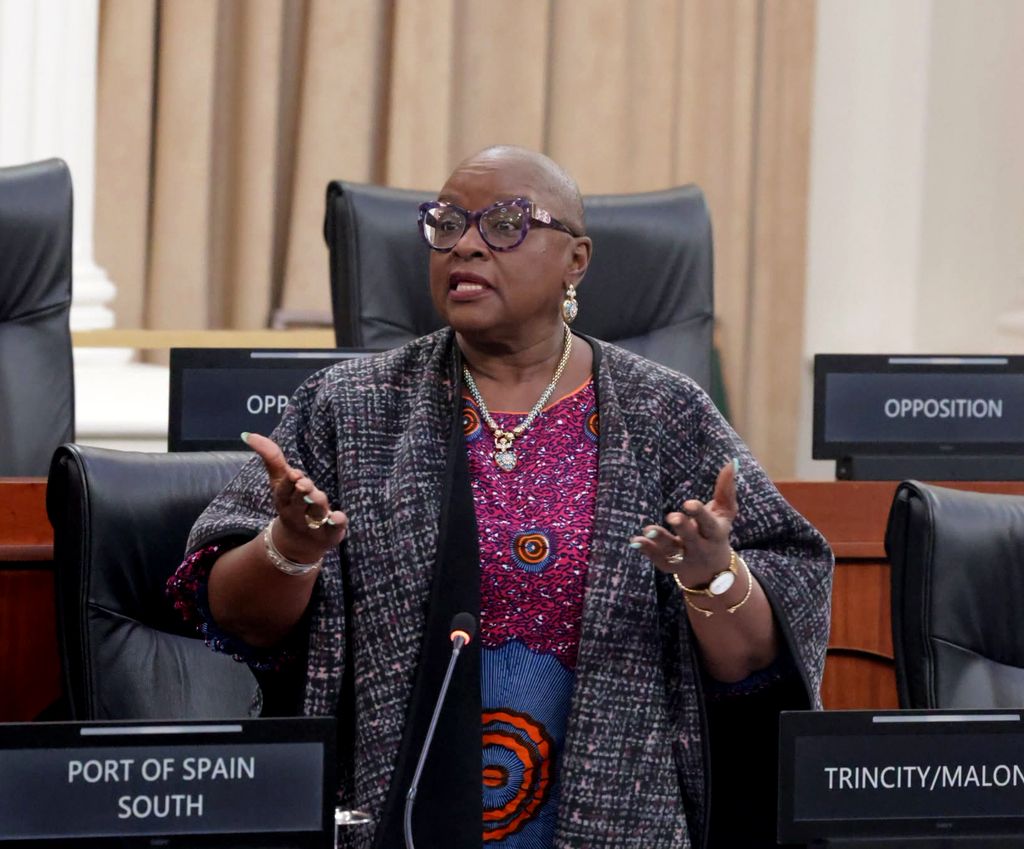
Former Housing Minister and MP for Trincity/Maloney referenced the report in her budget contribution to the Lower House on Friday.
Robinson-Regis accused the Housing Development Corporation (HDC) of putting taxpayers at risk through serious failures in the procurement of the housing contracts.
“The people’s money is not a political war chest to be given to whom they so desire,” Robinson-Regis told Parliament.
“Public procurement must never become a pipeline for political favouritism.”
The report identified significant deficiencies in the selection of suppliers, assessment of bids, procurement oversight and financing arrangements for 11 proposed design-build-finance housing packages.
The OPR concluded that the procurement process “was not conducted in accordance with the established regulatory framework and, consequently, did not give full effect to the objects of the Act”.
On August 16, Guardian Media reported that OPR had released a one-page statement on its website on July 29, saying it found problems in how the Housing Development Corporation (HDC) selected and checked companies for the cancelled $3.4 billion housing project.
But the OPR did not release the full report, which was sent to HDC for perusal.
The HDC officially cancelled its controversial housing procurement programme on June 17. Robinson-Regis said this is the first time the public is understanding why.
Housing Minister David Lee, even though he spoke immediately after her in the debate, did not respond to the OPR allegations during his presentation.
“My colleague spoke about the OPR,” he began, before pivoting to deny that the Government was implementing an inheritance tax.
Supplier facing insolvency was pre-qualified with speedy Christmas approvals
Robinson-Regis said the report, obtained through a Freedom of Information request, documented failures in due diligence and contractor qualification, including the pre-qualification of a supplier whose company profile indicated it was insolvent, in receivership or facing winding-up proceedings.
“Notwithstanding this, and the requirements of Section 29 (1) (d) of the Act, said company was pre-qualified and included in the pool of suppliers invited to participate,” the OPR report stated.
Robinson-Regis told the House that 30 pre-qualification approvals were granted on the same day suppliers applied, while six requests were approved within one to three days while 12 were processed within four to six days.
Ten of those 12 approvals occurred during the Christmas and New Year period.
She questioned whether the HDC had adequately assessed the financial standing and technical capacity of companies being considered for contracts ranging from approximately $112 million to $1.3 billion.
The OPR found that some supplier records lacked audited financial statements or sufficient evidence of technical capability for projects valued above $100 million. It also found no evidence that HDC officials sought additional clarification to confirm the completeness and accuracy of suppliers’ information before granting pre-qualification.
The former minister also cited concerns about oversight and possible conflicts of interest, including the report’s reference to companies sharing personnel.
She suggested that the circumstances raised the possibility of bid-rigging.
The OPR also questioned the HDC’s assertion that the financing model would avoid demands on the Treasury because completed houses would be sold through mortgages arranged by local financial institutions.
The HDC had told the regulator that contractors would be paid primarily from proceeds generated by the sale of completed housing units.
However, the OPR found that those proceeds constituted public money under the procurement legislation and that the HDC had committed to a project worth approximately $3.48 billion without guaranteed funding.
The report warned that this could expose the HDC and taxpayers to additional liabilities and erode value for money.
It also found that a proposed memorandum of understanding between the HDC and the Trinidad and Tobago Mortgage Bank to facilitate mortgage processing and payments did not appear to exist. The HDC said the arrangement had instead been replaced by a working relationship with the bank.
The report also identified concerns about the assessment of bidders’ financial capacity.
Robinson-Regis said the request for proposals required bidders to demonstrate a minimum $100 million line of credit, but eight of 10 letters from financial institutions contained disclaimers indicating that the financial commitments were non-binding.
She said the affected bidders were nevertheless allowed to proceed.
The OPR also found that the HDC had not established evaluation criteria, a scoring methodology or minimum thresholds for assessing financial capacity, despite requiring three years of audited financial statements.
The regulator said there was no evidence that those statements had been examined to determine whether bidders could sustain the financial obligations associated with the projects.
Robinson-Regis also questioned the technical evaluation process, saying the request for proposals required bidders to score at least 75 points and not fail any sub-attribute, but no passing score had been defined for the sub-attributes.
She pointed to one case in which a bidder’s technical score rose from 36.93 to 76.03 following a re-evaluation. The company that was technically non-compliant was then recommended for an award.
The OPR found that the revised evaluation report did not adequately explain the differences between the original and revised scores.
The regulator also raised concerns about the speed of the assessments. All 41 submissions across the 11 packages were evaluated between March 23 and April 1, 2026, with all 11 evaluation reports signed on April 1.
Robinson-Regis said the OPR observed that the HDC had adhered only to the minimum time frame prescribed for limited bidding, adding that bidders were not granted extra time to prepare their submissions.
“It is clear that with $3.4 billion at stake, the HDC was playing fast and loose with public money,” she said.
The regulator raised further concerns about the security of bid submissions, the adequacy of procurement oversight and whether contracts awarded between April 2023 and 2026 had been fully reported to the OPR.
Robinson-Regis linked the findings to the Government’s proposed changes to procurement legislation, arguing that weakening oversight would leave taxpayers more exposed.
“When the regular regulator, which is the OPR, documents this many failures in a $3.4 billion exercise, weakening oversight is not protecting taxpayers. It is putting taxpayers at risk,” she said.
She accused the Government of hypocrisy, recalling that members of the administration had previously called for stronger procurement regulation.
The OPR, in its conclusion, called on the HDC to take corrective, remedial and compliance-related action and ensure that future procurement proceedings comply with the Public Procurement and Disposal of Public Property Act, its regulations and applicable guidelines.
Since the publication of the OPR report, the Government has made legislative changes that curtailed the regulator’s powers, making its recommendations following an investigation explicitly advisory and non-binding.
Under the Public Procurement and Disposal of Public Property (Amendment) Act, 2026, the OPR is prohibited from suspending procurement proceedings or contracts, ordering bids to be re-evaluated, overturning contract awards or directing that another supplier receive a contract following an investigation.