
Senior Reporter
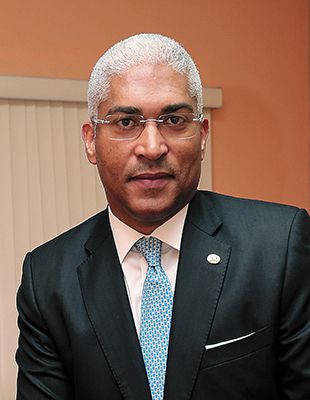
Former attorney general Garvin Nicholas says threats against public officials are not unusual, adding that this is one of the reasons government officials are provided with security details upon taking office.
However, he said while historically, such threats have rarely been acted upon, the information should still be treated with discretion.
Nicholas made the comments on CNC3’s The Morning Brew programme yesterday, while responding to reports of death threats against the Commissioner of Police (CoP) and his daughters, as well as claims of murder plots targeting the Prime Minister and other Government officials.
“There would be threats made. There would be things said about them privately or publicly that may cause concern. But in Trinidad and Tobago, we don’t have a history of going after public figures in that way, to kill, to hurt, to maim. It’s usually a war of words.”
He said if he were still AG, threats against him would not be publicised in the manner they are now. Instead, he said, he would inform the Special Branch, which would investigate it and determine if any action was necessary.
“I think that if every time there is a threat made or an alleged threat made against you, you go public, what you do is actually cause more chaos in society. So these things, as far as I’m concerned, should be handled within the closed information and intelligence.”
Nicholas said threats should be handled discreetly.
“But you can’t just be going out to the public every Monday morning and saying that there’s been a threat against me. Now, with regards to the threat that I saw reported against the Minister of Public Utilities (Barry Padarath), where it stated that somebody incarcerated gave evidence about a former minister putting out a hit on him. That concerned me, especially given the fact that we’ve seen people arrested with PDO’s for less and I haven’t actually seen the police move on that.”
It was reported that Padarath’s life was under threat after an alleged gangster reportedly gave a statement claiming he had been approached by a former government minister to kill him.
Nicholas said, logically, the fact that nothing came of the allegation was itself a cause for concern.
ICC should be strengthened
Turning to international affairs, Nicholas also weighed in on the United States’ bid to dismantle the International Criminal Court (ICC), saying the institution should instead be strengthened.
His comments came after Prime Minister Kamla Persad-Bissessar declined to comment on the issue.
The matter arose after US Secretary of State Marco Rubio announced that the US intends to dismantle the Hague-based International Criminal Court, arguing that it threatens American sovereignty and could expose US military personnel, border agents and elected officials to politically motivated prosecutions.
According to international reports, the US also plans to pressure countries to reject the ICC’s authority, with possible consequences for those that refuse, including sanctions, visa restrictions and heightened scrutiny.
Former prime minister and president ANR Robinson spearheaded the global initiative in 1989 that revived efforts to establish a permanent international criminal court.
Nicholas, who served as one of the attorneys general during Persad-Bissessar’s first term as prime minister between 2010 and 2015, said if the US and other larger countries withdraw from the ICC while smaller nations remain subject to its jurisdiction, it would expose a level of bias that could not be ignored.
“I think that the ICC should be strengthened because it plays a very, very important role in holding people to account. If it is that the major alleged perpetrators do not subject themselves to the rulings or to the jurisdiction of the court, then what use is the court?” Nicholas said.
Referring to claims that the US breached international law during the lead-up to efforts to remove Venezuelan President Nicolás Maduro—during which more than 100 people, including two men believed to be from Trinidad and Tobago, were reportedly killed—Nicholas said international law appears to have lost its force.
He warned that if one country is allowed to act without consequence, others will eventually follow, creating an increasingly chaotic world.
Nicholas said the Government now has an important decision to make—one that must take into account the country’s long-term future rather than simply responding to current events.