
On Thursday morning, Billy Ebrin set out to search for bodies.
He’d spent a short, anxious sleep in his silver Aveo car, too afraid to go back to his seventh-floor apartment in Caracas, Venezuela.
- list 1 of 3Venezuela earthquakes: How will sanctions impact aid operations?
- list 2 of 3Venezuela earthquakes devastate country
- list 3 of 3Venezuela struggles to respond to devastating twin earthquakes
end of list
Just hours earlier, he had been startled by the piercing alarm on his mobile phone. There was an uncomfortable pause. Then, the building began to violently shake.
His three dogs darted beneath the beds, terrified and trembling, while Ebrin took shelter beneath a doorframe and began to pray.
“I thought I was going to die. You could hear pieces of concrete breaking off the walls,” he said.
Two back-to-back earthquakes struck Venezuela with little warning shortly after 6pm local time (22:00 GMT) on Wednesday, triggering panic as people scrambled for safety.
The first was a 7.2-magnitude quake, followed by another that reached 7.5 on the nine-point Richter scale, both considered major seismic disasters.
When the shaking stopped, Ebrin rushed to the ground floor along with hundreds of others fleeing their buildings.
“People were bumping into each other in the confusion: elderly people, people carrying their pets, even squirrels and parrots. There were people in their underwear,” he told Al Jazeera. “It was all terrifying.”
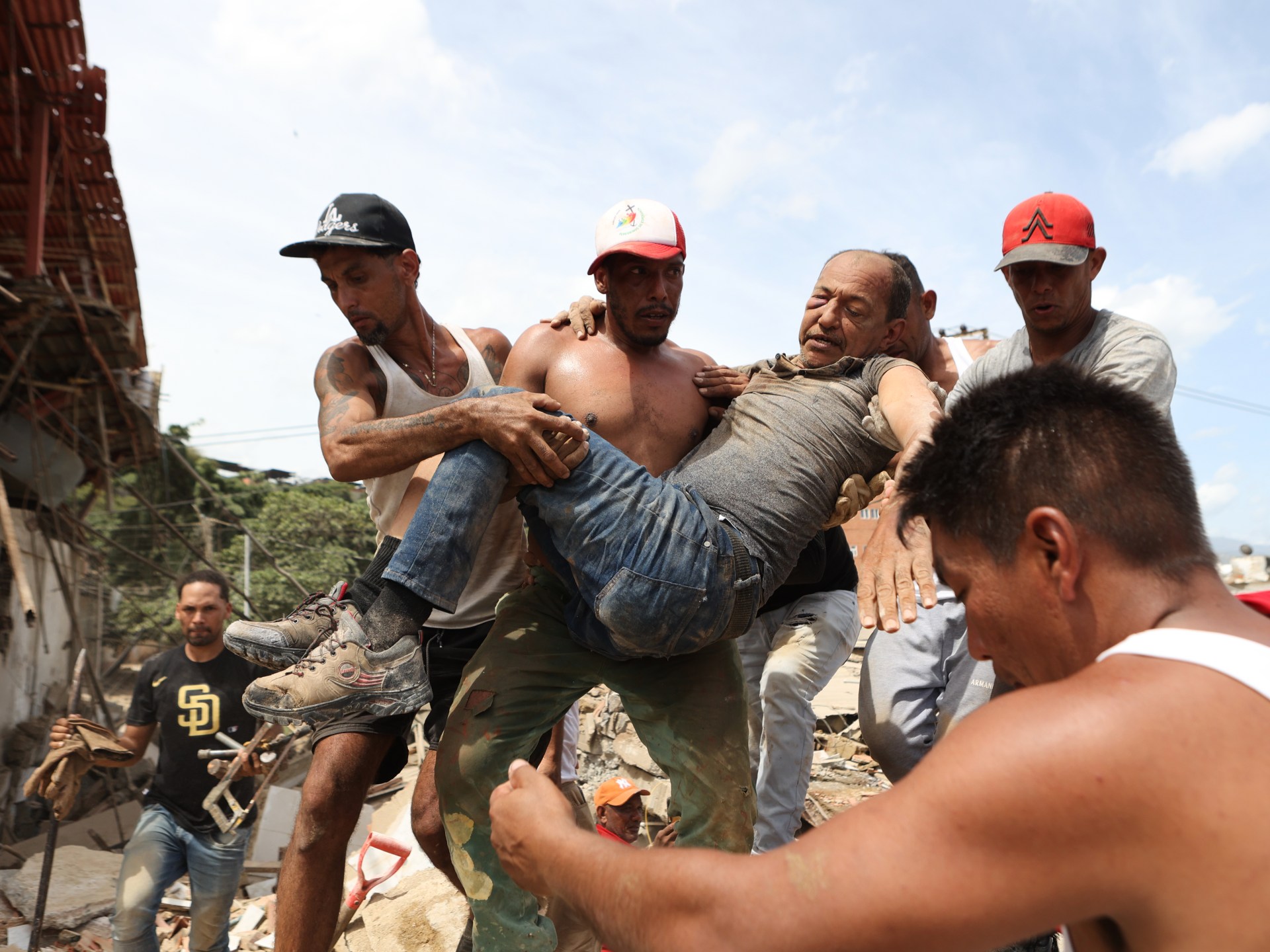
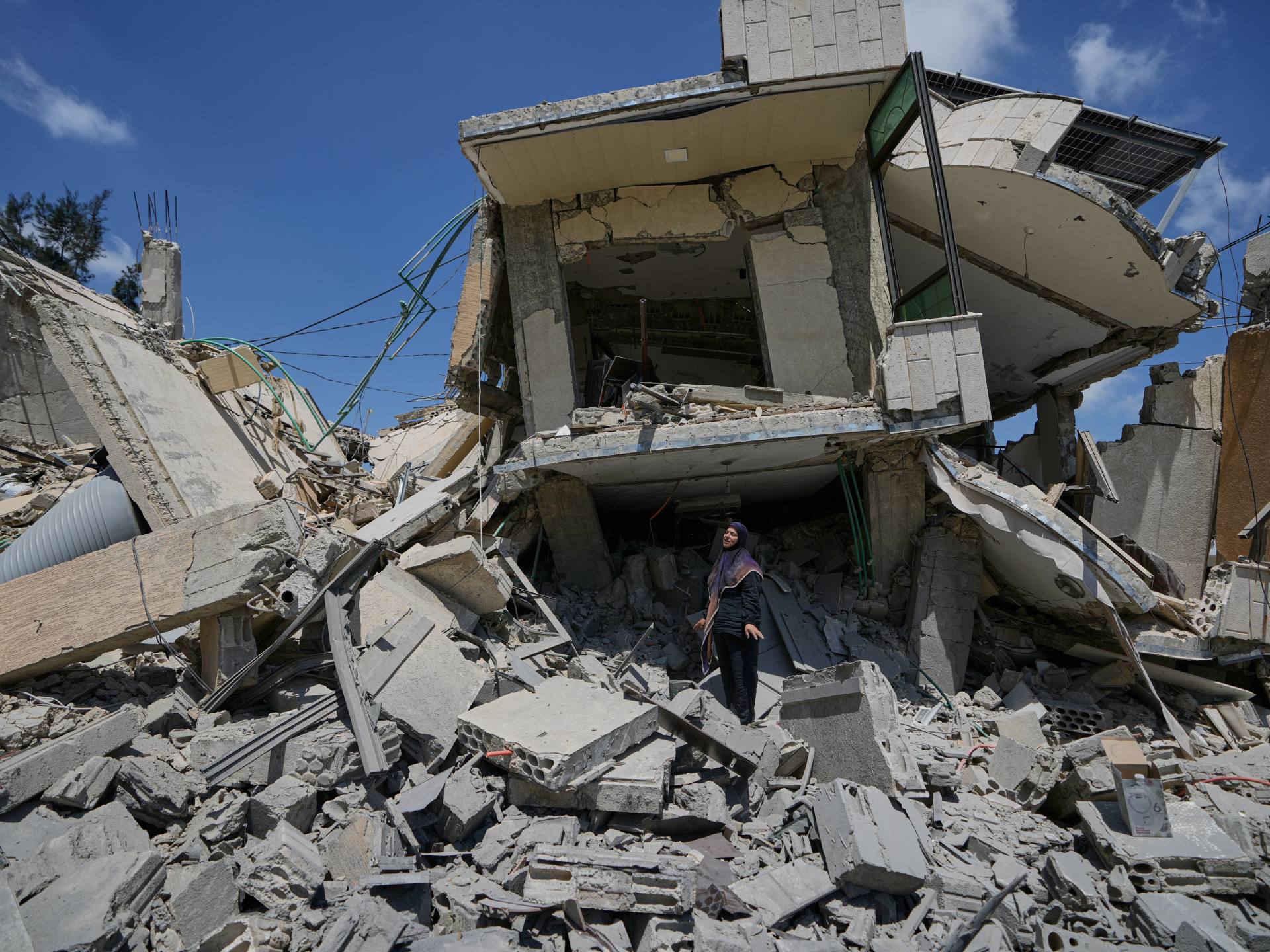
Near Ebrin’s home, many residents slept in the streets or in their cars after being warned not to enter buildings. They woke, if they slept at all, to find apartment blocks crumpled into heaps of concrete and twisted metal, with rescue workers searching for signs of life beneath the debris.

One of the worst-affected areas is the state of La Guaira, just north of Caracas, where lines of buildings have collapsed.
Advertisement
Venezuela’s National Assembly has confirmed that at least 188 people have died in the country. But the United States Geological Survey predicts the death toll could run into the thousands.
Acting President Delcy Rodriguez called on the international community and Venezuela’s private sector to assist in the rescue operation. A number of countries have said they will send assistance, including Ecuador, the Dominican Republic, Mexico, the US, Qatar and Argentina.
“We have one central and essential objective: to save lives. United as a nation, we will overcome this tragedy,” Rodriguez wrote on the social media platform X.
But many know it is a race against time to find those not accounted for, while voices are still heard beneath the rubble. Phone lines and electricity were down for many people, although some services have resumed in certain areas, driving a push from families to find out about their loved ones.
Across WhatsApp, Facebook, X and other platforms, images of missing relatives spread rapidly: elderly parents, young children, cousins, friends and neighbours whose phones had gone silent after the earthquakes.
The social media platform X has been partially unblocked by some internet providers following the earthquakes, amid the clamour for information.
Andres Azpurua, the director of digital rights organisation Ve sin Filtro, explained that the website, along with dozens of others, was blocked in 2024 in the aftermath of that year’s presidential election, which former President Nicolas Maduro is widely believed to have lost.
At the time, Maduro had sought to limit the spread of information that contradicted his claims to a third term.
But earlier this year, on January 3, the US launched a military operation to abduct and imprison Maduro. Public pressure, meanwhile, has built on the Rodriguez government to loosen the restrictions in the wake of Tuesday’s disaster.
“The government saw a lot of pressure on social media for unblocking of X and other platforms specifically because of the urgency to get information,” Azpurua said.
He added that some residents sought to leverage the US’s continued influence in Venezuela, after Maduro’s removal. “Many of those calls were directed at the US embassy in Venezuela, asking them to make Rodriguez unblock it.”
A website has now also been set up to register missing people.

While many families are still searching for loved ones, others are counting themselves fortunate to have escaped with only minor injuries.
Advertisement
“The moment the phone sounded the alert, it all happened very quickly. The tremors were so strong. I just about managed to stop a piece of the wall from falling on my dad,” Caracas resident Renny Vargas said. “We didn’t know what to do. I told my father to stay calm, to stay there with me and not move. It was just terrifying.”
Mairyn Cedeno lives in the Caracas parish of Caricuao and said something fell on her leg, hitting it hard.
“I don’t know what hit me because so many things were falling. The walls of the house are damaged and the electrical appliances fell too,” she said.
Venezuela has a mixture of modern towers and affluent districts, but it also has many older apartment blocks, informal housing and infrastructure that suffered from years of economic crisis, underinvestment and maintenance problems.
Venezuela sits on the boundary between two tectonic plates, and earthquakes are not uncommon. But serious ones with mass casualties are relatively rare.
The country suffered one of its most catastrophic earthquakes in 1967, which measured 6.7 on the Richter scale and killed up to 300 people.
Another severe earthquake took place in 1997, killing around 80. In 2018, a 7.3-magnitude quake also shook the country, killing a half dozen people.
As attention turns from rescue efforts to the extent of the damage, engineers are beginning to assess why some buildings suffered far more than others — and whether the country was adequately prepared, given the frequency of seismic activity.
Jesus Vasquez is a civil engineer in Caracas and director of the NGO Ciudadania Sin Limites, a Venezuelan civil society organisation focused on urban services and monitoring public infrastructure.
He explained that older buildings and the way they were designed will have had an impact on the amount of damage caused. But from the 1950s, buildings that complied with regulations were designed to be earthquake-resistant.
“That means the infrastructure is designed to be flexible and able to move, rather than being completely rigid, so it can absorb seismic activity,” Vasquez said.
He noted that much of the damage to buildings has been to facades, including cracks in walls and damage to internal sections of buildings. But parts of Caracas, including Los Palos Grandes and Chacao, have suffered a much heavier impact.
“They are built on softer ground, on sediment deposited over time by rainfall. When there is ground movement, those sands and sediments move even more, which is where many of the impacts in Caracas have occurred. The soil there moves much more than areas built on rock,” Vasquez explained.
But he said the severity of the destruction on Wednesday should not have happened.
“Buildings are designed not to collapse. Buildings can suffer damage, but not in a way that puts people’s lives at risk. It’s likely that several buildings will have to be evacuated after this earthquake.”
There is also concern over the ability of the health service to deal with the sheer number of casualties, especially after years of underinvestment.
Advertisement
On Thursday, schools were shuttered, and Caracas’s metro halted its services, as rail transportation was suspended.
Schools are also being used as emergency relief centres, and as rescue workers continue to search through collapsed buildings on Thursday, thousands of residents remain unsure when, or if, they will be able to return home.
Related News
Gaza post-‘ceasefire’ deaths hit 983 as Israeli attack targets refugee camp
Could the HPV vaccine eliminate cervical cancer deaths?
Iran war live: US vows to defend Gulf interests; Israel kills 2 in Lebanon