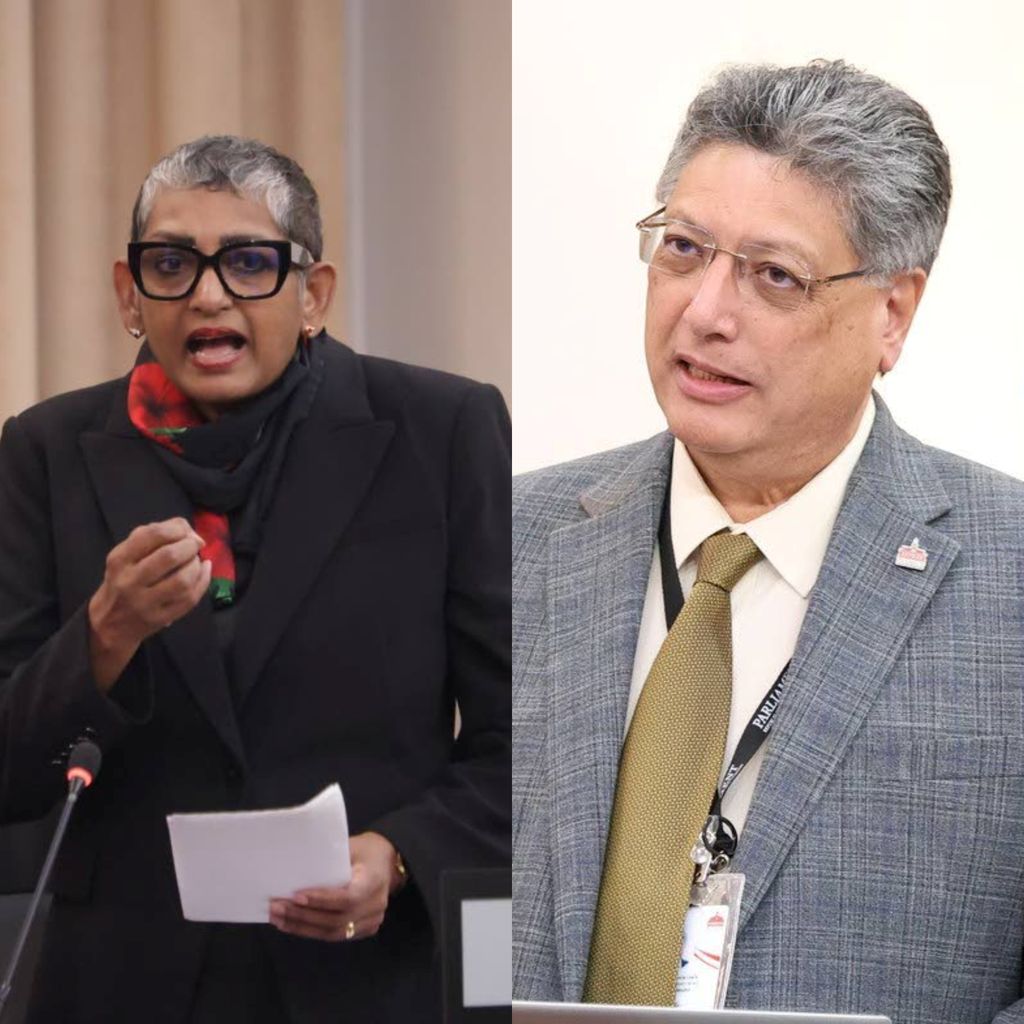

Independent Senators Sophia Chote, SC and Francis Lewis are questioning whether the Government has produced enough evidence to justify restricting alcohol, tobacco and cannabis use among adults between 18 and 25, warning that Parliament should not impose sweeping age limits without stronger local data.
Both senators supported efforts to reduce substance abuse and protect young people but raised concerns yesterday during debate in the Senate on the Miscellaneous Provisions (Alcohol, Cannabis, Dangerous Drugs, Gambling and Tobacco) Bill, 2026.
Chote said she welcomed the inclusion of vaping in the legislation because of its potential harm to young people but was unconvinced that the Government had adequately explained why 21 was the appropriate threshold.
“Why is 21 years considered to be a reasonable cutoff period?” she asked.
Chote similarly questioned why people between 18 and 21 were being singled out for alcohol and tobacco restrictions when the health consequences associated with those substances extend across age groups.
“Why are we looking at this demographic?” she asked. “Why is it reasonable to say that this particular demographic of 18 to 21-year-olds need help or at least protection of the law?”
While Health Minister Dr Lackram Bodoe presented statistics on road fatalities involving young people, Chote said those figures were not compared with other age groups, making it difficult to determine whether young adults presented a unique problem.
“Until these questions have been addressed sufficiently and with data in support of such explanations, I really do think that we have not put enough material before this Honourable House to allow or to say that this legislation should be passed,” she said.
Chote also raised concerns about proposed amendments to the Children Act, saying a child over ten found smoking, drinking or possessing tobacco could potentially face criminal proceedings and a maximum $50,000 fine.
Using the example of a child sent by a grandmother to purchase cigarettes, Chote said: “That child can be charged for a criminal offence and can be fined a sum of money which I’m sure he does not have in his piggy bank.”
“I find that extremely punitive,” she added.
Chote instead pointed to the World Health Organisation's global SAFER initiative for reducing harmful alcohol consumption, arguing that Trinidad and Tobago could benefit from a broader strategy across age groups.
She suggested the legislation be sent to a Joint Select Committee to allow stakeholders to contribute.
“This is something that could really benefit from a Joint Select Committee, and we can deal with alcohol abuse across the country,” she said.
Lewis, meanwhile, said the debate was not about whether alcohol, tobacco, cannabis and gambling cause harm.
“It clearly can, and it does,” he said.
Rather, Lewis said Parliament must determine whether the Bill's “particular age thresholds, offences and penalties, and enforcement mechanisms” were supported by sufficient evidence and were proportionate.
He stressed that those affected by the proposed restrictions are already adults.
“These are not people who are approaching adulthood, they are already adults under the law,” Lewis said, noting that they can vote, marry, have children, work and be prosecuted and imprisoned as adults.
He warned that while the legislation had been presented as a public health measure, “this is also a criminal bill.”
“It is a regulatory bill. It’s an employment bill for some people, and it is potentially a liberty bill, and therefore I think Parliament needs to scrutinise it in that regard.”
Lewis particularly questioned the scientific justification for using 25 as the cannabis threshold.
“Why 21, why 25?” he asked.
Lewis said the frequently repeated assertion that the prefrontal cortex finishes developing at 25 was an “oversimplification”, arguing that brain development continues beyond that age.
“There is no scientifically self-evident line at 25,” he said. “My concern is that we should not legislate from a slogan.”
He also called for evidence specific to this country, arguing that Trinidad and Tobago's drinking culture, family structures, enforcement capacity, informal economy, Carnival culture and relationship with bars and rum shops differ from those of other jurisdictions.
“Where is the Trinidad-Tobago evidence demonstrating that the proposed thresholds will produce the intended outcomes?” Lewis asked.
“These are measurable questions that deserve measurable answers.”
Lewis also questioned whether less restrictive measures could achieve the same public health objectives and whether the Bill's penalties were proportionate.
“The maximum penalty is not meaningless simply because we say a judge may exercise discretion,” he said.
Lewis ultimately described the legislation as appearing “more fundamentally a punitive law than a protective law.”
The Bill was passed after midnight with full government backing. However, there were no votes for the legislation from the Opposition or Independent benches.