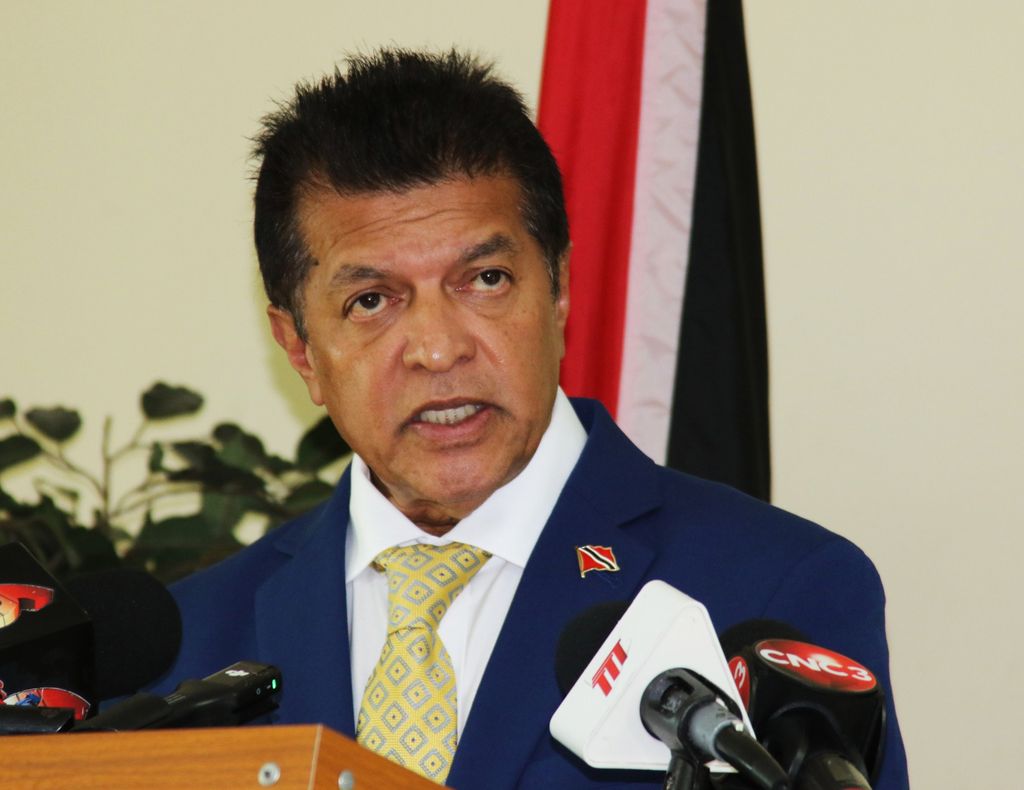

Health Minister Dr Lackram Bodoe says high levels of binge drinking among young adults and early alcohol use among schoolchildren show why the Government cannot remain a “passive observer” and must intervene to protect young people.
Speaking during debate on the Miscellaneous Provisions (Alcohol, Cannabis, Dangerous Drugs, Gambling and Tobacco) Bill, 2026, in the Senate, Bodoe rejected arguments that the proposed age restrictions were an attack on young people.
“I want to say here today that this Bill is for young people,” Bodoe said.
He described the legislation as providing “legal guardrails” to protect young people from substances and behaviours that could cause “physical, mental, and emotional harm” in both the short and long term.
The Bill seeks to raise the legal age for alcohol and tobacco from 18 to 21, while increasing the age for legal cannabis possession and use to 25.
Bodoe said the data he presented was drawn from sources including the World Health Organisation’s 2024 Global Status Report on Alcohol and Health and Treatment of Substance Use Disorders, the Pan American Health Organisation, the Trinidad and Tobago National Drug Council, the Trinidad and Tobago Police Service and the International Agency for Research on Cancer.
According to Bodoe, the data showed young adults between 18 and 24 had the highest concentration of heavy episodic, or binge, drinking in Trinidad and Tobago.
“So, it would appear that this Government is on the right path because this is really where the problem is,” he said.
Bodoe said National Drug Council university surveys showed 31 per cent of tertiary students reported heavy episodic drinking, while young adult males were 2.5 times more likely to engage in heavy binge drinking.
He also cited the Trinidad and Tobago Secondary School Substance Use Survey, which he said showed 80 per cent of secondary school students reported lifetime alcohol use, while 25 per cent of adolescents between 13 and 15 reported having previously been drunk.
“A startling, again, worrisome statistic,” Bodoe said.
The Health Minister also sought to make the scientific case for the proposed age limits, saying the human brain continues developing into early adulthood.
“The human brain development continues well into early adulthood, typically completing around age 25,” he said, noting that he was drawing not only on his role as Health Minister but his “40 years in medical practice.”
Bodoe said the prefrontal cortex, responsible for executive function, long-term planning, impulse control and risk assessment, is the last region of the brain to fully mature.
He argued that raising the purchasing age to 21 could also make it more difficult for younger teenagers to obtain alcohol and tobacco through older friends.
“When the legal purchasing age is 18, school seniors and recent graduates serve as legal buyers within the school circles,” Bodoe said.
“So we break that chain. Raising the age threshold to 21 creates a distinct social buffer.”
He said data showed more than 80 per cent of underage users obtained vaping and tobacco products from friends or acquaintances between 18 and 20.
“So we put a block there,” he said.
Bodoe also pointed to international experience, saying the United States recorded reductions in motor vehicle crashes and youth alcohol consumption after establishing 21 as the minimum drinking age.
He contrasted that with Australia and New Zealand, where he said lowering drinking ages was followed by increases in youth traffic crashes.
“What are the benefits of what we are proposing here today?” Bodoe asked, saying raising the drinking age to 21 had been associated with a “10% to 16% reduction in youth fatal traffic collisions.”
On cannabis, Bodoe said the proposed age of 25 was also grounded in concerns about brain development.
He said heavy cannabis use before 25 was linked to potential impairment in working memory, processing speed and sustained attention.
“So, I think this makes the case for raising that age limit to 25,” Bodoe said.
He stressed, however, that legislation must be accompanied by public education, pointing to 37 school and student-focused outreach activities conducted by the Health Ministry’s Health Education Division during fiscal 2026.
“Public education is a very important part and complement to the legislative measures we are proposing here,” he said. “We have to reach them earlier.”
Bodoe closed by describing the measures as “measured, proportionate, and proven public health interventions.”
“We cannot remain as passive observers. We have to do something about the problem,” he said.
The Bill was passed with 15 government senators voting in favour, 12 senators voting against and three independent senators abstaining.