
Brother Valentino, the Grenada-born calypsonian whose music championed black consciousness, equality and the struggles of ordinary people, died on Tuesday at the age of 85.
Born Emrold Anthony Phillip in Cherry Hill, Grenada, on July 7, 1941, he migrated to Trinidad and Tobago as a young boy and became one of the country’s most respected voices in calypso.
Valentino built a career on socially conscious music that challenged injustice, questioned political leadership and explored the dignity and aspirations of the disenfranchised.
His interest in calypso began in childhood, when his parents listened to the music and collected records by artistes including Lord Kitchener and Lord Cristo.
After his father’s death interrupted his education, Phillip tried several trades before music became his calling.
Inspired by Slinger “Mighty Sparrow” Franciso, who died on September 27, was buried last weekend after a state-assisted funeral, Valentino began performing in the early 1960s. At an audition for Lord Kitchener’s Caravan tent, he arrived without a stage name.
Kitchener gave him the Valentino moniker, which would become synonymous with uncompromising social commentary.
His career gained momentum during the Black Power movement of 1970, when questions of racial inequality, identity and economic justice dominated national discourse.
His 1971 composition No Revolution established him as a voice for Black consciousness. Other defining songs included Life Is A Stage, Dis Place Nice and Barking Dogs. His 1979 composition Stay Up Zimbabwe, an anthem supporting the struggle against white-minority rule, carried his message beyond T&T.
Valentino’s work extended beyond traditional Carnival performances. His solo production, Poet and Prophet, sold out eight shows in 1975, demonstrating calypso’s ability to command audiences outside the competition circuit.
He toured the United States, appeared alongside fellow calypsonian Black Stalin in Blood Brothers and became a founding member of Kaiso House.
Although he never won T&T’s Calypso Monarch title, his standing among generations of listeners earned him a distinction he valued deeply: The People’s Calypsonian.
His achievements included the 2005 Veterans Calypso Monarch title for Where Kaiso Went, recognition from the Sunshine Awards and the Hummingbird Medal (Gold)in 2012 for his contribution to the country’s social and cultural life.
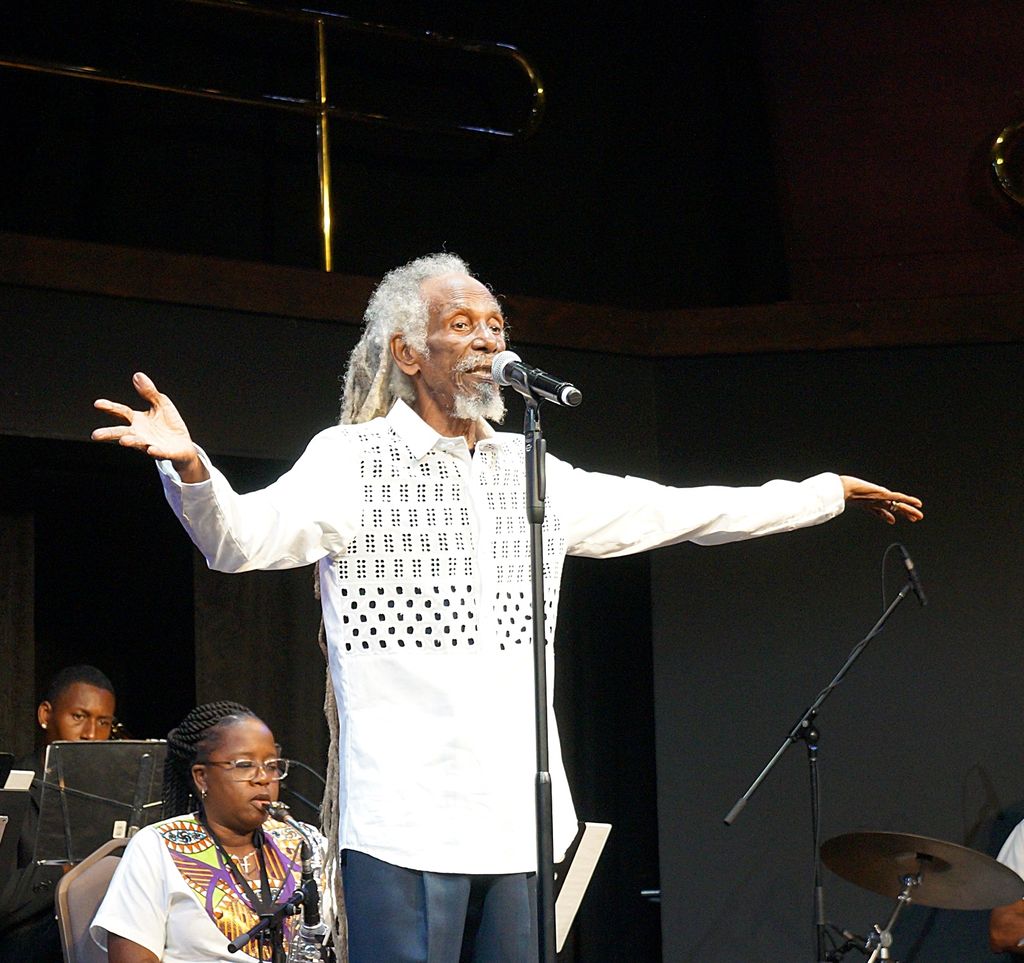
October was a month of honours for Valentino. On October 2, he hosted Legacy Concert: Passing the Baton at Kafe Blue in Port-of-Spain. At the time, he told his audience it would have been his final performance.
Brother Valentino was to have been conferred with an Honorary Doctorate of Humane Letters from the University of T&T at its graduation ceremonies next month. He had taken his official photos at the campus last weekend, before taking ill on Monday, requiring hospitalisation.
Speaking with Guardian Media yesterday, programme coordinator at UTT’s Department of Arts, Letters and Public Affairs Krisson “Seraphim” Joseph, a fellow calypsonian, expressed shock when told of Valentino’s death.
Joseph had been tasked with performing the tribute to Valentino at the graduation.
As a calypsonian, Joseph said Valentino took his responsibility to the people very seriously. Which is evident in one of his favourite songs from him - True Opposition.
“I literally remember covering that song at a show,” Joseph said.
“But while I’m singing it, I became overwhelmed by his understanding of who we were meant, or called to be as calypsonians, and how it came out in the song.”
The Ministry of Culture and Community Development, in a statement yesterday, described Valentino as “a voice for the voiceless, a conscience for the nation and a keeper of our stories.”
Minister Michelle Benjamin said his music gave expression to the struggles, hopes, dignity and aspirations of ordinary people, while challenging audiences to reflect on their responsibilities to society.
The ministry said his contribution could not be measured solely by awards, but by the lasting relationship he built with the public through his music and fearless commentary.
The Trinbago Unified Calypsonians’ Organisation described Valentino’s social commentary as an expression of generations’ struggles, hopes and experiences.
TUCO also expressed condolences to his wife, Peggy Castanada, a former member of T&T’s World Netball Championship team of 1979, and his family.
Guardian Media was told that Castanada is currently in Barbados supporting the T&T team at the 2027 Netball World Netball Americas Qualifiers.