Democrats win full control of more state governments and the Texas House
 04 November 2026
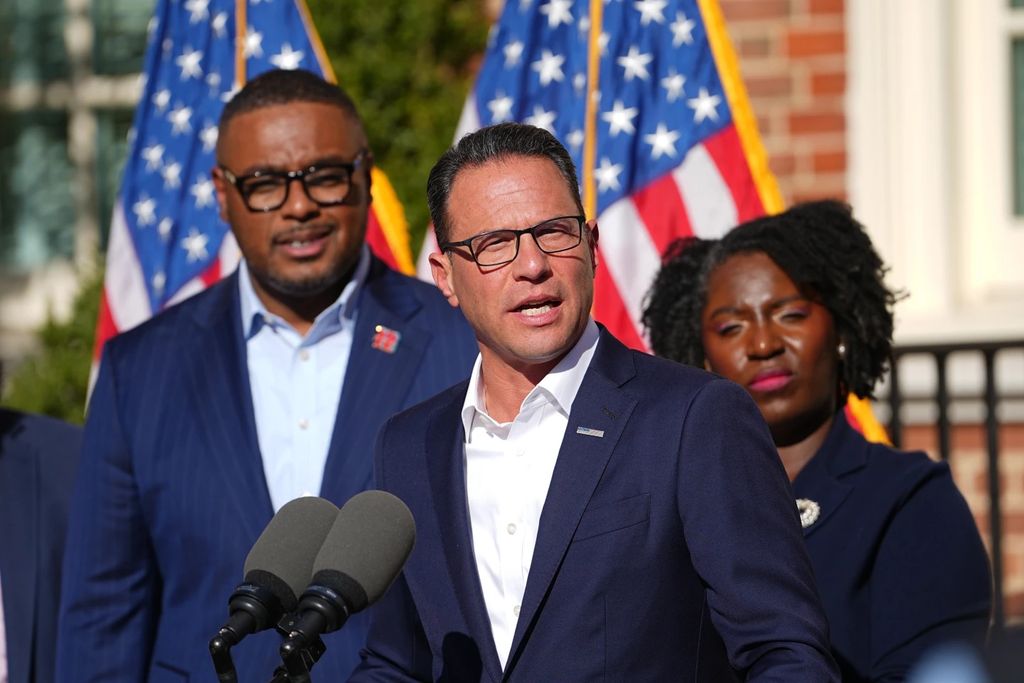

Democrats in Texas took control of the state House after historic wins for governor and U.S. Senate, part of a series of sweeping gains nationwide in Tuesday’s elections that shifted the balance of power across several battleground and Republican-leaning states.
It will be the first time Democrats control the House in Texas since Republicans took over after the 2002 election. Republicans are keeping control of the Senate in the state — which also elected Gina Hinojosa its first Democratic governor since George W. Bush ousted Ann Richards in 1994.
In this year’s midterm elections, the party took full control — both statehouse chambers and governors’ offices — in at least five states where they previously shared power.
The wins put pressure on the party to answer to an electorate angry over the rising cost of living, high gas prices, inflation and the lack of affordable housing. State governments shape a wide array of policies affecting everyday lives, including tax rates and abortion rights, school choice and education funding, data center development, and the use of artificial intelligence and law enforcement surveillance cameras.
“Now it’s time to deliver,” said Devin Remiker, chairman of Wisconsin’s Democratic Party, which retained the governor’s office and successfully flipped both chambers of the state Legislature, breaking a 16-year Republican majority.
Democrats prevail in battleground states
Democrats also won or retained full control of both chambers of the legislatures in Michigan, Minnesota and Pennsylvania and kept the governor’s office for trifectas in all three.
In Nevada, they gained control by winning the governor’s seat and retaining the legislature.
There will be pressure on Democrats in Wisconsin and other battleground states to redraw congressional maps, just as President Donald Trump successfully urged eight Republican-led states to do ahead of this election. But that backfired, with Republicans losing most of the Democratic-held seats they had targeted to flip and others they had banked on winning.
The Republican congressional redistricting in Texas may have mobilized additional Democratic voters in some parts of the state who helped drive gains in the statehouse, said Mark Jones, a political science professor at Rice University in Houston.
But “when we’re trying to think about why Democrats won, it’s one man in the White House and his policies — Donald Trump,” Jones said.
Even under maps that favored Republicans in Wisconsin, Democrats picked up two congressional seats in Tuesday’s races. That means the state will have an evenly divided congressional delegation in 2027.
Democrats also break up Republican trifectas and supermajorities
Democrats will also hold at least 28 governorships in 2027, with pickups in Georgia, Iowa, Ohio and Texas — states long held by Republicans.
And the party broke or prevented Republican supermajorities in nine legislative chambers in eight states: Florida, South Carolina, Indiana, Missouri, Iowa, Ohio, Kansas and North Carolina.
That means Republicans would need help from Democratic lawmakers to override a Democratic governor’s veto in Iowa, Ohio and North Carolina. The Associated Press has not called the governor’s race in Kansas.
The wins come after Democrats lost nearly 1,000 state legislative seats during President Barack Obama’s tenure, a slide they’ve been trying to reverse for several cycles.
It’s the biggest single-election change of partisan power in state governments since 2010, said Katie Owens Hubler, director of elections and redistricting at the National Conference of State Legislatures.
Lawmakers who will soon be in the majority say the change brings expectations. “We know that people will be counting on us to deliver, and we take that incredibly seriously,” said Wisconsin state Rep. Greta Neubauer, currently the minority leader of state Assembly Democrats.
Heather Williams, president of the Democratic Legislative Campaign Committee, said the party won “historic levels of power in statehouses.” She said they hadn’t flipped this many seats nationwide since the 1980s.
This time, she said, Democrats will have to focus on issues that matter to middle-class voters such as improving educational opportunities and increasing access to healthcare, particularly in rural areas.
“This election is about kitchen-table issues; it’s about economic opportunities,” she said Wednesday. “That is what the mandate is about.”
Wins put spotlight on Democratic priorities in 2027
The cost of groceries, housing, healthcare, gas and utility bills were campaign talking points after legislative sessions packed with bills aiming to make life more affordable for Americans, while also providing tax relief and reining in data center development and the use of artificial intelligence.
The coming legislative session could see major efforts to lighten the tax burden on the middle class, relax housing regulations, expand access to healthcare, and force utilities and data center developers to do more to stop electricity bills from rising.
It was the first time since 1992 that Democrats won control of both legislative chambers and the governor’s office at the same time in Pennsylvania.
Gov. Josh Shapiro, in a news conference Wednesday at the governor’s residence in Harrisburg, singled out sending more aid to the state’s mass transit agencies, raising the state minimum wage, protecting abortion rights in the state constitution, and building more housing.
House Appropriations Committee Chairman Rep. Jordan Harris, a Philadelphia Democrat, noted at a news conference that the Democratic-controlled House passed many bills that died in the Republican-controlled Senate.
“Oh, guess what?” he said. “We’re gonna dust them bad boys off, because we coming for you!”
Incoming Democratic governors, including Wisconsin’s David Crowley and Minnesota’s Amy Klobuchar, said they wanted to work with Republicans.
“I am not interested in moving Minnesota to the left or the right; I want to move us forward,” Klobuchar said.
She even had a warning for her Democratic supporters.
“Spoiler alert: You may not like every single thing I do,” she said. —MADISON, Wis. (AP)
_________
Story by SCOTT BAUER and GEOFF MULVIHILL | Associated Press
Geoff Mulvihill reported from Haddonfield, New Jersey. Associated Press reporters Marc Levy in Harrisburg, Pennsylvania, and David Lieb in Washington contributed.