
Senior Reporter
shane.su[email protected]
Police Commissioner Allister Guevarro says the Trinidad and Tobago Police Service (TTPS) already knows which areas will receive greater attention under the Special Operations Act, but he is not prepared to disclose where those operations will be focused.
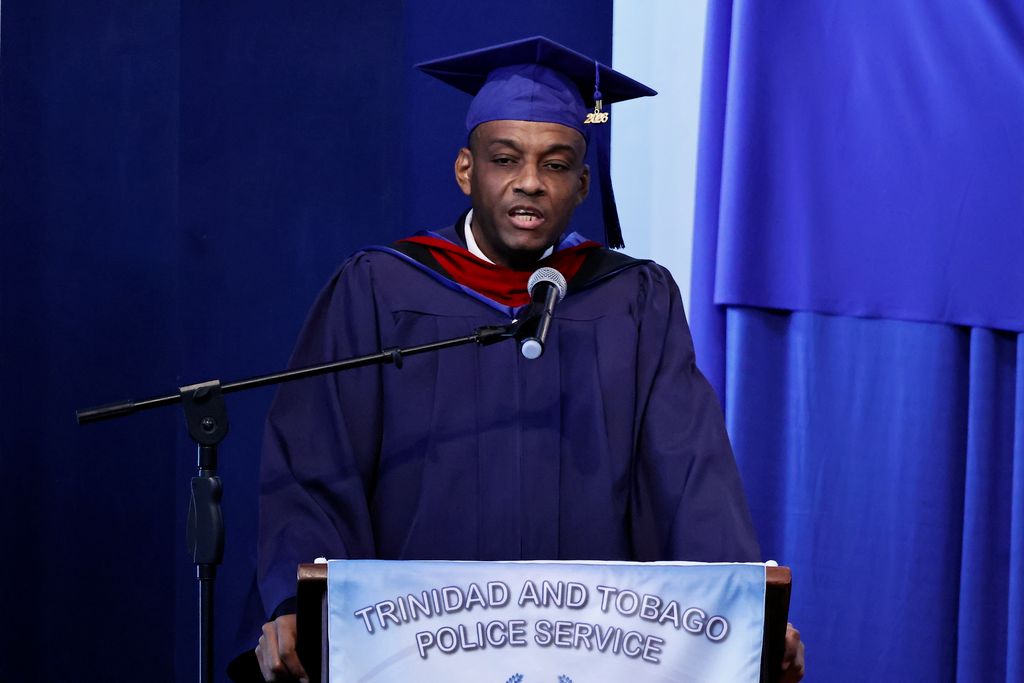
Responding to Guardian Media’s questions after a graduation ceremony for more than 100 police officers who participated in advanced law enforcement skills training at the Police Training Academy, St James, yesterday, Guevarro declined to identify the communities that would be targeted for enhanced crime-fighting operations.
“If I were to give you that (information), people would then start to move out and prepare themselves for the police.
“We have the information, but I’m not willing to share it.”
The act, which was passed in Parliament in September, is now officially part of this country’s laws following its proclamation by President Christine Kangaloo.
The law divides the country into seven different policing districts and allows specific locations to be declared “closed areas.”
Within these areas, authorities can impose curfews, establish cordons and checkpoints, close roads, restrict entry and exit, and conduct searches without warrants.
The Act forms part of the Government’s strategy to address violent crime, alongside the introduction of micro police units in specific areas to enhance police patrol coverage while reducing response times to emergencies.
As of yesterday, three micro policing units—Eddie Hart Savannah, Grand Bazaar and Tarouba—were operational.
Asked when the remaining policing units would become functional and ready to facilitate operations, Guevarro said their continued rollout would be guided by police data.
“When I opened the first three (police units), I said that it was based on data that we utilised and again we’ll be using data to guide how we roll out all the rest.”
With the reading of the national Budget for fiscal 2027 set for October 12, Guevarro also maintained that funding was critical to the TTPS’s crime-fighting plans, although he did not specify which aspects of law enforcement were in the most urgent need of financing.
“Fighting crime costs money and we have no amount of cost that could be attributed to saving human lives.
“I trust that the authorities would take that into consideration when making an appropriate allocation for the TTPS.”