
Senior Political Reporter
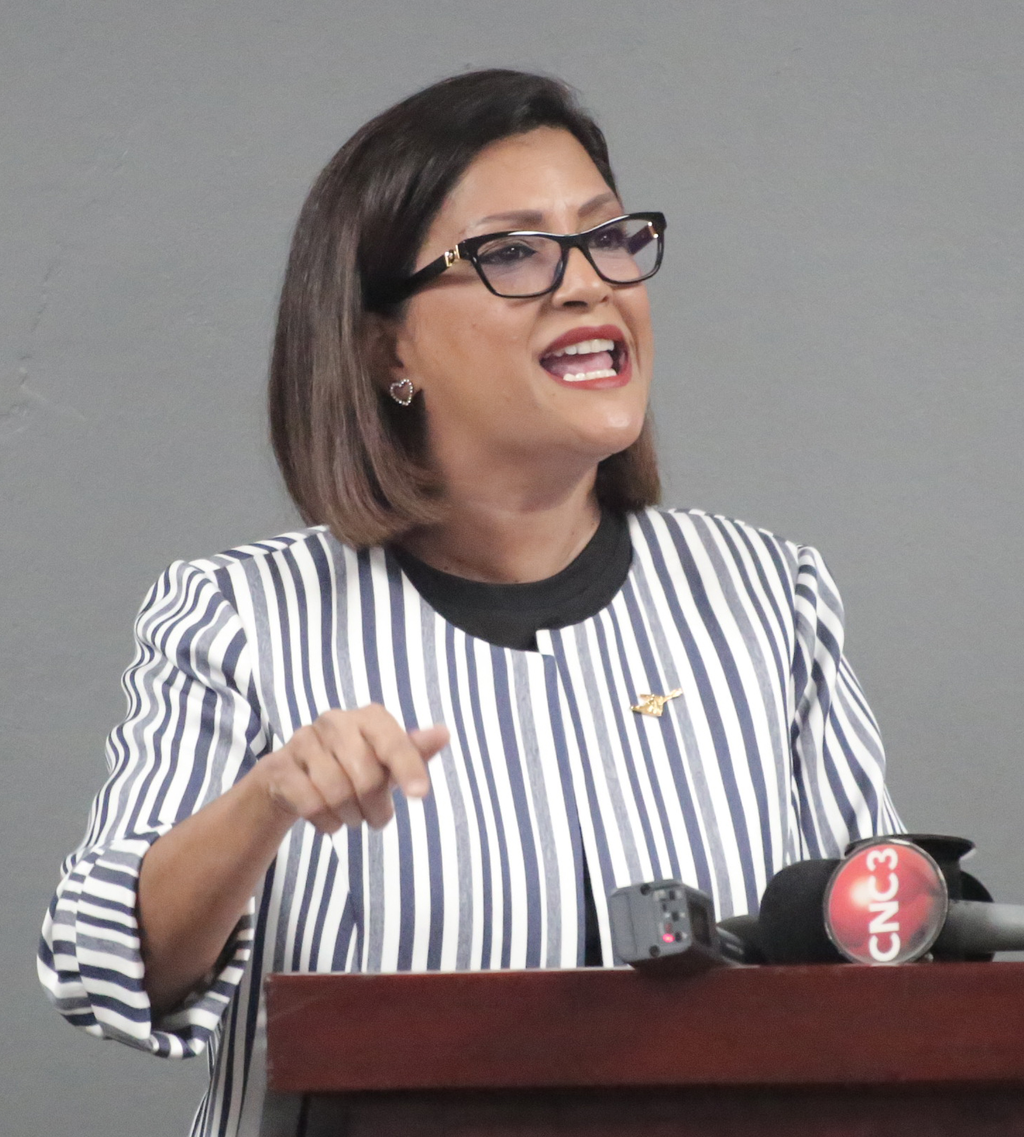
Public Utilities Minister Barry Padarath says the Water and Sewerage Authority (WASA) is continuing efforts to resolve the discoloured water affecting consumers in parts of north, central and south Trinidad, assuring the issue is temporary.
Padarath provided the update in Parliament yesterday while responding to a question from Opposition Whip Marvin Gonzales on whether urgent measures were being taken to address complaints from customers in areas including Diego Martin, Port-of-Spain, central and south Trinidad.
Consumers across several communities have raised concerns in recent days about discoloured water coming from their taps.
Responding to Gonzales, Padarath said he was surprised by the question coming from a former Minister of Public Utilities.
“Mr Speaker, I’m a little bit surprised at this question coming from a former minister of public utilities. However, earlier this week WASA advised that the temporary water discolouration followed the scheduled maintenance shutdown at Desalcott, which is an annual event,” he said.
Padarath explained that adjustments to the transmission system, followed by the restoration of normal water pressure, disturbed sediment within sections of the network, resulting in temporary discolouration.
“WASA immediately commenced flushing operations in the affected areas and they have advised the public that the water remains safe for domestic use,” he added.
The minister said the authority had acted transparently.
“Mr Speaker, WASA has nothing to hide. The problem was identified, the public was informed and corrective action taken,” he said, noting that a similar issue affected parts of central and north Trinidad in 2022.
“This happens from time to time, particularly where sediment impacts the watercourse.”
Padarath said the issue was not new and referenced a September 14, 2022 article headlined “WASA—Discoloured Red Water Supply to Parts of Central and North Trinidad.”
“Therefore, that is why I’m surprised (the question) coming from a former minister of public utilities. This happens from time to time, particularly where there’s sediment impacting the watercourse,” he said.
Padarath also responded to comments from Diego Martin North East MP Colm Imbert.
“I want to indicate to him that in a Guardian article in 2009, when he was the minister at that time, there was a headline that ‘WASA says brown water good to drink’. And that happened under two PNM administrations,” Padarath said.
In a supplementary question, Gonzales asked whether the minister was aware that several communities not supplied by either Desalcott or the Caroni Water Treatment Plant were also experiencing discoloured water.
Padarath replied that the problem was not limited to those facilities.
“The challenges resulting from the shutdown of Desalcott and the Caroni Water Treatment Plant are not isolated or unique to those two facilities. They have impacted other areas that service different parts of Trinidad and Tobago, and therefore the challenges have remained the same,” he said.
“Those were two facilities I identified where we experienced that discolouration, but it is not unique or isolated to Caroni or south Trinidad. It has impacted parts of north Trinidad as well.”
The minister added that recent rainfall had worsened the situation by stirring sediment within water treatment facilities.
“I’m advised by WASA that because of the rains we’ve seen recently, it has churned up the sediment in the water treatment facilities. Therefore, the challenges in filtering out the sand and dirt have created some difficulties there,” he said.
Asked when the issue would be resolved, Padarath said WASA had advised that remediation efforts were ongoing.