
AKASH SAMAROO
Lead Editor – Politics
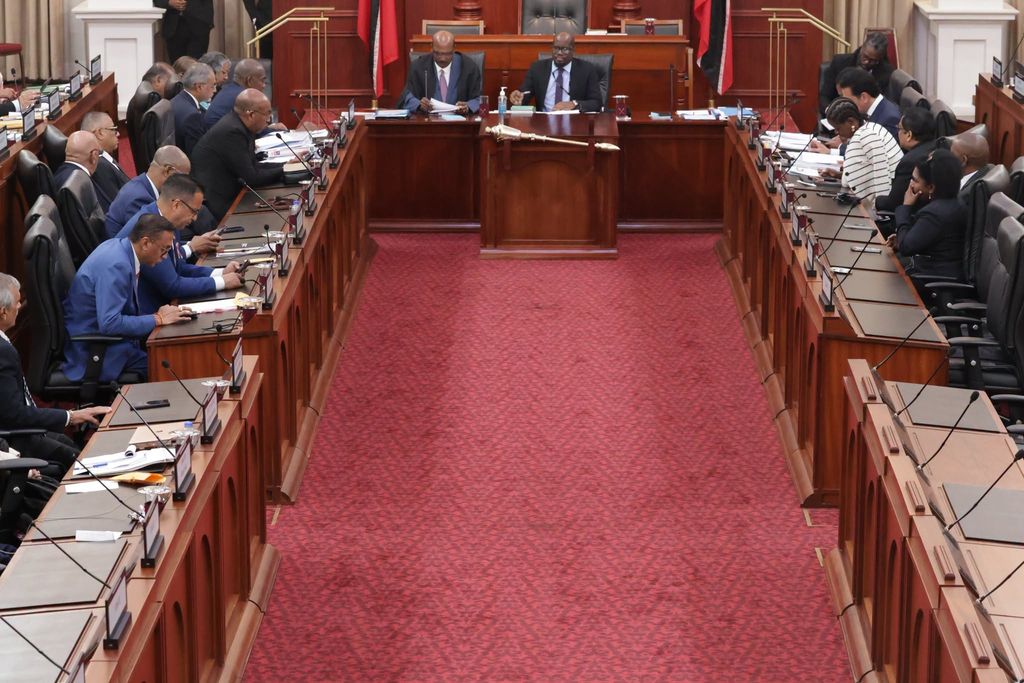
The Senate has passed legislation raising the legal age for drinking alcohol and smoking tobacco in Trinidad and Tobago to 21, and for gambling and cannabis use to 25, but the Government failed to attract a single “yes” vote from either the Opposition or Independent benches.
The Miscellaneous Provisions (Alcohol, Cannabis, Dangerous Drugs, Gambling and Tobacco) Bill, 2026, was approved early Wednesday morning, with 15 Senators voting in favour, 12 against and three abstaining.
All 15 votes in favour came from Government Senators.
Independent Senators Dr Marlene Attzs, Francis Lewis and Alicia Pauline Lalite-Ettienne abstained, while the remaining Independent Senators joined the Opposition in voting against the legislation.
It is the third major piece of legislation in recent weeks for which the Government has had to rely on the full strength of its Senate bench after failing to secure a “yes” vote from either the Opposition or Independents.
Both the Special Operations Bill and the Public Procurement and Disposal of Public Property (Amendment) Bill resulted in 15-15 ties and required Senate President Wade Mark to exercise his casting vote for them to pass.
Attorney General John Jeremie had made a direct appeal to the Independent benches during his wind-up, urging Senators to support the objective of the legislation even if they did not consider it perfect.
In making his case, Jeremie recalled the late Independent Senator Dana Seetahal SC and her approach when Parliament debated tobacco-control legislation years ago.
He said Seetahal was a heavy smoker but nevertheless supported restrictions on tobacco because she believed in the objective of the legislation.
“This is a chimney smoker telling me that, okay, this is a good piece of legislation, I support the objective, it’s not going to make my life easier, but I would support it,” Jeremie said.
He then appealed to Senators considering the current Bill.
“I want to urge my colleagues on the other side of the aisle to consider the fact that, one, no piece of legislation is perfect.”
His appeal followed several hours of debate in which Independent Senators questioned both the Government’s justification for the new age limits and some of the penalties contained in the legislation.
Among the issues raised was why an 18-year-old, who is legally an adult and can vote, marry, enter contracts and join the protective services, should no longer be considered old enough to legally purchase alcohol.
Senators also challenged the Government’s reliance on international studies and called for local data to demonstrate the extent to which young people in Trinidad and Tobago are disproportionately affected by issues such as road deaths, alcohol-related harm and drug overdoses.
Jeremie maintained that the age limits were regulatory measures and said the decision to increase the drinking age was supported by medical evidence.
“The legal age to drink alcohol in a number of territories throughout the world has been lifted to 21 on the back of medical evidence,” he said.
Jeremie pointed to evidence presented earlier in the debate by Health Minister Dr Lackram Bodoe and said the Government also intended to use public education and media campaigns to reduce the accessibility and use of alcohol.
He also cited jurisdictions including the United States, Canada, Sri Lanka, Lithuania and Singapore, where legislators have imposed various restrictions on alcohol, tobacco, gambling or cannabis.
On concerns that some of the Bill’s penalties were excessive, Jeremie argued that Parliament had previously approved substantial increases in fines and prison sentences.
He pointed to a 2020 amendment to the Interpretation Act which, he said, increased the fine for breaches of regulations from $500 to $100,000.
Jeremie also cited penalties under the Dangerous Drugs Act ranging from 25 years to life imprisonment, arguing that it was difficult to reconcile those penalties with criticism of a $50,000 fine in the current Bill.
“The object of the penalty is to express society’s repugnance with the conduct,” Jeremie said.
“I think that the penalties which are in the legislation before us, those are responsible penalties, and they are proportionate.”
The Attorney General also rejected criticism of the quality of the Bill’s drafting, saying legislation goes through policy formulation, a legislative review committee and Cabinet oversight before reaching Parliament.
The Bill will now be sent to President Christine Kangaloo for assent, after which it will become law.