
JENSEN LA VENDE
Senior Reporter
When the Miscellaneous Provisions (Alcohol, Cannabis, Dangerous Drugs, Gambling and Tobacco) Bill, 2026 comes into effect next year, there will be police officers who may not be able to drink a beer or smoke a cigarette, yet carry a firearm.
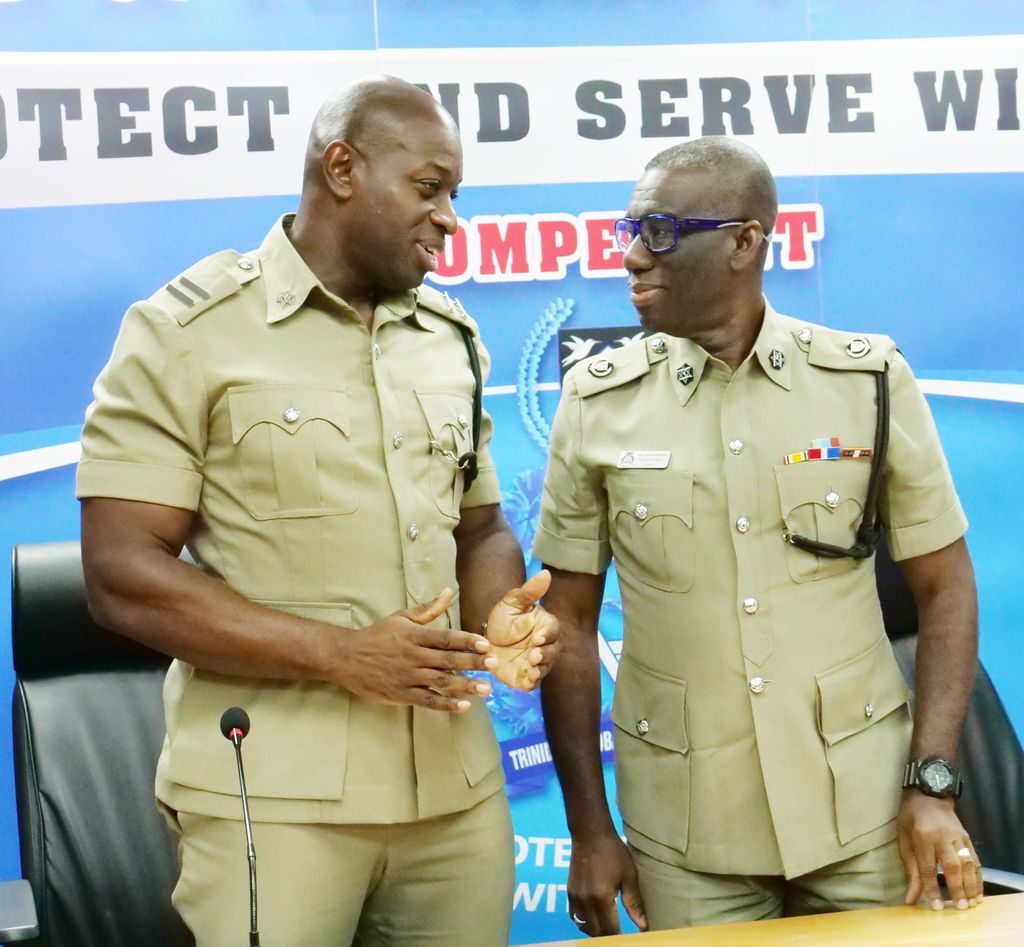
Speaking at the Trinidad and Tobago Police Service (TTPS) media briefing yesterday, head of the Police Training Academy, Snr Supt Richard Taylor, said police officers are recruited from the ages of 18 to 35.
The bill would make 25 the threshold for possessing cannabis within permissible quantities and cultivating up to four plants.
For gambling, citizens under 25 are prohibited from entering gambling establishments to gamble or participate in electronically organised gambling. It would extend criminal liability to people between 18 and 20 for the use or possession of alcohol or tobacco and to those between 18 and 24 for the use or possession of cannabis or dangerous drugs.
Against this backdrop, Taylor, as well as public information officer ASP Owie Russell, were asked if the law should be amended to allow officers to enter the police service at an older age.
Russell said: “What I’m trying to say is that we would want to, as a responsible organisation, we would want to see what the contents of the law actually state before we go further to make any adjustments or amendments.”
He said the police commissioner is the one to say if any special unit will be formed to police the law.
Asked if the officers must undergo specialised training for this particular offence, Russell said officers, when given new powers, must be equipped to use them lawfully, fairly, and most importantly, with restraint.
“The TTPS has already met and formulated a plan on its approach to implementation of new legislation which fits seamlessly into its latest anti-crime operations.”
Commenting on the enforcement of the law, former DCP in charge of operations Jayson Forde said the TTPS will not be reinventing the wheel.
“The police officers don’t have to reinvent any wheel. Look at what happened in the past, apply today’s ability, and today’s techniques. I feel that they will be able to have a good measure of success.”
He likened the law to when cinemas had age restrictions on movies and that was policed, recalling at one time as a teen he was stopped from entering the cinema because he did not meet the age requirement. He said while some “may slip through the cracks,” he had no doubt that officers are able to enforce the law.
However, he warned that some people determined to break the law would find ways to fraudulently acquire fake ID cards.
Training is a must
Taylor, who is also an attorney, agreed when asked if there should be a law mandating police officers to use body cameras, saying every officer that passes through the academy is already trained to use them. “Well, yes. I want to say yes. However, body cameras cost. I think the reason why every officer at this point in time is not outfitted with a camera is because of the cost. But yes, all officers are trained when they come to the academy to use body cameras. So, every recruit that leaves the academy is trained.”
In the last five years, Taylor said between 5,000 and 8,000 officers underwent retraining in various topics as part of the police service improvement methods.
The topics include use of force, treating with de-escalation, customer service, investigative skills and others.