
RADHICA DE SILVA
Senior Multimedia Reporter
More than one in three Form Four and Five students surveyed in Tobago reported having used alcohol in their lifetime, according to research which criminologist Dr Randy Seepersad says provides an important picture of substance use among young people as the Government moves to raise the legal age for alcohol, cannabis and gambling.
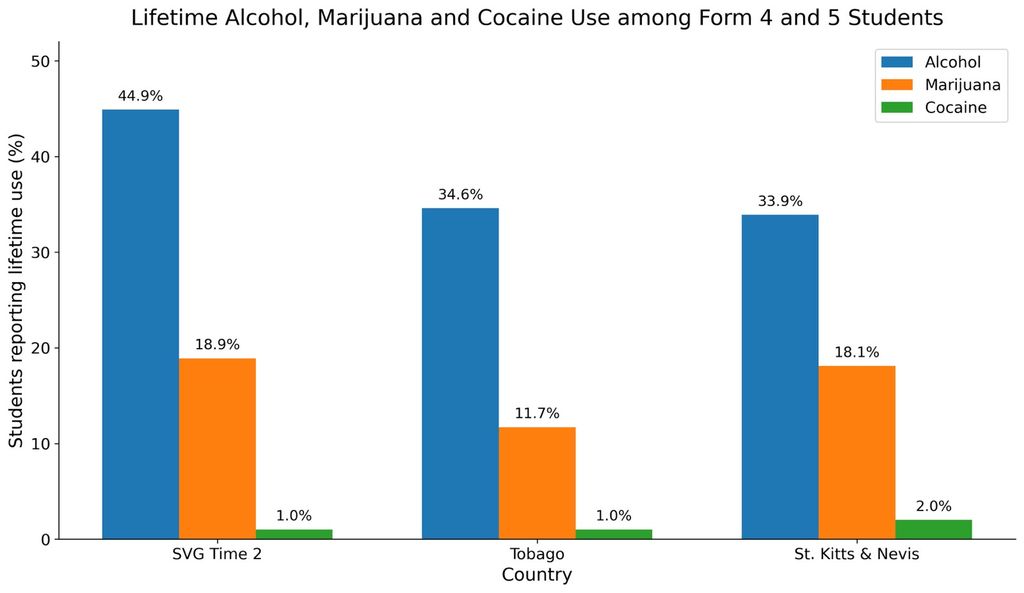
Dr Seepersad provided the 2024 research, conducted among Form Four and Five students in government secondary schools in Tobago, which found that 34.6 per cent reported lifetime alcohol use, compared with 11.7 per cent who reported marijuana use and one per cent who reported cocaine use.
Dr Seepersad said researchers reached about 80 per cent of all enrolled Form Four and Five students in Tobago, making the findings a significant representation of that student population.
“We didn't manage all but we got about 80 per cent, so that's a very, very large proportion of all of the Form Four and Five students in government secondary schools,” he said.
However, Dr Seepersad stressed that the findings should not be interpreted as representing students throughout Trinidad and Tobago.
He said the Ministry of Education did not grant researchers permission to access schools in Trinidad, while the Tobago House of Assembly provided access to schools in Tobago.
The research comes as the Government introduces the Miscellaneous Provisions (Alcohol, Cannabis, Dangerous Drugs, Gambling and Tobacco) Bill, 2026, in Parliament today.
The Bill seeks to amend seven pieces of legislation and would increase the minimum legal age for the sale, purchase, possession or consumption of alcohol and tobacco from 18 to 21.
The proposed age for cannabis would increase from 18 to 25, while the minimum age for gambling would also rise to 25.
The Government has said the measures are intended to protect young people from substance abuse, addiction and the risks associated with gambling.
But Dr Seepersad said the significance of raising the age lies in delaying young people's exposure to activities which carry risks.
“It's a form of delaying exposure to activities that will carry some kind of risk, risks of addiction, impaired judgment, financial harm, other kinds of negative consequences,” he said.
He described the approach as a form of prevention, but cautioned that legislation alone would not necessarily change behaviour.
“It has worked well in other countries, but really depends on enforcement,” Dr Seepersad said.
“If you are not able to enforce the restrictions that are put in place by law, then it really becomes ineffective.”
Dr Seepersad noted that enforcement could be particularly difficult in Trinidad and Tobago because alcohol and cannabis are readily accessible in homes and social settings.
“In such a very permissive environment with wide access, you know, within the household and social settings, etc, where adults don't really enforce these things, you would find that changing the law may not actually change the behaviour,” he said.
He said the challenge is even greater because much of the activity takes place in private settings.
“More than likely, I can imagine that the police may not have the resources to police things like underage drinking or marijuana usage and all these things,” he said.
Dr Seepersad said parents therefore have a major role in ensuring that the proposed law translates into behavioural change.
“Parents too, they have to be the ones who are the police because they are the ones in the homes,” he said.
He said parents are also responsible for creating the environment in which young people are exposed to alcohol and other substances.
“They are the ones who buy the alcohol and other substances, bring it into the homes, use it in front of the children, and create that permissive environment,” he said.
Dr Seepersad noted that schools and Government must also be part of the response through education and evidence-based prevention programmes.
“The schools have to be the educators when it comes to helping children to understand the potential harms,” he said.
“Really, it's a whole-of-society approach that is required when it comes to helping young persons understand about the dangers of substance use, when it comes to limiting access and monitoring them and so forth.”
The research also raises questions about marijuana use among young people following its decriminalisation in 2019.
Seepersad said he did not have systematic data to quantify the harm caused by marijuana among young people in Tobago, but said there were recognised concerns about developmental effects associated with substance use.
“While we don't have systematic data on the harm that it has caused, knowing that it could possibly cause harm and knowing that it's being used among young persons, when you add those two things together, at least you could reasonably say that it's going to have some kind of negative effect on young persons,” he said.
He said those possible effects could include cognitive and developmental consequences, although he cautioned that further empirical evidence would be needed to establish the extent of such effects.
The Government's proposed legislation goes beyond simply changing the legal ages.
It also creates new offences and increases penalties for breaches involving alcohol, cannabis, tobacco and gambling. Under the proposed gambling provisions, for example, a person under 25 who gambles or enters certain licensed gambling premises could face a fine of up to $50,000, although the Bill provides for fixed-penalty and rehabilitative options for specified offences.
Dr Seepersad said the ultimate challenge will be changing social attitudes towards alcohol, cannabis and gambling.
“You want to reach a point where it becomes culturally inappropriate for persons of a certain age to engage in these kinds of activities,” he said.
He said that cultural shift could take a generation, but would have a longer-term effect because young people would eventually become parents themselves.
“If you could achieve it in one generation, you could change things,” Seepersad said.
“What it means is that culturally, that new way of thinking would perpetuate itself because the younger generation, when they have their children, they will ingrain values in their children that really encourage them to abstain from alcohol usage, marijuana usage, etc, at least until they get quite a lot older.”
Related News

State ordered to pay rental company almost $400K over URP contract
Special Operations Bill passed after Senate deadlock
Beckles: Govt misleading public on proposed age increases and penalties