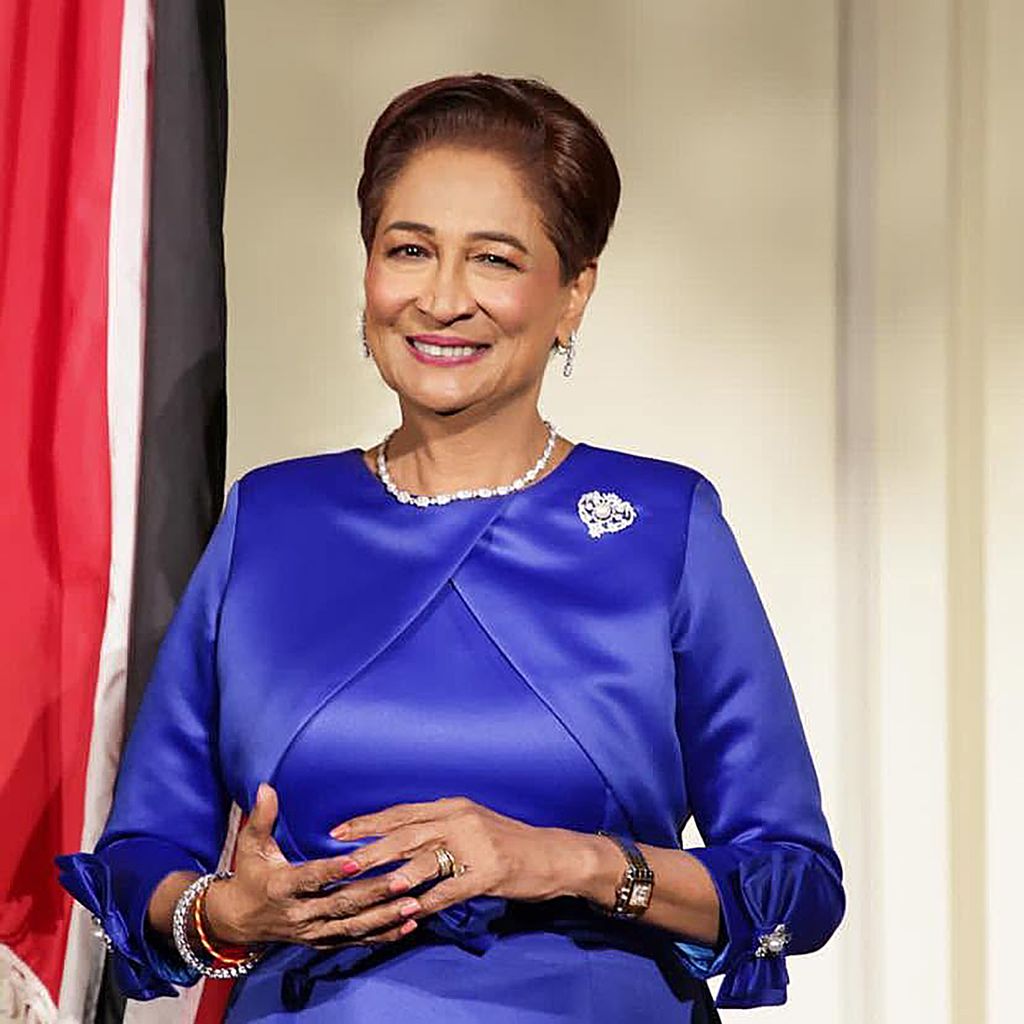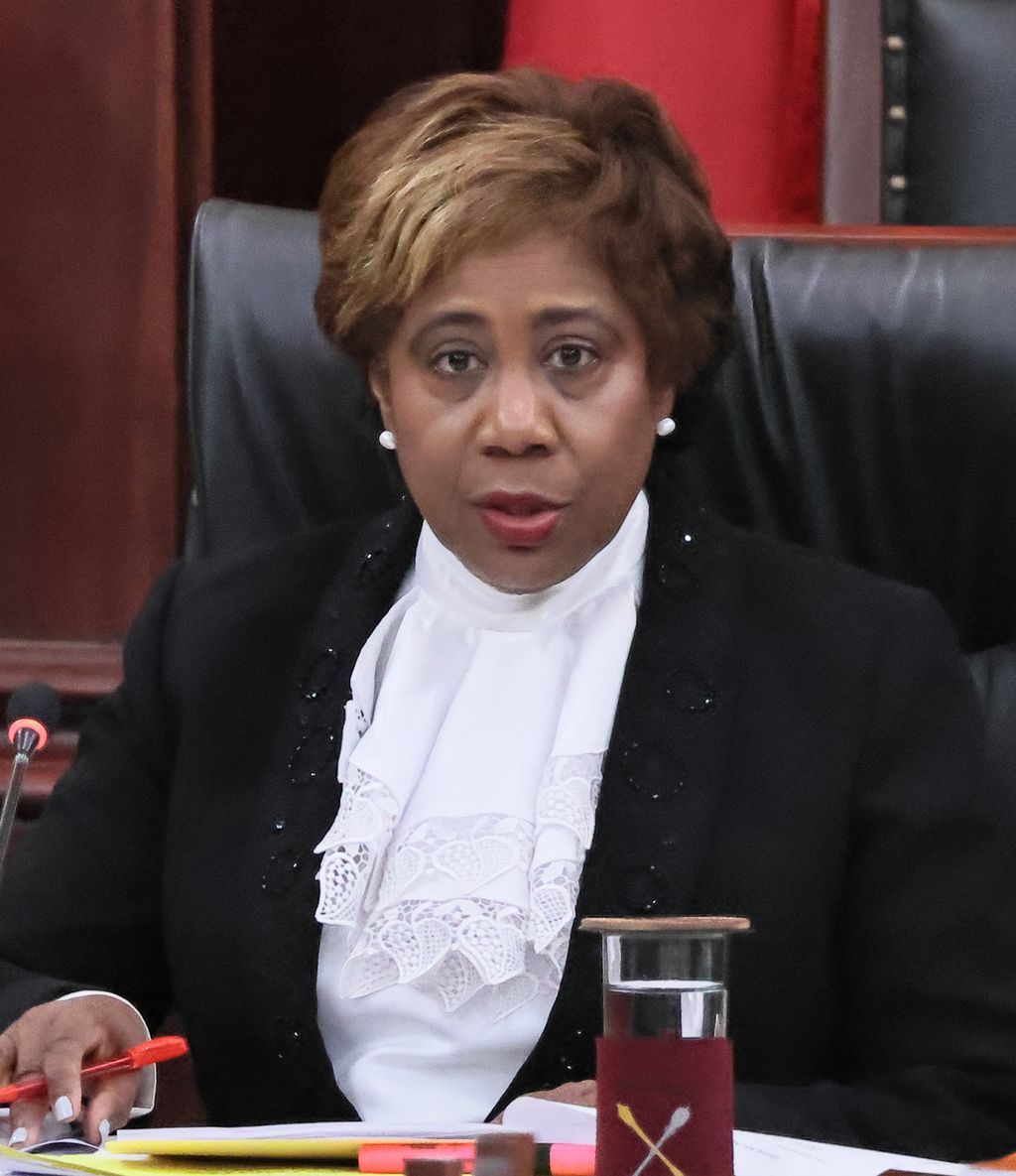

Former House speaker Bridgid Annisette-George has rejected attempts to cite her 2017 casting votes in Parliament as a precedent for Senate President Wade Mark’s deciding vote on the Special Operations Bill, arguing that none of her votes determined the fate of substantive legislation.
In a detailed response to the controversy, Annisette-George said there was a “critical distinction” between the circumstances in which she exercised casting votes as Speaker and Mark’s decision last Thursday to break a 15-15 Senate deadlock and secure passage of the contentious legislation.
“What a stretch to state that the precedent for the breach of the Denison Principle by the Senate President on the Special Operations Bill was set in 2017 by the then Speaker of the House!” Annisette-George wrote in a statement dated September 28.
Her comments directly challenged constitutional affairs expert Professor Hamid Ghany, who has argued that her use of casting votes in 2017 effectively displaced the British parliamentary convention governing how a presiding officer should break a tie. Ghany contends there has been no settled local practice since then and that Mark was entitled to cast his vote as he did.
At the centre of the dispute is the Denison Principle, a parliamentary convention which, according to Annisette-George, requires a presiding officer to preserve the status quo when breaking a tie and avoid using a casting vote to determine a substantive matter if members are deadlocked.
She said the principle does not simply require a presiding officer to vote against the government. Rather, she said a casting vote may be used to allow further discussion, while a final vote should preserve existing law or the existing position unless a majority supports change.
Annisette-George reviewed four casting votes she exercised in 2017 during proceedings involving the Indictable Offences (Pre-Trial Procedure) Bill, the Bail (Access to Bail) (Amendment) Bill and the Criminal Procedure (Plea Discussion and Plea Agreement) Bill.
According to her, those votes either allowed debate and consideration to continue or dealt with the timing and continuation of parliamentary proceedings.
She noted that on March 15, 2017, when the House was tied 16-16 on a motion to adjourn debate on the Indictable Offences Bill, she voted in favour of maintaining the status quo. In September that year, she also broke separate 17-17 ties during consideration of Senate amendments and on a motion to adjourn the House.
However, she maintained,”In none of the four instances cited by the Professor was the casting vote a determining or final vote on the substantive issue before the House of Representatives.”
“The four 2017 casting votes were not used to determine substantive legislative change. That is the critical distinction which the Professor’s analysis overlooks,” she added.
That distinction has become central to the debate surrounding Mark’s action because his casting vote came at the third reading of the SOB, the final stage required for its passage in the Senate.
All 15 Government senators supported the legislation, while the six Opposition and nine Independent senators voted against it. With the chamber deadlocked 15-15, Mark exercised his casting vote in favour of the bill, resulting in its passage by a 16-15 margin.
The controversy has prompted competing interpretations of parliamentary convention. Former House speaker Nizam Mohammed has also argued that Annisette-George’s 2017 votes were materially different because they did not finally determine government legislation. Ghany, however, maintains her actions altered the local practice surrounding casting votes.
While Annisette-George acknowledged that T&T has experienced a turning point in its observance of the British parliamentary convention, she firmly rejected Ghany’s contention that the shift occurred under her Speakership.
“The professor is correct that there has occurred a turning point in the settled practice in the observance of the British Parliamentary Convention for presiding officers of the Denison Principle. But he is all wrong in identifying 2017 as the date,” she said.
Related News
Hinds urges PNM supporters to petition President over SO Bill
Beckles, Rowley condemn PM’s ‘attack’ on independent senators
Scotland vows to mobilise constituents against bill: ‘We do not agree with this’